Politics & Government
License Plate Cameras, Tax Break Vote Lead South Windsor Meeting
The meeting also included budget pressure points, a school budget hearing and other council business.


SOUTH WINDSOR, CT — South Windsor Town Council approved a seven-year, 70 percent tax abatement for the Buckland Gateway development Monday after debating whether the deal was worth the promised future growth.
The vote came during a wide-ranging meeting that also included a warning from Mayor Brian Zimmerman about the town’s budget outlook and a strong defense of the police department’s Flock license plate reader system from Chief Chris Lindstrom.
Budget Pressure Comes Into Focus
Zimmerman said budget season will be tough and made clear the numbers are already tight.
Find out what's happening in South Windsorfor free with the latest updates from Patch.
“I know everybody understands that it’s going to be a difficult budget process,” Zimmerman said. He said the current proposal reflects about a 6.97 percent tax increase and added that if the council wanted to trim that by 1 percent, it would need to find “either spending reductions or revenue increases of approximately $1.35 million.”
The council later opened and closed a public hearing on the proposed Board of Education budget in about two minutes after no one from the public spoke.
Find out what's happening in South Windsorfor free with the latest updates from Patch.
Zimmerman then asked for a show of hands, and eight people supported the requested school budget amount, with no one favoring either a lower or higher number.
Police Make Case For Flock Cameras
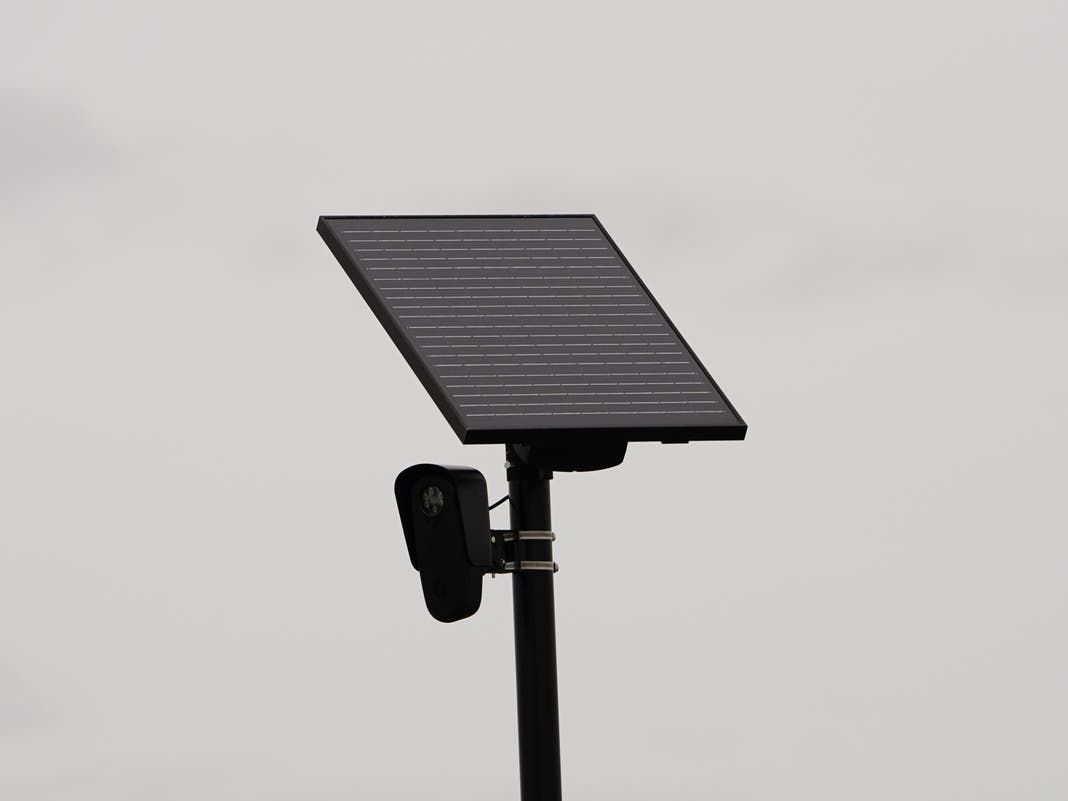
Earlier in the meeting, South Windsor Police Chief Chris Lindstrom gave a presentation on Flock license plate readers, describing them as a practical public-safety tool that helps officers solve crimes faster while staying within clear legal and policy limits.
“There’s been a lot of misinformation in the media, and misinformation, online misinformation that’s word of mouth,” Lindstrom said. “What I want to do is come and share with you what is accurate as we know it and what we’re doing.”
Lindstrom said South Windsor’s system has been active since April 2025 and now includes eight Flock license plate readers across town.
Police said the data collected from those readers is owned and controlled by South Windsor police, stored on Flock servers for 30 days and only shared with other local law enforcement agencies when South Windsor gives permission. Police also said the department’s use of the system is governed by a statewide model policy.
Lindstrom also stressed that the system is not doing what some critics say it does.
“Flock does not take any pictures of people,” Lindstrom said. “It does not track anybody. You’ve been told otherwise, I’m telling you, it does not track people. Doesn’t track cars.”
Police said the cameras specifically monitor the rear of vehicles and are designed that way to avoid identifying people. Officials also emphasized that the system is not used for red-light enforcement or speed enforcement.
Lindstrom said the cameras give officers a fast way to narrow down where a suspect vehicle may have gone, including by checking scanner locations in South Windsor, neighboring towns and participating private sites.
“It helps us saturate areas for investigative purposes,” he said.
He argued the technology has already proven its value in town.
“This technology makes us safer,” Lindstrom said. “It makes us more efficient in recovering stolen property. It makes us more efficient in holding suspects accountable.”
Police said the system has been used successfully about 70 times so far, helping move investigations forward by identifying vehicles connected to family violence crimes, burglaries and larcenies, stolen motor vehicles, weapons and narcotics cases, armed robberies, missing persons cases and incidents involving suicidal or emotionally disturbed people.
The department also said South Windsor’s Flock program grew out of a proposal the chief brought to town leaders in November 2023 and later received bipartisan support from the Town Council. Police said the program was launched using money awarded through the state’s auto-theft grant.
Tax Break Draws Split Vote
The meeting’s biggest fight came over the Buckland Gateway abatement for property at 220 and 245 Gateway Blvd. and 274 Buckland Road.
Town documents say the development involves an estimated $5.5 million investment, a new 16,700-square-foot building and about 60 permanent jobs.
Town Manager Michael Maniscalco first flagged that the written resolution was missing the actual abatement percentage and said the language needed to specify “seven years at 70%” so it matched the Economic Development Commission recommendation.
The council approved that friendly amendment before moving to the main debate.
Opponents argued the town was giving away too much for a project already underway.
Councilor Mike Ouellette said past success stories should not automatically be credited to abatements.
“Correlation doesn’t equal causation,” Ouellette said, arguing that some businesses came to town because of location, not tax deals.
Councilor Audrey Delnicki said the project already appeared committed and questioned whether the council had ever really negotiated.
“Why couldn’t it do 50 or 40?” Delnicki asked, saying taxpayers would want to know why 70 percent was the right number.
Councilor Carlos Cordeiro also opposed the deal, saying Buckland Road is one of the town’s strongest commercial corridors and should not need extra incentives.
“This developer has never gotten a tax abatement for any of his projects,” Cordeiro said. “You want to go to Mestech, I’m in. You want to go to Geissler’s, I’m in. Let’s talk. But this Buckland Road ... that’s a prized possession.”
Supporters argued the town was trying to generate future value from land that has not yet reached its full tax-producing potential.
Zimmerman said he would rather collect part of something now than wait years for a possible full return that may never come.
“If we collect 30% of something, and we get it now, in many ways, that’s better than 100% of zero,” Zimmerman said.
Councilor Lisa King said the deciding factor for her was the developer’s stated plan to pass savings on to future restaurant tenants.
“That’s what I’m voting for,” King said. “If this helps those restaurant owners and those people that he wants to be in there ... I will be voting for it.”
Councilor Beth Fitzgerald also backed the resolution, saying the developer should not be penalized for moving on a desirable site.
“I don’t think that he should be punished for having foresight to develop this property on Buckland Road,” Fitzgerald said.
Maniscalco said the administration believed the project could help spur other development in the area and warned the council that the developer’s commitment was not guaranteed without the break.
“Without the 7-year, 70% abatement, the developer indicated serious reconsideration of moving forward,” Maniscalco said.
The resolution passed 5-3.
Ouellette, Delnicki and Cordeiro voted no, while Deputy Mayor Steve Paterna, Zimmerman, Fitzgerald, King and Councilor Pendleton voted yes.
Other Council Business
The council also unanimously reappointed CliftonLarsonAllen as town auditor for the fiscal year ending June 30, 2026, at a fee of $81,000, approved tax refunds totaling $5,579.12, and set April 20 public hearings on joining the Connecticut Municipal Development Authority and on a proposal to combine the Social Justice and Racial Equity Commission with the Human Relations Commission.
Get more local news delivered straight to your inbox. Sign up for free Patch newsletters and alerts.