Politics & Government
South Windsor's Experiment with Fuel Cell Appears to Be Nearing an End
Included in the town building improvement referendum question is $220,000 generator that would replace the fuel cell in the high school.


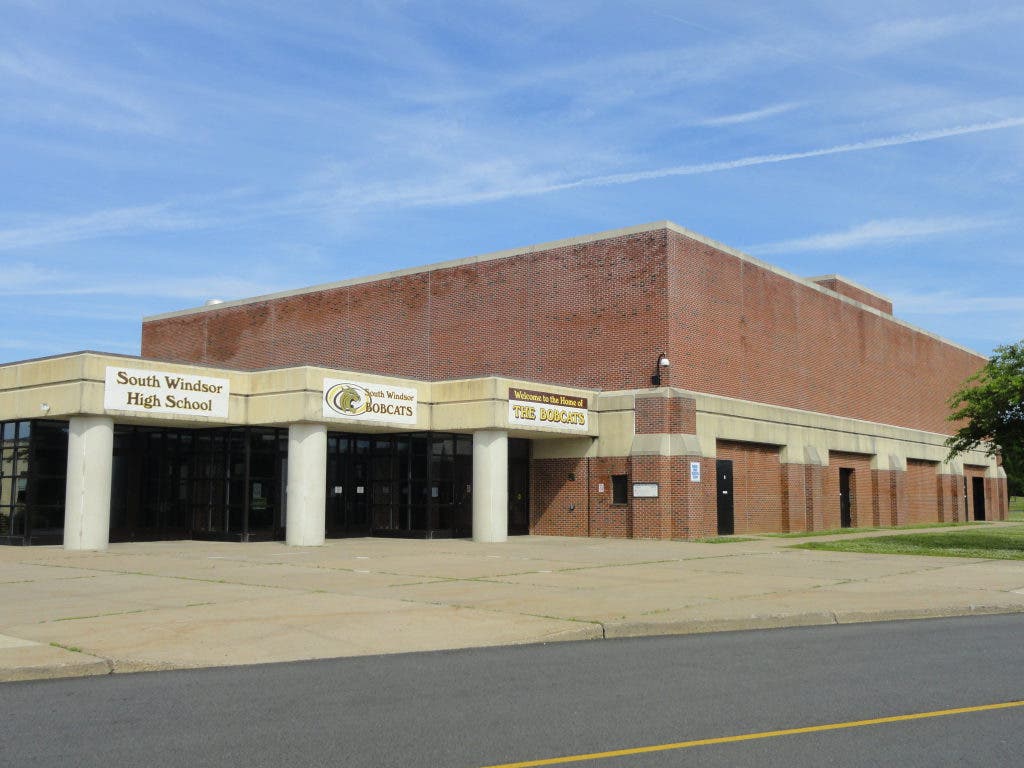
The proposed installation of a $220,000 generator at the high school, included in the five capital improvement referendum questions on the November ballot, has raised many eyebrows.
Indeed, it was just 10 years ago when a $2.1 million fuel cell - the cost of which was picked up by grant from grant money - was installed at the high school with great fanfare and promises of clean energy, cost savings and educational opportunities.
But a decade later, with the town facing the prospect of investing a half a million dollars to restack the fuel cell, the overall results of the alternative form of energy have been mixed, according to town officials.
Town Manager Matt Galligan said in an interview Friday that replacing the fuel cell with a generator is a “business decision,” meaning that it will cost the town some $280,000 less to replace the fuel cell with a generator than it would to restack it. What’s more, the fuel cell would need to be restacked every five to seven years, where a generator can, depending on how long it is run, last for up to 15 years.
The fuel cell also only provided power to half the high school, which served as an emergency shelter during the aftermath of the late October snowstorm last year, where the generator would provide the school with full power, Galligan said.
Furthermore, the town never realized the full cost savings that the fuel cell onced promised. Originally, the fuel cell was supposed to save the town about $130,000 per year in energy costs, Galligan said.
But due to maintenance and, for lack of a better term, surcharges from CL&P that were based on powering the fuel cell back up once it was taken offline once or twice a year, the town saved more along the lines of $40,000 to $65,000 a year, according to the schools’ Director of Facility Operations Patrick Hankard.
In addition, the town never followed through with selling power back to the grid, as originally planned, because of the rules and regulations that had to be followed, Galligan said.
“It was a very expensive legal thing to go through,” Galligan said.
The end result is the fuel cell became more burdensome on South Windsor taxpayers than it was worth.
“We did find during the snowstorm that it can only power the foyer, gymnasium and cafeteria,” Town Councilor Cary Prague said. “People who went to the high school were not allowed to use their hair dryers. We would have to spend $500,000 every 6 years [to restack it] and it doesn’t save $500,000 during those 6 years. … It’s a hopeless technology.”
Prague, who was an outspoken critic of the fuel cell when it first was proposed 10 years ago, said that nearly all forms of alternative energy are costing taxpayers billions of dollars each year.
Still, officials stopped short of calling the fuel cell a failure.
“It was highly reliable,” Galligan said. The only time the fuel cell had operating issues was several years ago when the gas company mixed propane into its product - the fuel cell ran on natural gas - and the fuel lines had to be cleaned.
Galligan also praised the clean energy that the fuel cell generated.
“It’s a great alternative use for energy,” Galligan said.
But, like the Betamax versus VHS debate that took place in the early 1980s, fuel cells don’t appear to be winning out to solar, wind and hydro-power on the alternative energy front.
“Nobody has embraced [the fuel cell] technology,” Galligan said. “I don’t know why. They’re used in Japan and Europe. I know it costs more, but we have to think about having a clean environment.”
What’s more, Galligan, Hankard and Prague all universally praised the educational component that went along with the fuel cell. A course offered at the high school taught the science of the fuel cell as well as alternative forms of energy to students.
“From an educational standpoint, thanks to our curriculum specialist, it was worth it,” Prague said. “If you make a mistake and fail, it’s worthwhile. We turned the opportunity into a learning experience and taught students about fuel cells and alternative energy and the science behind fuel cells. ... From that standpoint it was positive.”
Yet from an economic standpoint, Prague said that the fuel cell is just one more example of alternative forms of energy that aren’t profitable.
Galligan said that if costs were kept down, he wouldn’t hesitate to revisit fuel cell technology.
“I like that it’s clean energy,” said Galligan, noting that moving to a generator wasn’t “what we really want to do, but it’s economics. … It just comes down to costs.”
Get more local news delivered straight to your inbox. Sign up for free Patch newsletters and alerts.