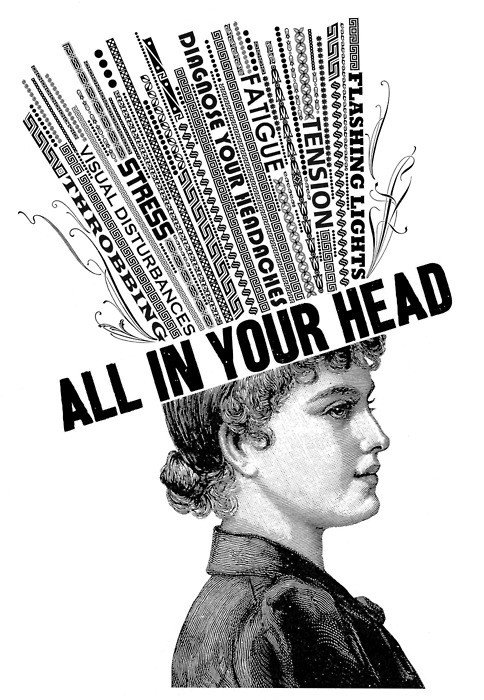
I recall a patient last year who came to me with chronic muscle spasms. Two decades ago, she had been diagnosed with Ehrlichiosis - a tick-borne infection similar to Lyme disease, with a similar geographic distribution. For years, she had gone from doctor to doctor seeking a diagnosis that would provide some insight into the cause of her chronic fatigue, muscle aches and pain, and digestive disturbances. Because she tested negative for known diseases that cause these kinds of symptoms, she was told that there was no biological basis for her symptoms and, therefore, that they must be "all in her [sic] head."
Until she was finally diagnosed (as the first confirmed case in Connecticut), my patient suffered from depression, self-doubt, and severely limited quality of life. As the weeks and months went by, she became more and more debilitated. What a relief it was, then, to finally find a doctor who took her symptoms seriously and kept testing until he discovered the source of her problems! After a long course of intravenous antibiotic and some physical therapy, my patient was able to get on with her life and establish a new career as a fitness trainer.
Like all severe illnesses, however, Erlichiosis had left scars. My patient's muscles were weak and prone to spasms, and she was plagued by frequent colds and flu. More importantly, there were emotional scars that left her unable to listen to her own body and trust her own instincts. She seldom sought help unless her symptoms were severe. In other words, she had earned not to take herself seriously. She was still prone to bouts of low self-esteem and feelings of helplessness. All this not because of a virus, but because doctors had trivialized her experience by telling her it was just her imagination.
Most people know that the mind and body really aren't separate entities. Stress causes illness and illness causes stress. Any active person who has had their lives restricted for a short or long term by pain or illness knows that there can be feelings of frustration, helplessness, depression or worse associated with physical illness. And it's true that the worse you feel mentally, the more severe your physical symptoms can get.
Maybe this is why so many people now seek out "alternative" medicine - acupuncture, naturopathic, physical massage, herbalism, and so forth. Those of us who are trained to look at the mind and body not as separate entities, but as an integrated whole, tend to have a different view of our patients. We tend to listen harder and more sympathetically, because each patient's story of illness contains clues about how to bring about wellness. We tend to involve our patients more in their own care - not as a matter of "compliance" with some medical prescription, but in order to craft a lifestyle that promotes optimum health and empower people to do more for themselves. We tend to provide approaches that strengthen patient's own natural healing and resilience, rather than "attacking" problems with medications and procedures that come with their own set of risks.
Perhaps most of all, the "alternative" medicine practitioner's chief diagnostic tool is the patient. We believe what you tell us about your illness, your pain, your limitations - and we help you create a new narrative of wellness and autonomy that is uniquely your own.