Politics & Government
$1 Million In Settlement Funds To Restore Great Meadows Marsh
Among the $1 million are funds from the Lordship Point and Raymark Industries Superfund sites.


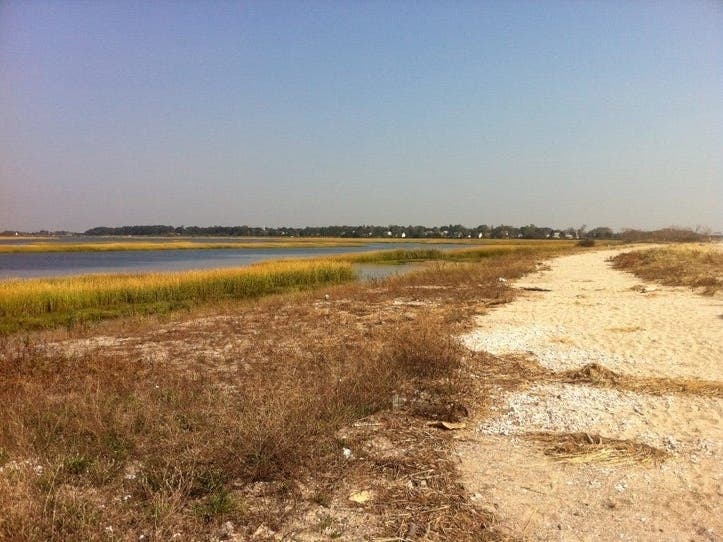
Via the U.S. Fish and Wildlife Service: STRATFORD, CT — State and federal environmental officials will direct natural resource restoration funds from the Lordship Point and Raymark Industries Superfund sites in Stratford to restore Connecticut’s largest salt marsh in the Great Meadows Marsh Unit of Stewart B. McKinney National Wildlife Refuge.
The projects will improve water quality and habitat for fish, shellfish and waterfowl, as well as rare species including the saltmarsh sparrow, diamondback terrapin and marsh pink. Additionally, restoring the natural function and stability of the marsh will help it adapt to rising sea levels.
The projects are outlined in a final restoration plan and environmental assessment released Thursday by the natural resource trustees, comprising the Connecticut Department of Energy and Environmental Protection, U.S. Fish and Wildlife Service, and National Oceanic and Atmospheric Administration. The trustees consulted with town officials and local conservation and natural resource organizations to identify projects that would restore natural resources affected by contamination from the two sites. A draft plan was released for public comment in October 2018.
Find out what's happening in Stratfordfor free with the latest updates from Patch.
Much of the marsh at the Great Meadows Marsh Unit no longer functions properly due to historic placement of dredged soils and filling of wetlands in the 1950s. Various techniques moving soil and fill, removing invasive plants, and taking out manmade structures will return the marsh to a more natural state.
The Remington Gun Club operated a skeet shooting range at Lordship Point from the 1920s to 1986. Lead shot from the range contaminated the site and the adjacent saltmarshes and shallow water areas. Raymark Industries Inc. manufactured automotive parts from 1919 to 1989 on property along the Housatonic River estuary. Manufacturing wastes included PCBs, asbestos, lead, copper and volatile organic compounds.
Find out what's happening in Stratfordfor free with the latest updates from Patch.
The ultimate goal of the natural resource damage assessment and restoration process is to replace, restore, rehabilitate or acquire the equivalent of injured natural resources and resource services lost due to the release of hazardous substances — at no cost to the taxpayer. The trustees received approximately $750,000 in legal settlements from the parties responsible for the two superfund sites. An additional $300,000 was secured from a settlement between the trustees and General Electric for natural resource damages to the Housatonic River.
“The Great Meadows Marsh Unit contains the largest block of unditched saltmarsh remaining in the State of Connecticut. It also is home to the only identified population of Marsh Pink in the state. We look forward to working with the Service and NOAA to implement the planned restoration projects,” stated Rick Jacobson, chief of the Bureau of Natural Resources for the Connecticut Department of Energy and Environmental Protection.
The Stewart B. McKinney National Wildlife Refuge is administered as part of the Silvio O. Conte National Fish and Wildlife Refuge Complex. Andrew French, wildlife refuge manager of Silvio O. Conte, echoed Jacobson's enthusiasm at working with the other two agencies.
“In addition to improving habitat for Marsh Pink, we plan to improve tidal saltmarsh habitat for the saltmarsh sparrow, a species of special concern for both the state and the Service. Scientists estimate the songbird’s population has dropped 70 percent in the last 15 years, making it at risk of needing federal protection,” French stated.
NOAA has been the lead trustee in this effort since 2005 and will lead the restoration project. Pat Montanio, director of NOAA’s Office of Habitat Conservation, added that the restored marsh will be more than mud and grass.
“Healthy marsh habitat at Great Meadows supports fish important to the ecosystem and economy, and improves coastal resilience against storms and sea level rise. We’re proud to work with our partners on this and many other efforts restoring habitat after pollution events,” Montanio stated.
A hardcopy of the Final RP/EA is available at the Stewart B. McKinney National Wildlife Refuge headquarters in Westbrook. An electronic version of the document is available at: https://bit.ly/2MqA69e.
Get more local news delivered straight to your inbox. Sign up for free Patch newsletters and alerts.