Health & Fitness
Seeking Significance: the Individual Psychology of Dr. Alfred Adler
A series of 72 articles on the life, psychological concepts, and therapy methods of Dr. Alfred Adler. You know his ideas...you just don't know his name!
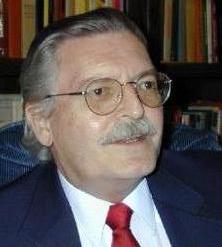


I'm Bob Herrmann-Keeling, Ph.D., the only practitioner of Adlerian psychology and psychotherapy in Connecticut. I live in Higganum. I am offering you 72 brief articles on the life and contributions to psychology of Dr. Alfred Adler.
While Adler's name may not be familiar, his ideas and counseling methods most certainly are! Inferiority complex, superiority striving, family constellation, birth order, psychology of use, sibling rivalry, life style, reverse psycholodgy, compensation and over-compensations, private logic, mistaken thinking, goal orientation, the Iron Law of Communal Life, social embeddedness, belonging, and much more. And there are the counseling modalities he created: group therapy, family therapy, marriage counseling, parent-child counseling, and parenting education.
Today I offer a series of 72 articles on Dr. Alfred Adler, one of the great psychological pioneers of our time. If you wish to comment, (bobhk@aol.com) I’ll include selected responses here. This blog is about Adler...not Freud or Jung or others. Contents: 9 articles on Adler's life; 50 major Adlerian concepts; 12 counseling methods.
Find out what's happening in The Haddams-Killingworthfor free with the latest updates from Patch.
Alfred Adler was born in 1870. At age 4, he was sick with pneumonia and the doctor gave him up. The parents brought in another doctor who treated him, and in a few days he was well again: “From then on I recall thinking of myself in the future as a physician. I had set a goal for my life from which I could expect to end my childhood fear of death, and chose the occupation of physician to overcome death and the fear of death.” (We’ll see later how this becomes the Fictional Final Goal, or “mistaken mission” in life.)
Adler’s mother pampered him until a brother was born. Adler said he “felt dethroned, and turned to my father, whose favorite I was.” His father’s advice was “never to take anything for granted, but find out everything for yourself.” This motto became basic to him as a scientific researcher.
Find out what's happening in The Haddams-Killingworthfor free with the latest updates from Patch.
Schooling in Austria in the 1880s was by rote memorization. Students were drilled in Latin, Greek, German language, literature, history, geography, mathematics, physics, and religion. The main method was to point out mistakes; there was no encouragement. Adler entered a year behind his classmates, and felt a need to catch up from his inferior position and become superior among his classmates.
Adler’s parents wanted a son to enter a profession, so in 1888, Adler entered the Faculty of Medicine at the University of Vienna, to become a physician. He fulfilled
two years of military obligation, completed his three qualifying exams in 1894,
and received his medical degree in 1895. He returned for several years of
postgraduate training in psychiatry.
In 1897 he met Raissa Epstein, a Russian studying at the university in Vienna. Adler as exhilarated by her intelligence, idealism, and determination to change the world. They married the next year.
In 1898, Adler published Health Book for the Tailoring Trade, in which he pioneered a psychological approach to problems in the work-place. He introduced ideas that would later appear in his Individual Psychology. From the book, Austria passed laws to change social factors and working conditions in this home-based industry.
In 1899 Adler opened a private practice in neurology and psychiatry. He
and Raissa setting up their home in an apartment in the same building. They had four children: Valentine “Val”) (1898), Alexandra (1901), Kurt (1905), and Nelly (1909). Adler joined a Protestant church to encourage his children to read the Bible “for its psychological wisdom and insights into human nature.”
Next time: Freud asks Adler for help.