Politics & Government
Area Representatives Pass Legislation to Help Combat Opioid Epidemic
State representatives from Tolland were among those voting in favor of bi-partisan legislation aimed at reducing addictions.


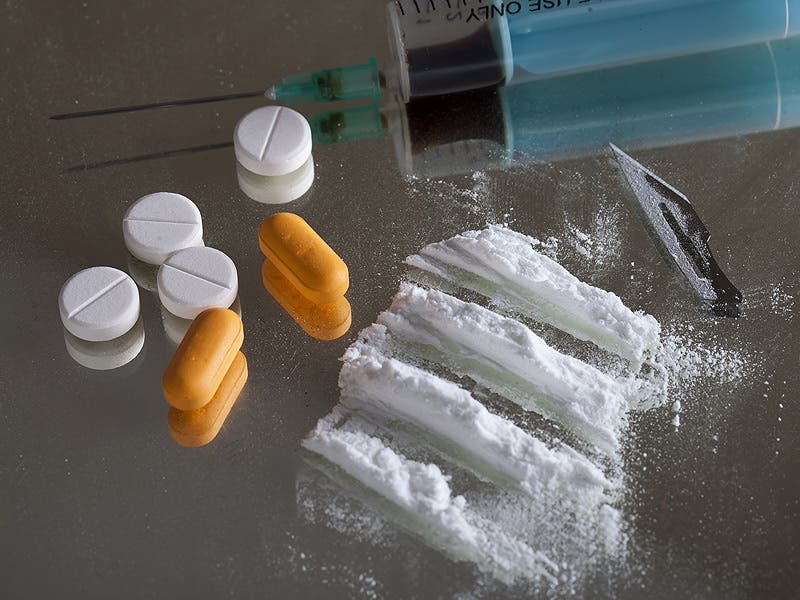
HARTFORD, CT - In an effort to combat the growing opioid epidemic, State Representatives Christopher Davis (R-57), Tim Ackert (R-8), Sam Belsito (R-53), and Bill Aman (R-14) voted in favor of bi-partisan legislation aimed at reducing addictions to opioid medications and heroin, according to a written statement from the Connecticut General Assembly.
“Nearly everyone in our state knows of someone who has suffered a loss due to an overdose from heroin and other opioids,” said Davis, who represents East Windsor and Ellington. “Usually a person gets addicted to medication prescribed to them to help alleviate pain or steals a friend's or family member's excess medication. Today’s legislation will help reduce the possibility of someone abusing opioid medication, in hopes of helping prevent the heroin and opioid tragedies that occur too often across our region.”
“We are starting to address the opioid epidemic, but more work still needs to be done to prevent another family from having to bury a loved one, “added Ackert, whose district includes Vernon and Tolland. “I will continue to advocate for policies that help eliminate this growing crisis.”
Find out what's happening in Tollandfor free with the latest updates from Patch.
“This piece of legislation will help prevent opioid abuse and help save lives from this disease. Yet, we need to make sure people who are in jail for selling this deadly narcotic serve out their time,” said Belsito, whose district includes Tolland. “Moving forward we need to put in place heavy penalties on those who sell opioid medication or heroin illegally.”
“Over-supplying someone opioids leads to an excess supply sitting around the house, and this could create a potential problem down the road if these dangerous drugs get into the wrong person’s hands,” said Aman, who represents South Windsor. "Limiting opioid prescriptions is a common-sense solution to help end this growing epidemic.”
Find out what's happening in Tollandfor free with the latest updates from Patch.
The legislation that was approved yesterday, House Bill 5053, An Act Increasing Access to Overdose Reversal Drugs, will help address the opioid epidemic running rampant through the state by:
- Requiring municipalities to update their existing emergency medical services plans to ensure that the emergency responder likely to the first person on the scene of an emergency call is equipped with and prepared to administer the overdose reversal drug naloxone and has been appropriately trained to do so
- Closing a gap in current liability language related to a licensed healthcare professional who administers an opioid antagonist
- Prohibiting commercial health carriers from requiring prior authorization for coverage of naloxone
- Requiring the Alcohol and Drug Policy Council's state plan to include, by January 1, 2017, a goal of reducing the number of opioid-induced deaths in the state
In addition, the bill limits the prescribing of opioid drugs by:
- Prohibiting, for adult patients, an initial prescription of opioid drugs for longer than seven days
- Prohibiting, for minor patients, any prescriptions of opioid drugs for longer than seven days and requiring the prescriber to discuss the risks associated with the drug with the patient and, if present, the custodial parent, guardian, or other person having legal custody of the patient
- Allowing, for both adult and minor patients, a prescriber to give more than a seven-day supply of opioid drugs if, in the prescriber's professional medical judgement, the acute or chronic pain condition requires it and requires the prescriber to note such condition in the medical record
- Making several changes to the state's electronic prescription monitoring program to help facilitate prescriber and pharmacist compliance
Last year, 723 people died as a result of a drug overdose which is double the amount from 2012. Of this amount, 415 were related to heroin, which represents a 27 percent increase from 2014.
The bill now moves to the State Senate for final legislative approval.
Get more local news delivered straight to your inbox. Sign up for free Patch newsletters and alerts.