Politics & Government
Conversations Between State, Fed Officials About Tolland's Crumbling Foundations 'Far From Over,' Legislators Say
A federal agency recently turned down the governor's request to put up a field office.



HARTFORD, CT — Two Legislators on Wednesday said conversations about crumbling home foundations in the eastern portion of Connecticut are far from over between state and federal entities, despite a reluctance of one major agency to set up a field office in the area.
"Oh ... this is just the tip," 8th District state Rep. Timothy Ackert said of an iceberg of concrete problems that stretches from the Connecticut River right through about a third of the state.
"We're just getting started," added state Sen. Tony Guglielmo, whose 35th District has been hit broadside by the epidemic of bad concrete foundations.
Find out what's happening in Tollandfor free with the latest updates from Patch.
The legislators' comments come on the heels of the Federal Emergency Management Agency's rejection of an appeal by Gov. Dennel P. Malloy to set up a field office in the area to monitor the situation. Guglielmo and the governor are both steadfast in their belief that the concrete situation is a natural disaster.
Malloy estimates more than 30,000 homes are affected, although Ackert said the number might be "a bit high."
Find out what's happening in Tollandfor free with the latest updates from Patch.
"It's a slow moving hurricane that has made landfall here," Guglielmo said.
U.S. Rep. Joe Courtney, a Vernon resident, has been pressuring federal agencies to make relief money available. See his reasoning here.
See FEMA's response to Malloy here.
A FEMA representative said that, although the chemical reaction that caused the crumbling is natural, pouring foundations is man-made and does not "constitute" a catastrophe.
Cracks have been located in many homes throughout eastern Connecticut and the problem has been traced to a bad batch poured by the J.J. Mottes Company in the 1980s or 1990s, state officials said. A state investigation concluded that a natural mineral called pyrrhotite caused the cracking. See details of the report here.
The state Department of Consumer Protection has a Web page designed to assist those affected.
"It's not something that any company did wrong," Ackert said. "It was a mineral that, when exposed to materials like water, expanded and the concrete started cracking."
Guglielmo said that constitutes a natural disaster. The Canadian government intervened with aid about 10 years ago for a similar problem, he said.
"FEMA helped pay for things to be taken care of after the Boston Marathon bombing and that certainly was not a natural disaster," he said. "And we think this is a natural disaster. It's too big for Connecticut to handle by itself."
Ackert said a coalition will be formed among area legislators like Christopher Davis (57th House District), Kelly Luxenberg (12th House District), Kurt Vail (52nd House District), Gregg Haddad (54th House District), Mae Flexer ( 29th Senate District) and Sam Belsito (53rd House District) to work with municipal advocacy agencies to formulate a deeper strategy.
"This will be discussed in session," Ackert said. "This is going to have a lasting impact on the value of real estate."
Added Guglielmo, "It is a FEMA situation because people are going to be displaced when these homes are repaired. FEMA has the resources like trailers that can be used to house people while homes are being worked on. The federal government also has the disaster money and this is a disaster. We have to figure out a plan to help people pay for this."
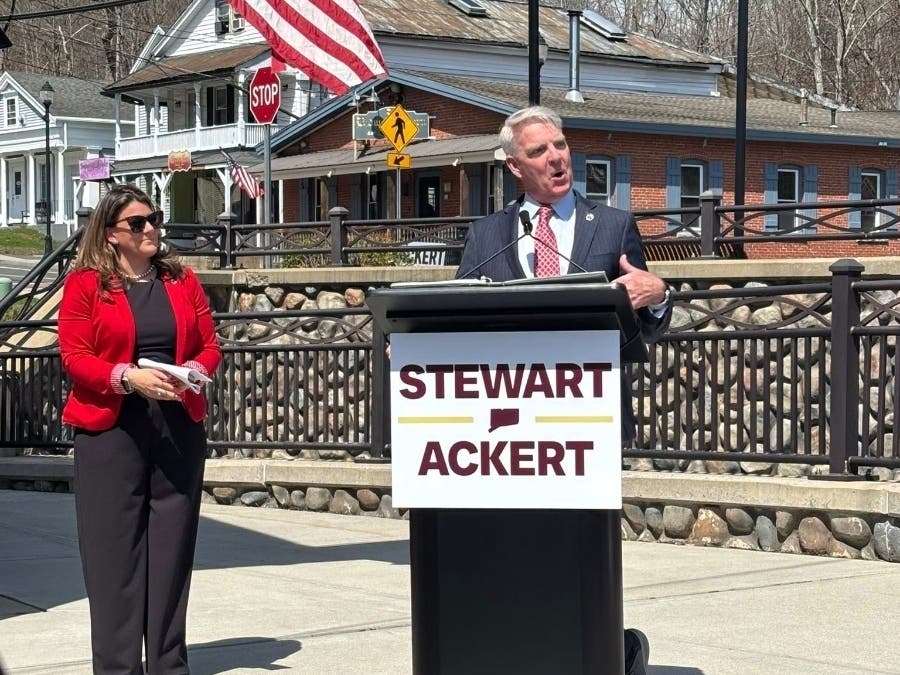
Patch file photo
Get more local news delivered straight to your inbox. Sign up for free Patch newsletters and alerts.