Politics & Government
State Report Released to Tolland, Area Residents on Crumbling Foundations: 'Expansive Materials' Blamed
The report was released by the state attorney general's office on Friday.


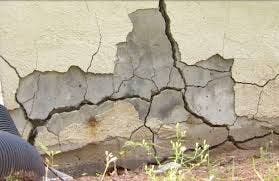
HARTFORD, CT — The presence of pyrrhotite and "expansive and thus deleterious secondary minerals" in a batch of concrete traced back 20 and 30 years is the primary cause of an epidemic of crumbling home foundations in eastern Connecitut, according to the final report from the state's expert.
The state attorney general's office released the report on Friday.
Cracks have been located in many homes throughout eastern Connecticut and the problem has been traced to a bad batch poured by the J.J. Mottes Company in the 1980s or 1990s, state officials said.
Find out what's happening in Tollandfor free with the latest updates from Patch.
On Aug. 6, 2015, the AG and the consumer protection commissioner were asked by Gov. Dannel P. Malloy to investigate whether Connecticut's consumer protection laws were violated in connection with the construction of homes in eastern Connecticut experiencing deterioration of their concrete foundations.
The final report is divided into seven chapters.
Find out what's happening in Tollandfor free with the latest updates from Patch.
The first chapter is an introduction to the research project, its objectives and research approach. Chapter 2 provides background information such as deterioration of concrete derived from sulfate attack and secondary mineral formation,
Chapter 3 presents detailed onsite survey results of candidate houses.
Chapter 4 provides information regarding the compressive strength investigation.
Chapters 5 and 6 cover mineralogical assessment of the quarry aggregate, aggregate from the crushed
core samples and mineral formations at the vicinity of cracking surface.
Chapter 7 presents the microstructural investigation of deteriorated concrete. Chapter eight summarizes the principal findings and conclusions.
Cylinder cores with a diameter of 3 inches and a minimum length of 6 inches were drilled out of foundations for testing, officials said.
The conclusion is, "Pyrrhotite in the aggregate oxidizes at the presence of water and oxidant (oxygen or ferric ions) which lead to the formation of expansive secondary mineral product such as ferrihydrite and the release of sulfate. The released sulfate promotes the reaction with aluminum containing phases in the cement (tricalcium aluminate (3CaO∙Al2O3)) and results in the formation of expansive and thus deleterious secondary minerals such as ettringite.
"Furthermore, at the presence of carbon, either from the calcite in aggregate or from CO2 from
environment, another deleterious mineral thaumasite can be formed. Both of these secondary
minerals are expansive and might ultimately lead to the premature deterioration of the concrete
foundation investigated in this research.
"The hypothesis is validated by the chemical, mineralogical and microstructural investigation on the pyrrhotite-bearing aggregate, sulfate containing whitish deposits found at the vicinity of the cracking surface along with the spatial association of secondary minerals with microcracks in the cement matrix."
The state Department of Consumer Protection has a Web page designed to assist those affected.
Photo Credit: Patch File
Get more local news delivered straight to your inbox. Sign up for free Patch newsletters and alerts.