Politics & Government
Malloy Weighs In On Veto-Proof CT Budget Passed By House, Senate
The budget would include a mix of tax/fee hikes along with spending cuts to balance CT's $3.5 billion budget gap.



HARTFORD, CT — The State Senate passed a truly-bipartisan budget overnight that includes both tax hikes and spending cuts, which were needed to plug a $3.5 billion budget deficit. The House followed in suit with a vote of 126 to 23, which means the legislature has the numbers to overrule a veto from Gov. Dannel Malloy.
Both Democrats and Republicans compromised on some of their respective issues to come up with the solution.
Malloy's communications director Kelly Donnelly said that the governor's office has already uncovered major problems with the bill.
Find out what's happening in Trumbullfor free with the latest updates from Patch.
"Unfortunately, our review has already uncovered egregious problems relating to the hospital tax that could put the state budget out of balance by over a billion dollars," Donnelly said. "Staff will continue to analyze the bill, weighing its merits and faults, so that the Governor can arrive at an informed and carefully considered decision regarding his support.”
Donnelly said the document was only made available a few minutes before it was called to the floor and is over 900 pages long. It will take the governor's office some time to analyze it.
Find out what's happening in Trumbullfor free with the latest updates from Patch.
The vote roll call was 33 to 3 in the Senate with Democrat Gary Winfield and Republicans Len Suzio and Joe Markley voting against it.
The budget includes a mix of tax increases, spending cuts and reforms to balance the remaining $3.5 billion budget hole. Around $1.5 billion of the budget gap was effectively closed with a union concession agreement.
Effectively there are tax and fee increases of $150 million in the first fiscal year and $201 million in the second, according to the CT Mirror. That doesn’t include a large tax increase to hospitals that will be offset by federal Medicaid reimbursements. Overall the budget is $41.3 billion over two years, which makes the tax and fee increases a relatively minor part of the budget solution.
The Legislature had proposed eliminating the car tax in fiscal 2018-19, but that was scrapped as part of budget negotiations.
The state has gone 117 days without a budget and has made it the only state in the country without a passed budget. Republicans with the help of a handful of Democrats passed a budget, but it was vetoed by Gov. Dannel Malloy.
Among some of the highlights:
Municipalities:
- Averts deep municipal cuts in the governor’s executive order.
- Establishes a new Education Cost Sharing formula. Wealthier towns with shrinking enrollment will see small aid decreases while poorer towns with growing population will see gradual increases over time.
- Doesn’t shift teacher pension costs to cities and towns.
- Allows greater collaboration between towns and school boards to save through efficiencies.
Taxes/Fees:
- Car tax cap is 39 mills in year one and 45 mills in year two. The state will reimburse the difference to municipalities whose mill rates exceed the caps.
- Eliminates tax on social security income and pension income for single filers with an AGI below $75,000 and joint filers below $100,000.
- A $10 additional fee on vehicle registration that would allow free entrance to all state parks with a Connecticut license plate.
- 45-cents per pack increase on cigarettes.
- 25-cent fee on ride sharing services.
- Tax on daily fantasy sports betting.
Hartford Bankruptcy
- A total of $40 million in aid for Hartford so the city can avoid bankruptcy. An oversight board will be established and require the city to reduce expenses.
Savings/Reforms
- Enforceable spending cap, and bonding cap of $1.9 billion.
- Overtime savings of 10 percent and a hiring freeze on non-24-hour non-union positions.
- UConn and UConn Health will see a $134 million reduction in funding.
The budget would establish a special fund to assist homeowners in the eastern part of the state with crumbling foundations.
“After months of negotiations, Democrats and Republicans have worked together to produce a truly bipartisan budget that invests in our economy, maintains strong levels of education funding and protects local property taxpayers while rejecting damaging cuts to higher education and scholarship programs,” said Senate President Pro Tempore Martin M. Looney (D-New Haven).
Senate Republican President Pro Tempore said it took the combined efforts of Democrats and Republicans to reach a compromise that would prevent devastating cuts to towns, cities, schools and core social services.
“Passing a bipartisan budget that contains significant structural reforms sends an important message that we are taking the first vital step to begin strengthening our state, restoring our fiscal health, and promoting economic growth,” Fasano said. “This budget accomplishes reforms our state has not been able to achieve for decades.”
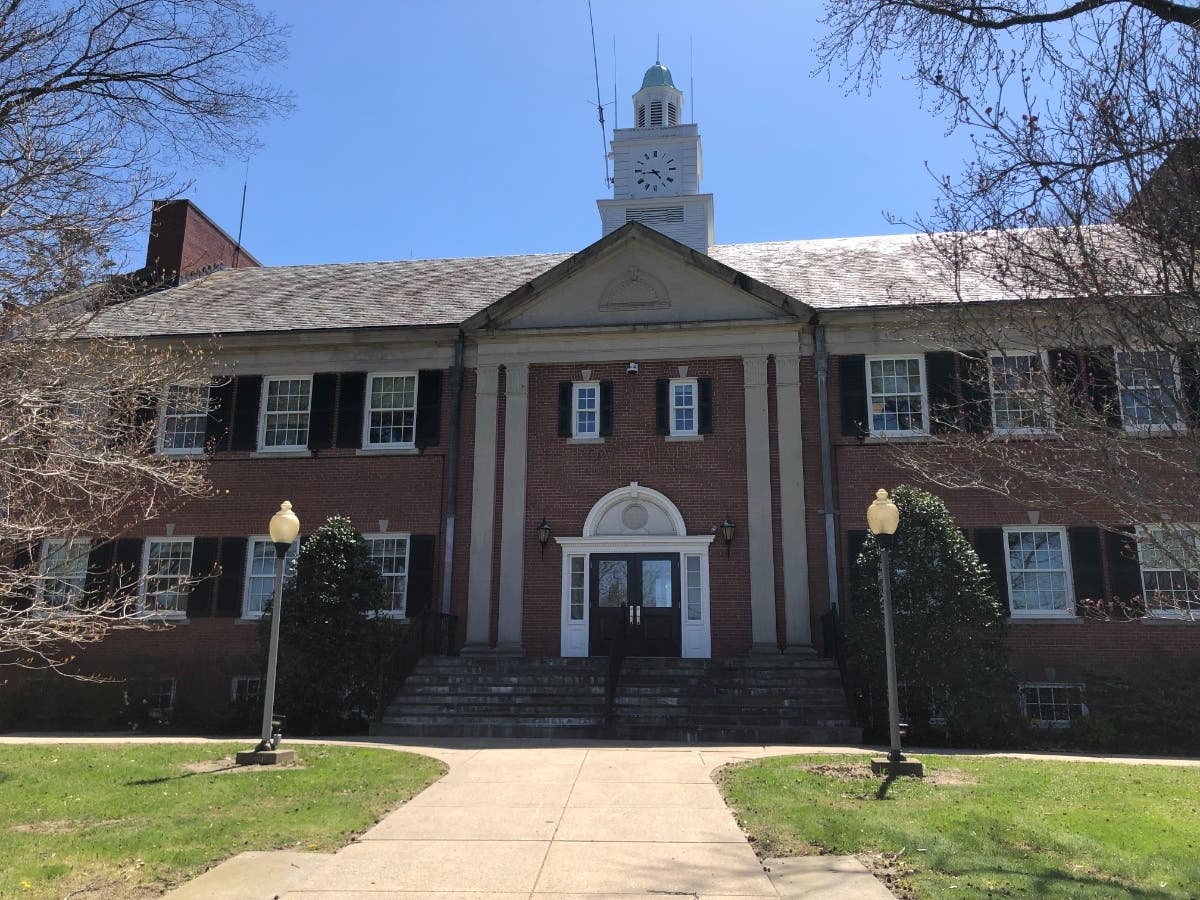
Image via Bob Child/AP
Get more local news delivered straight to your inbox. Sign up for free Patch newsletters and alerts.