Politics & Government
Governor: $5 Million in State Funds Set Aside for Foundation Testing in Eastern Connecticut
The funds need to first be approved by the State Bond Commission.


HARTFORD, CT – Governor Dannel P. Malloy on Monday announced that he intends to allocate $5 million in state funding to assist homeowners battling the crumbling foundation epidemic.
The funding will be used to provide testing and visual inspections of foundations in order to "better understand the extent of the problem while also assisting property owners with the costs related to testing," Malloy said.
The allocation will be placed on the agenda of an upcoming meeting of the State Bond Commission, "as part of the state’s ongoing efforts to assist homeowners in northeastern Connecticut facing concerns due to the possible existence of a mineral that could cause the foundations of their homes to deteriorate," Malloy said.
Find out what's happening in Vernonfor free with the latest updates from Patch.
The Connecticut Department of Housing is also planning to allocate an additional $1 million in federal block grant funding to further assist low and moderate-income homeowners and help offset testing costs, the governor said.
“It is vital that local, state, and federal government – along with private sector partners – work together to both understand the scope of this problem, and to help those whose homes are affected,” Malloy said. “Providing financial assistance for the testing of foundations in these communities is a logical first step. It will help us better inform our federal partners about the scope of this situation and garner their support for additional aide. Today’s announcement does not represent the totality of the state’s assistance for affected homeowners – we will remain at the table with homeowners and other partners as work continues.”
Find out what's happening in Vernonfor free with the latest updates from Patch.
Lt. Gov. Nancy Wyman lives right snack in the middle of it all in Tolland.
“This funding provides direct support to homeowners to help them – and us – get answers about these foundations failures,” Wyman said. “Even as we seek resources for those homeowners whose homes are impacted by the pyrrhotite-caused condition, we are still trying to get a handle on the number of homes that could need remediation. This is a difficult time for the region and the families whose most valuable asset is at risk. We are committed to doing everything we can to help.”
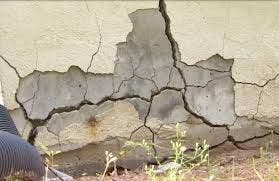
Malloy pointed to hundreds of of homes in the region that have cracked foundations because a batch of concrete in 1980s and 1990s construction containing pyrrhotite a mineral that reacts to oxygen and water.
Pyrrhotite is an iron sulfide mineral, and its exposure to oxygen and water leads to a chemical reaction that results in deterioration of home foundations, Malloy said.
The presence of pyrrhotite indicates the potential for concrete deterioration, but its existence alone does not necessarily cause it, he said. For homes with existing deterioration, the existence of pyrrhotite can – in some circumstances – be determined by visual inspection alone, chiefly because this kind of deterioration forms a unique cracking pattern, he said.
Under the program the Governor announced Monday, homeowners will be eligible for a 50 percent reimbursement – up to $2,000 – for the testing of two core samples within their homes.
Homeowners who have visual testing conducted by a licensed professional engineer will be eligible for a 100 percent reimbursement – up to $400.
The program will provide testing for applicants with homes built since 1983 and that are within a 20-mile radius of the J.J. Mottes Concrete Company in Stafford Springs, the concrete supplier.
Malloy said his office will be working with the Capitol Region Council of Governments CRCOG to administer the funding and provide reimbursement to homeowners who have their foundations tested. CRCOG will provide quarterly reports on testing results to the Department of Consumer Protection and the Attorney General’s Office. Additional information for homeowners interested in the program will be announced in the coming weeks, he said.
“CRCOG is very encouraged that new resources for concrete testing will be available to homeowners who are struggling with this issue,” CRCOG Executive Director Lyle Wray said.
The DOH will make block grant funding available later in the year and, while the program will be open to all applicants it will prioritize assistance for low and moderate-income homeowners who are affected by the problem, Malloy said.
U.S. Rep Joe Courtney hailed the move.
“I am pleased that today Gov. Malloy has announced promising new steps that the State of Connecticut is taking to address the increasingly urgent problem of crumbling home foundations in north central Connecticut,” said Courtney. “As my office determined last August, federal assistance is available immediately through the Department of Housing and Urban Devolvement Small Cities CDBG and HOME block grant programs, and I’m glad that the Governor indicated today that these funding sources will be used. Nothing could fall more squarely within the mission of CDBG to promote community development than stopping this threat to northcentral Connecticut’s housing market. I encourage the General Assembly to support these efforts and continue to investigate the potential use of additional money that is available through HUD. This is a good first step, but much more work will need to be done in order to get a handle on the urgent issue of crumbling foundation which is threatening local families, our communities and the region’s economy.”
In August, Courtney’s office received confirmation from the federal Department of Housing and Urban Development (HUD) that federal housing funds could be used to address crumbling foundations. Since that time, he has encouraged state officials and local leaders to pursue this funding as one part of a larger effort to respond to this urgent issue.
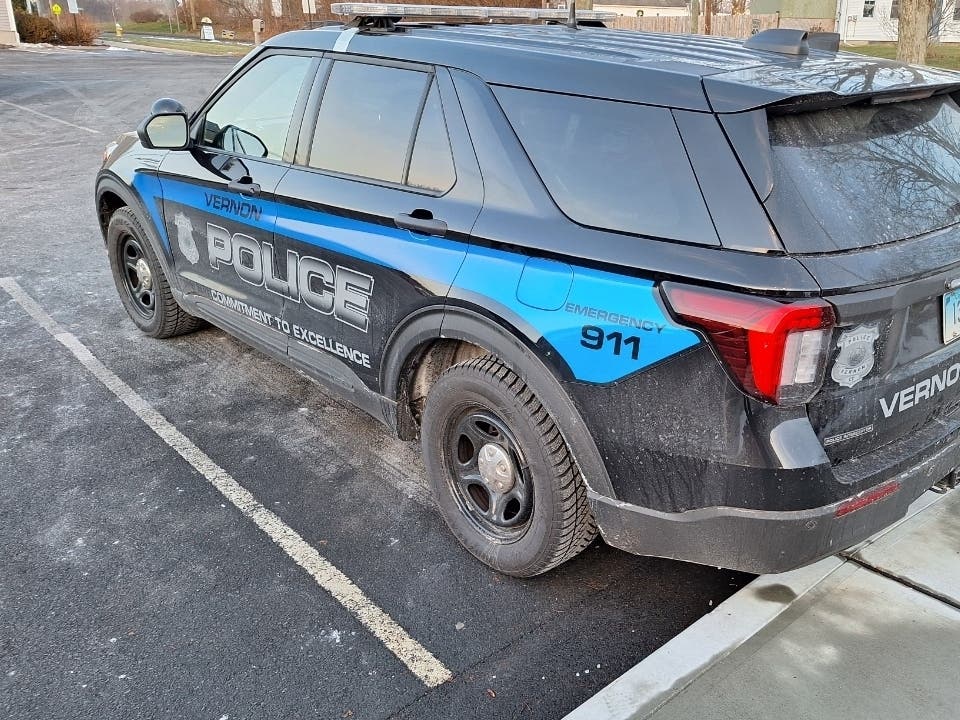
Patch file photo
Get more local news delivered straight to your inbox. Sign up for free Patch newsletters and alerts.