Community Corner
Smoke — And The Smell — From Western Fires Drift Into Vernon
Smoke and a smokey odor were prevalent in Vernon Monday, a product of western wildfires.


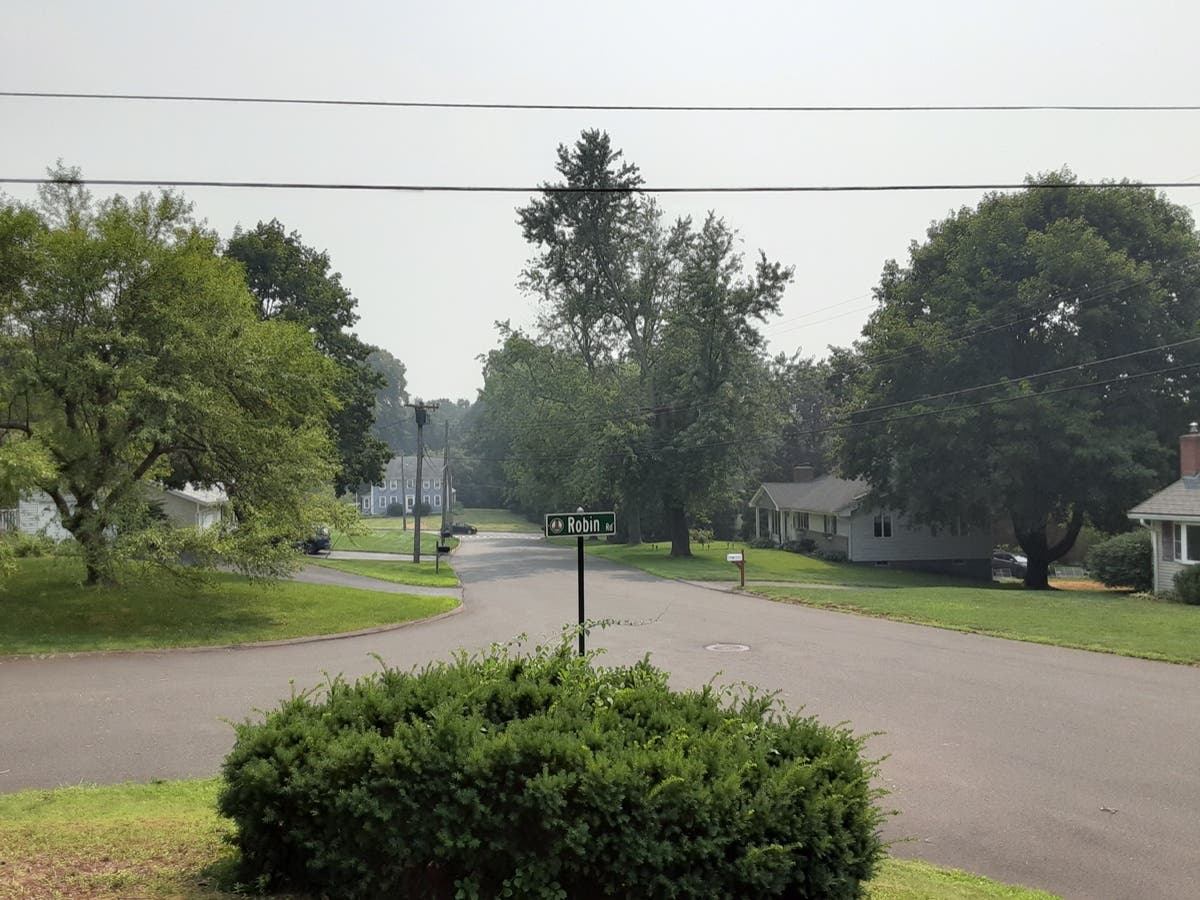
VERNON, CT — Smoke — and the smell of it — from wildfires in the western United States and Canada have reached Vernon and the town was covered in a thick haze Monday.
"I just walked outside the office and I thought Rockville was on fire," Vernon Town Administrator Michael Purcaro said at about 3 p.m. Monday. "I'm serious ... I thought I had missed a call and our emergency system wasn't working."
The smell of smoke was prevalent from Talcottville to Vernon Center to Rockville to Lafayette Monday.
Find out what's happening in Vernonfor free with the latest updates from Patch.
Purcaro investigated the matter and, sure enough, was told by local fire officials and regional weather authorities that the smoke was indeed from the West.
According to the Idaho-based National Interagency Fire Center, wildfires currently active in 13 western states — more than 80 in all — have burned nearly 1.3 million acres in recent weeks. There are others in western Canada, according to the statistics.
Find out what's happening in Vernonfor free with the latest updates from Patch.
The jet stream and other air currents have carried smoke and ash thousands of miles, according to the report.
Purcaro said dispatchers at the Vernon Police department have fielded calls from the weekend into Monday.
"I really thought the haze was from a large structure fire," Purcaro said.
The haze and smell could linger for several more days with unhealthy air quality for sensitive groups across the state, according to the Connecticut Department of Energy and Environmental Protection.
The DEEP said people with heart or lung disease, older adults, children and teens can take some steps to reduce exposure:
- Avoid strenuous outdoor activities.
- Keep outdoor activities short.
- Consider moving physical activities indoors or rescheduling them.
Other groups can take the following steps to reduce exposure:
- Choose less strenuous activities (like walking instead of running).
- Shorten the amount of time for outdoor activities.
Here is the word from the national Weather Service:
[Air Quality Alert - 300 PM Update] CT DEEP has also issued an Air Quality Action Day for Northern Connecticut (including Litchfield County) until 11 PM. This is from particulate matter from smoke associated with the western US wildfires. A look at the updated hazard map below: pic.twitter.com/7RndOTSz2p
— NWS Boston (@NWSBoston) July 26, 2021
[4:30pm] The smoky conditions are being picked up by the visible satellite across New England #wildfiresmoke pic.twitter.com/llooiis4qw
— NWS Boston (@NWSBoston) July 26, 2021
Get more local news delivered straight to your inbox. Sign up for free Patch newsletters and alerts.