When visitors walk into WPAA‑TV and Community Media Center, many instinctively look for the familiar digital sign‑in tablet on the foyer table. It’s gone now—replaced with a journal inviting people to leave comments about the space and the art within it. The reactions have been… revealing.
A regular who has visited monthly for nearly two years walked in, glanced at one of the paintings, and blurted out:
“One of those paintings shouts at me, ‘You are a Honkie!’”
The person entering right behind him responded gently:
“I suggest you look closer.”
Another frequent guest, a participant in a weekly show, stared at a the upstairs panels in the green room and said,
“This artist hates people like me.”
The curator replied,
“If you see hate, take a closer look. The actual historic picture is just below the painting.”
Find out what's happening in Wallingfordfor free with the latest updates from Patch.
These moments are not unusual. Most visitors don’t leave comments at all—perhaps because the takeaways feel too personal, too revealing. Art has a way of doing that. It doesn’t just hang on the wall; it reflects back what we bring to it.
Across Connecticut and the nation, galleries and museums are engaging in projects that highlight stories—stories that reveal history, identity, and the values we hold today. The approaches differ, but each offers a window into our shared past and our present choices.
Find out what's happening in Wallingfordfor free with the latest updates from Patch.
At WPAA‑TV, this work aligns with our ongoing mission:
To provide a brave, safe, creative space for a diversity of expression within our community and beyond.
We invite people to discover what they didn’t know they needed. Through digital media tools, the studioW stage, and community storytelling, we help people inform, connect, and build community—through ideas, opinions, stories, news, information, and performance.
Art, culture, and storytelling are not separate here. They are integrated.
In addition to hosting the #socialactionart gallery, WPAA‑TV is home to TeenTigerTV, a youth media program where young people learn to create, reflect, and speak with purpose. Several opportunities are built into the experience, all tied together by a common thread: uplifting youth voices.
As part of USA250, the Place Yourself in History initiative is undergoing a video remake. And now, In This Place—an extension of the foyer journal—is being launched to deepen reflection and dialogue.
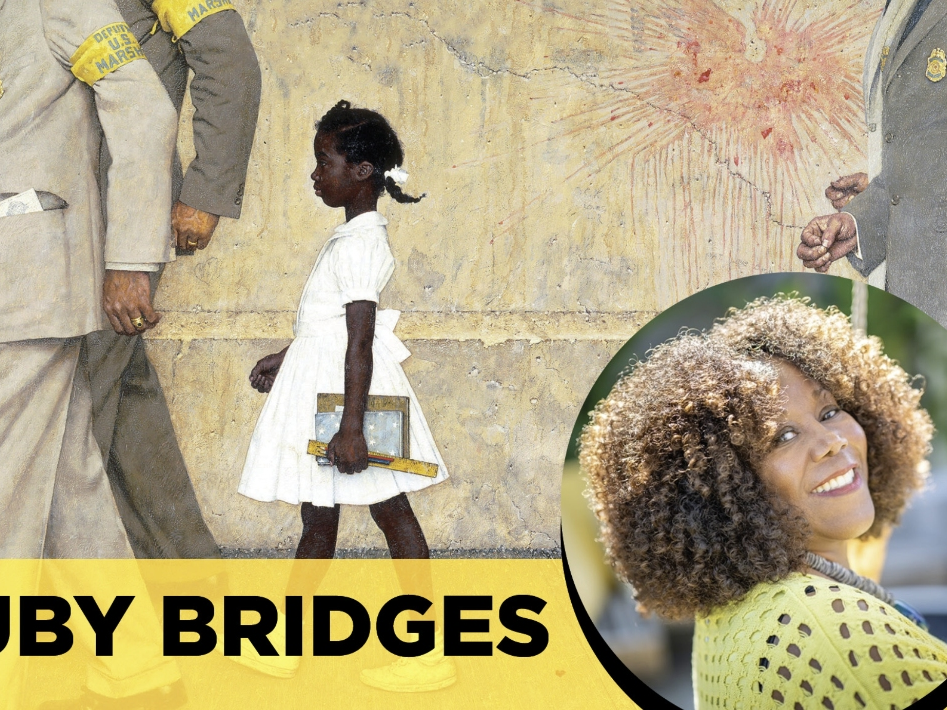
One of the first contributions comes from TeenTigerTV participant Muhammad Khan, who chose to reflect on a painting from Iyaba Ibo Mandingo’s series We Are Not Like You. His writing demonstrates what happens when someone truly looks again.
In This Place: Reflection by M. Khan
My Thoughts on the six-year-old Ruby Bridges Painting
By Muhammad Khan
Here are my thoughts on one of the six panels in the series “We Are Not Like You” by Iyaba Ibo Mandingo (Nelson ‘Carty’ Ford Memorial Art Gallery inside WPAA-TV and Community Media Center).
This review is on the six-year-old Ruby Bridges painting. This painting depicts a girl of six walking to school being escorted by U.S. marshals with the roles reversed of her being white while the majority that holds power are colored. Ruby Bridges was born on September 8, 1954, to Abon and Lucille Bridges. On November 14, 1960, she became the first African American child to attend an all-white school in the South in New Orleans making her a household name. Though she had a distressing experience in school because of racist remarks and her family being targeted, she never missed a day of school.
To me, what's being shown here in the painting is prejudice. A girl trying to attain knowledge is rejected racially, just because of the color of her skin. Her being escorted out and into school while the majority of the colored people are telling and protesting for her to go back from where she came from, shows me a sense of bravery she is showing and putting up. It takes a lot of courage to do what she is doing, going against what the majority thinks is right. She still appears vulnerable, walking into a space where she is clearly unwanted. The way the painting depicts the blacks in charge instead of the whites, shows whichever color you are doesn't really matter, the ones that have more of a hierarchy decide how the others are treated. The exaggerated expressions and the bold color choice of the artist highlights the anger and hostility in the crowd. The way it shows offensive language in the signs, reflects on the history of segregation and discrimination against certain groups being treated unfairly and excluded. I feel like the artist makes you confront the reality of how deeply rooted discrimination was. The crowd larger and louder puts more of a word out there to keep people like her out and on what should be happening. Despite the numbers against the girl, she becomes the main focal point, seemingly outshining the hatred with her courage. By placing her at the center of the chaos, the painting makes me confront the injustice of a society that tried to deny children equal access to education just because of their race. The girl's forward movement shows progress, even when progress felt impossible. Her presence shows a statement for those who can do something, but are just afraid to make a change. However small it is, her doing that sets an example of what can be done. The painting doesn’t just show a moment in history; it shows an emotional truth behind that moment of what happened in the past. The painting made me feel uncomfortable, like somehow the artist wanted me to feel that feeling, to make all the people looking at that painting feel it. It shows the reality that ordinary people once believed that segregation was justified. It really puts your mind in a perspective that you didn’t know existed, the perspective of the people of that time, it makes you think of how humanity has grown since before and now. Overall the artwork I see is not just a historical reminder of what happened but also a moral one. It asks us to reflect on how prejudice shapes communities, how courage can disrupt injustice and how important one small change can make even if it feels impossible. By making me see the cruelty of discrimination and the bravery of those who resisted it, the painting becomes more than just a picture, it teaches you a lesson on what people had to go through.
Historic Context: The Real Ruby Bridges Moment
The painting Muhammad describes is rooted in a real event that shaped the Civil Rights era.
On November 14, 1960, six‑year‑old Ruby Bridges became the first African American child to integrate an all‑white elementary school in the South. She walked into William Frantz Elementary School in New Orleans flanked by four U.S. marshals because of violent threats and crowds of white adults shouting slurs, carrying signs, and demanding she be turned away.
Her teacher, Barbara Henry, taught her alone for the entire year because white parents pulled their children from the classroom. Ruby’s family faced retaliation—her father lost his job, and her grandparents were evicted from the farm where they worked.
And yet, as Muhammad notes, “she never missed a day of school.”
Iyaba Ibo Mandingo’s decision to reverse the racial roles in his painting is intentional. It forces viewers to confront the mechanics of power, not just the optics of race. It asks:
Would you recognize injustice if the faces were different?
Would you feel differently if the roles were reversed?
This inversion echoes Muhammad’s insight that hierarchy—not skin tone—determines who is protected and who is targeted.
Look Again
Art can provoke discomfort. It can challenge assumptions. It can make us see what we didn’t want to see—or what we didn’t know we were carrying.
But when we look again, with context and curiosity, something shifts.
We begin to understand not just the artwork, but ourselves.
WPAA‑TV remains committed to being a brave, safe, creative space where that kind of reflection can happen—through art, through youth voices, through community storytelling, and through the courage to look again.
Open, No Need to Knock
WPAA‑TV is open most days from 11 am into early evening at 28 S Orchard St. If you need an excellent excuse to stop in, WPAA-TV is a collection location for Masters Manna and Bikers Against Animal Cruelty.
TeenTigerTV drop in is Monday 6 to 8:30 PM. More details here.