Schools
Community Assets Network is Recruiting New Members
The Easton, Redding and Region 9 schools are seeking community members to help kids discover their passion about the real world of work.

From Joel Barlow PS: What do you want to be when you grow up? Everyone grapples with that question. In a time of monumental change, the Easton, Redding and Region 9 schools are seeking community members to help kids discover their passion about the real world of work. “A community should be raising its children in a way that positions them not just for financial success but for happiness and well being in life,” Dr. Thomas McMorran, school superintendent, said during a recent interview. Now more than ever, community members are needed to help kids navigate what their future lives and careers will be like. One thing is certain: They won’t be anything like those in the past.”
Dr. McMorran and Dr. Gina Pin, Joel Barlow High School head of school, invite Easton and Redding to become part of the dynamic and rapidly growing Community Assets Network (CAN). Not only can they help students explore the challenging world of work and learn about careers they might never have dreamed of, but they can also meet their neighbors in the process. For a small investment of time and caring, residents can provide a whole lot of value to local kids and to themselves.
The network, comprised of community members (assets) representing a variety of fields, currently numbers 120 local residents. The assets have agreed to serve as mentors and guest speakers for the ER9 schools. Local residents with expertise in any career area, volunteer or professional, are urged to join the network. Dr. McMorran explained CAN’s important role in educating Easton and Redding kids. “What is an asset? Assets are identified contributors to some desired good. We tend to think of assets as financial or substantive in some way, but a community’s greatest assets are its people. “What is a network? A network is a group of people who are collaborating and interchanging information and support in order to achieve a common good,” he said. “A Community Assets Network should be a large group of people within a community who are sharing skills and abilities for the advantage of our kids.”
Find out what's happening in Weston-Redding-Eastonfor free with the latest updates from Patch.
Dr. McMorran questioned what happened to the notion of apprenticeship and informal ways of mentoring kids that used to be done by community members who felt a shared obligation to raise their children. The economy of the future is going to be built on interpersonal relationships, knowledge and the ability to solve social interaction problems, he said. “Some skills will be technical, such as how to clean the air or reverse the warming of the earth. But most will be centered around how to live together in an economy where more manufacturing, food growth and other enterprises that used to require a lot of hands are going to be automated,” Dr. McMorran said. The simple answer to how to prepare for an uncertain future is to help students acquire the practical skills and experiences required for the world of work, Dr. McMorran said. “Fortunately we have been working on this for some time. We know how to help kids learn about their interests and opportunities through exploration programs such as Naviance, and through our developmental counseling program.”
Beyond that, CAN can help kids when their own true compass points in a direction they want to explore, according to Dr. McMorran. “For instance if they’re interested in aviation, a local aviator can tell them what that career entails. If they’re interested in veterinary science, they can work with a local veterinarian and learn to care for animals.” He went on, “If they’re interested in water conservation, they can visit a local water treatment plant. Rather than learning from a textbook, they can visit Putnam Memorial State Park and experience history through re-enactors: cooks, potters, surgeons, musicians, soldiers and others who demonstrate and discuss many facets of life during colonial times.” Dr. Pin provided an example of the ways CAN is already helping to connect classroom learning and real life. “A Barlow physics teacher was looking to make book learning come to life,” Dr. Pin said. “We invited a military pilot, who is a member of CAN, to come to the class. He spoke of the physics of stopping a plane. Having students make a connection to real life through speakers in the schools is another element of the network.”
Find out what's happening in Weston-Redding-Eastonfor free with the latest updates from Patch.
Dr. Pin said that CAN is bringing people together and connecting them with other community members so they can be assets for each other as well as for the schools. CAN will also take students out of the schools to work with professionals collaboratively on something important.
Palooza coming May 23
Dr. Pin cited the upcoming Barlow Palooza, a festival of student learning offered to the Easton and Redding communities May 23 from 5:30 to 8 p.m. at Joel Barlow High School, as an example of how to bring the community and community assets into the schools. Palooza showcases Passages projects and AP science research, as well as many other demonstrations of student work, including art shows, music and theatre presentations, and a mock emergency medical crisis, Dr. Pin said.
Passages provides seniors an opportunity to explore a Capstone project in an area of interest outside the traditional classroom, whereas Advanced Placement science students conduct research they may have presented at area and state science fairs. Palooza is the opportunity to show the community what students have accomplished in a variety of areas. Community assets will be invited to a pre-event reception, and will serve as outside assessors for the Passages presentations. The goal is for future Passages students to connect with CAN professionals who can serve as mentors for their projects.
“Whether you’re a parent or a non-parent resident of Easton or Redding, chances are your particular skill set is of value to one or more like-minded students,” Dr. McMorran said. Every time we set up a career fair or program, volunteers tell us the satisfaction
they feel is a reward even greater than the benefit to the child.” Lynn Zaffino, Easton Public Library director, reinforces that message. “I am honored to serve as a member of the Community Assets Network Task Force,” she said. “I believe the mission of the Community Assets Network ties in very well with the library’s mission, by providing career-related educational opportunities and resources to students. I am excited to see the students expand their knowledge and experiences, while forming valuable contacts with members of the community.”
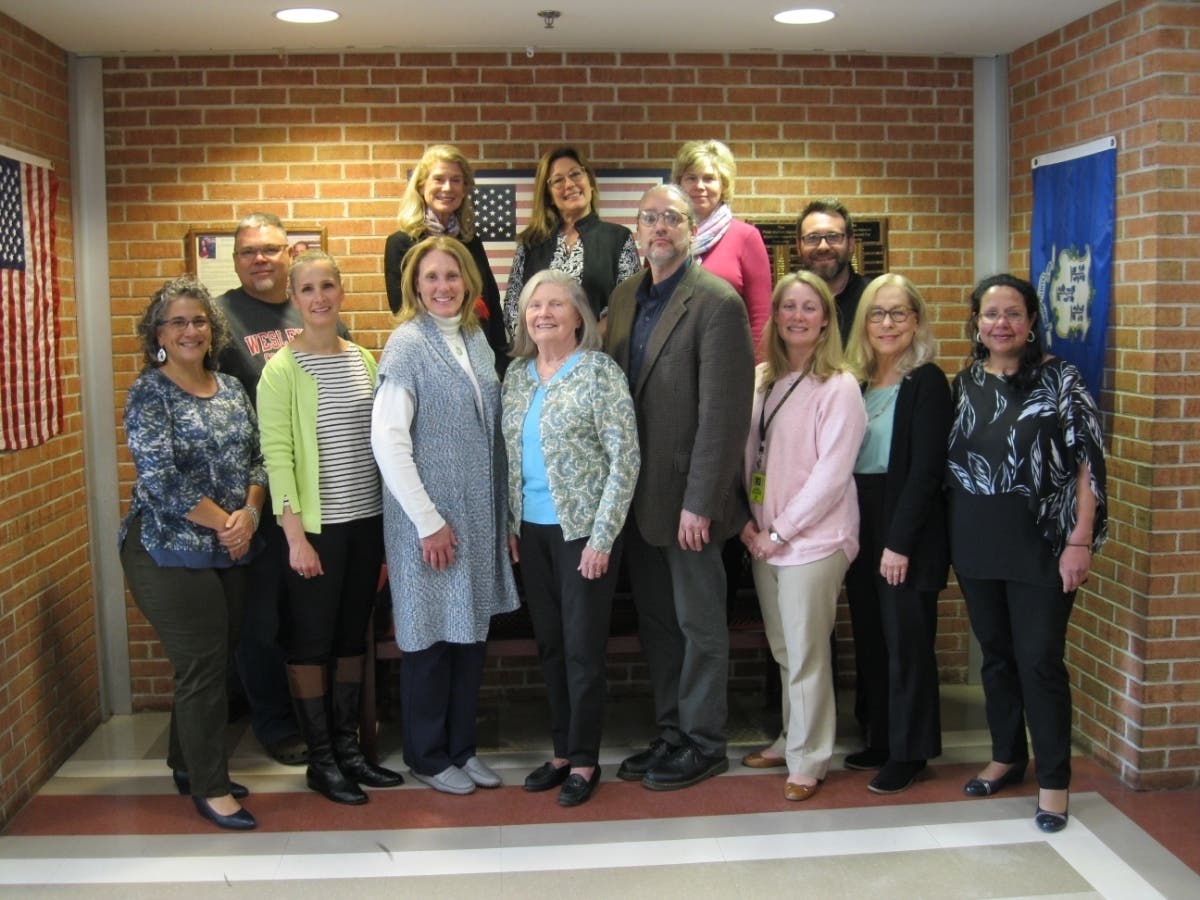
The CAN Task Force, led by Anne Kipp, a retired school administrator, includes school staff and community volunteers. Members are Chris Angell, Lisa Campeau-Fenzel, Dr. James Castonguay, Nancy Doniger, Pamela Gupta, Christine Halloran, Tim Huminski, Susan Kaplan, Julie McTague, Dr. Gina Pin, Rosemary Riber, Alice Smith, Darlene Wallin, Jen Wastrom and Lynn Zaffino.
The task force plans to hold an informational forum in the fall for current and potential new members. To find out more about CAN and become an asset, visit the Joel Barlow High School Page, www.joelbarlowps.org, and search under Community.