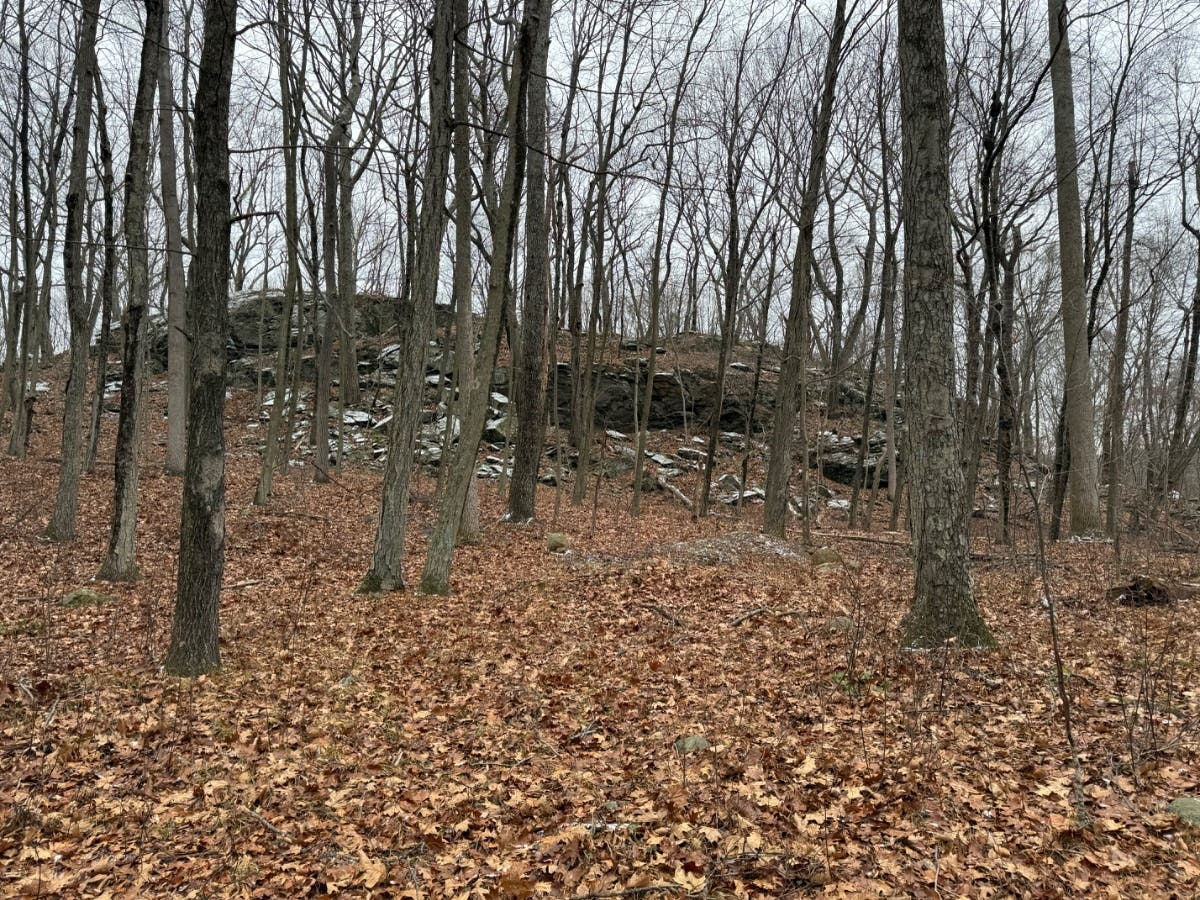
For decades, the Saddle Ridge property has been the subject of repeated development proposals and sustained community concern. From Buckey Stone's original subdivision plans to the current cluster housing application now before Easton's Planning and Zoning Commission, the site has never been without controversy. That is because Saddle Ridge is not simply an undeveloped parcel. It is a place layered with environmental sensitivity, archaeological significance, and cultural history that warrants careful public attention.
At recent Planning and Zoning hearings, my testimony addressed the cultural sensitivity of the Saddle Ridge site. Archaeological resources are nonrenewable. Once disturbed, they are lost permanently. Under the current proposal, areas identified as sensitive would undergo mechanical topsoil stripping, with an archaeologist permitted to monitor construction. While monitoring is preferable to no protection at all, it is far from ideal. Mechanical stripping can destroy artifacts and their context before meaningful documentation can occur, undermining the very purpose of archaeological review.
In addition to subsurface archaeological deposits, the property contains sensitive rock shelter outcroppings that are part of the region's prehistoric landscape. Rock shelters are not incidental stone features; they often hold evidence of seasonal habitation, toolmaking, and ceremonial or subsistence activities dating back thousands of years. The blasting proposed to accommodate roads, foundations, and utilities would permanently alter and destroy these formations. Their loss would represent not only physical alteration of the terrain but the erasure of irreplaceable archaeological and landscape context.
Find out what's happening in Weston-Redding-Eastonfor free with the latest updates from Patch.
The current development proposal calls for 26 lots arranged in a cluster configuration. At the hearing, the developer's engineer testified that this layout represents the most environmentally sound design for the property. That statement now sits in the public record. However, it appears to conflict with statements made at a meeting with abutting neighbors last May, when residents offered to purchase one or more lots in order to reduce density and increase buffers between new construction and existing homes. At that meeting, the developer responded that building fewer houses would make the project financially unviable.
It is also worth noting that the current application relies on Easton's relatively new Conservation Cluster Housing Regulation, a tool that has never been applied at this scale elsewhere in town. At the most recent Planning and Zoning hearing, Commission member Alison Sternberg observed that the density and reduced lot sizes proposed for Saddle Ridge do not appear consistent with the original conservation-focused intent of the Cluster Housing Regulation adopted in 2019. It leaves residents wondering how the Commission, when composing and enacting the regulation, did not anticipate that its provisions could produce unintended and potentially negative consequences at this scale. There is little local precedent for managing the long-term impacts such developments may pose. Of particular concern are issues of watershed protection, the cumulative effects of multiple septic systems and private wells in a sensitive upland environment, and the future stewardship of wetlands, stormwater systems, and access roads. Under the current plan, these concerns would ultimately fall to the Town of Easton. These are not abstract considerations; they represent ongoing financial, environmental, and management responsibilities that extend far beyond the approval of a single application and warrant careful scrutiny before such a model is expanded.
Find out what's happening in Weston-Redding-Eastonfor free with the latest updates from Patch.
Important and reasonable questions have yet to be answered. Is the proposed configuration truly the least impactful option for the land, or does it represent the minimum density required to maintain the project's financial viability? This is not a question of intent, but of outcome, and it is one the community deserves to examine openly.
Further complicating the proposal is the developer's recent effort to call into question the designation of one of Easton's scenic roads in order to modify access to the development. Scenic road status is not symbolic. It reflects long standing community values around landscape preservation, rural character, and historic continuity. Altering such a designation to accommodate a single project has implications well beyond Saddle Ridge.
My involvement in these discussions reflects a long-standing position advocating for conservation in Easton as a reservoir town and for exemptions from one size fits all housing mandates that fail to account for environmental constraints, watershed protection, and historic landscapes. These issues have been explored in my reporting for the Easton Courier, particularly as Connecticut grapples with housing policy that often overlooks the diversity of the state's geography and infrastructure.
In that context, I was encouraged by Selectman Nick D'Addario's recent opinion piece suggesting that Connecticut must find alternatives to imposing uniform housing quotas on communities with vastly different environmental conditions. A more nuanced, place-based approach would better serve both housing goals and conservation priorities, and his willingness to raise that conversation publicly deserves community support.
It is also important to acknowledge that public participation in the Saddle Ridge hearings has been limited. Extreme cold winter weather and a lack of sustained news coverage have likely contributed to lower attendance. That does not diminish the importance of the decisions or reflect a lack of interest by the community. In fact, it makes engagement all the more critical.
The choices made today will shape Easton's future and set precedents for what our town values and protects. Residents who have concerns about archaeological loss, development density, watershed and wetland or scenic road protections should attend this week's P&Z hearing, Tuesday, March 3rd at 7 pm. https://us02web.zoom.us/j/88224619716pwd=qZtBueSFBprTNnemhH091h8aSjxQej.1
If you cannot attend in person or by zoom, consider submitting comments and reach out to our local officials. Those who support conservation focused solutions and thoughtful reform should contact Selectman Nick D'Addario and express support for his efforts at the state level.
The question facing Easton is not simply how much development is permissible, but how much is responsible. Conservation is not opposition to progress. It is an acknowledgment that some places, once altered, cannot be restored. Saddle Ridge is one of those places, and it deserves the long view.