Business & Tech
The Value of Innovation
Crisis meant opportunity for the Gilbert and Bennett mill in Georgetown.
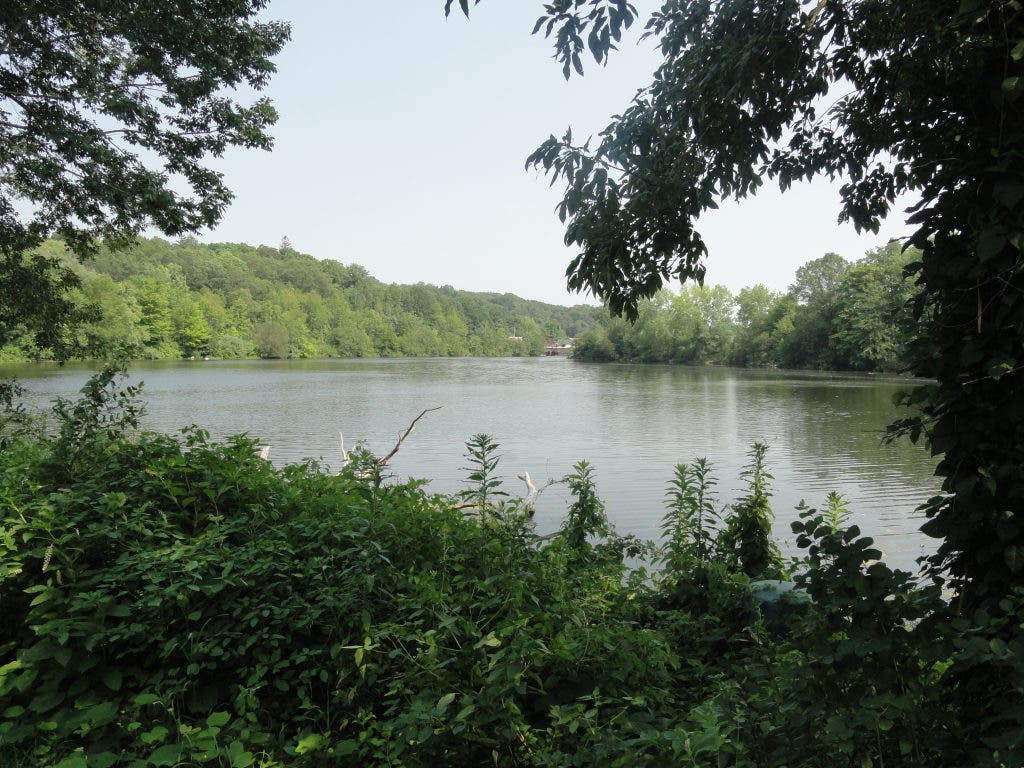


The Gilbert and Bennett Manufacturing Company site in Georgetown, famous of late for local attempts at revitalization, was home to an innovative company that exemplified the 19th century ideal of the utopian one-company community.
Several years following the Revolutionary War, Weston’s own David Coley, a metal worker, moved to Georgetown from Kettle Creek and purchased a site on the Norwalk River, where he built an iron mill and shop. After many successful years, Coley closed the business and the site was vacant; subsequently, a comb factory was constructed, which also operated successfully for many years.
In 1834, Gilbert & Bennett Co. bought the site and built what was known for many years as the Old Red Mill. The mill’s operations were powered by a water wheel, and the primary function of the business was to hand-weave animal hair, usually horsehair, and use the result for sieves. Among the sieve workers were Edmund, John and William Hurlbutt, a well-known local family.
Find out what's happening in Weston-Redding-Eastonfor free with the latest updates from Patch.
No one was satisfied with the horsehair sieves and the company began to search for a way to improve the technology. Using a carpet loom to weave fine wire into cloth proved successful, and a new business was born.
Among the uses of the new wire cloth was the window screen, an instant success, especially as cheesecloth was used to keep insects outside prior to its development.
Find out what's happening in Weston-Redding-Eastonfor free with the latest updates from Patch.
In 1836, the company built new, sturdier looms and put them on the third floor of the Red Mill. The business began a rapid expansion, hiring many workers, and Gilbert brothers Edwin and William along with Edmund Hurlbutt drove through the country selling the product.
Eventually, the company’s side businesses fell away and Gilbert and Bennett elected to focus on the wire weaving business; the Old Red Mill was burned down, and a new mill was built in 1863. Among the new mill’s capabilities was the manufacture of fine wire, which meant that the company no longer had to purchase its supplies. The new mill featured a machine that wove poultry wire, which was the first of its kind in the United States.
The new mill accidentally burned to the ground in 1874, along with several adjacent buildings. With no means to fight the fire, stunned Georgetown residents were forced to stand and watch the buildings turn to ashes. The damages, according to the Norwalk River Watershed Association, totaled $200,000, of which $40,000 was covered by insurance.
Despite the devastation, Gilbert and Bennett persevered, and sound decision making in the wake of the disaster forged the way to even greater future success. A new factory was built on the site using state-of-the-art equipment. The building, located at 20 North Main Street, is still standing today.
Gilbert and Bennett convinced the Danbury and Norwalk Railroad to build a branch into Georgetown near the new building, which allowed the company to send and receive materials in a more consistent and timely fashion.
It also permitted the use of steam power. Coal, transported by rail, allowed the company to operate consistently without having to depend on the conditions of the Norwalk River.
The business’s success enabled its continued expansion and resulted in the recruitment and hire of many Swedish immigrants; several homes nearby were built for the purpose of housing Gilbert and Bennett’s workers, who were offered low-interest mortgages by the company, and many remain standing today.
Schools and churches were constructed to satisfy the residents, including the , located at 49 New Street. The interior featured a mural depicting Benjamin Gilbert and his wife when the hair weaving business began.
As the company continued into the 20th century, its operations gradually began to shift away from Georgetown so the company could better focus on its nationwide market. In 1981, the warehouses were moved to Georgia, and by 1986 less than 10 percent of the company’s workforce remained in Georgetown.
Since then, the site's deteriorated, and have stalled.
To see numerous historical photos and read more about the site's past, click here. For even more detailed information, click here.
The information in this article was researched using several sources, but the most helpful were LivingPlaces.com and the Norwalk River Watershed Association.