Community Corner
'Having A Baby Means Losing A Paycheck' For Pregnant Police Officer Forced On Unpaid Leave: ACLU
A pregnant Connecticut police officer was forced to go on unpaid leave and a complaint has been filed, the ACLU says.


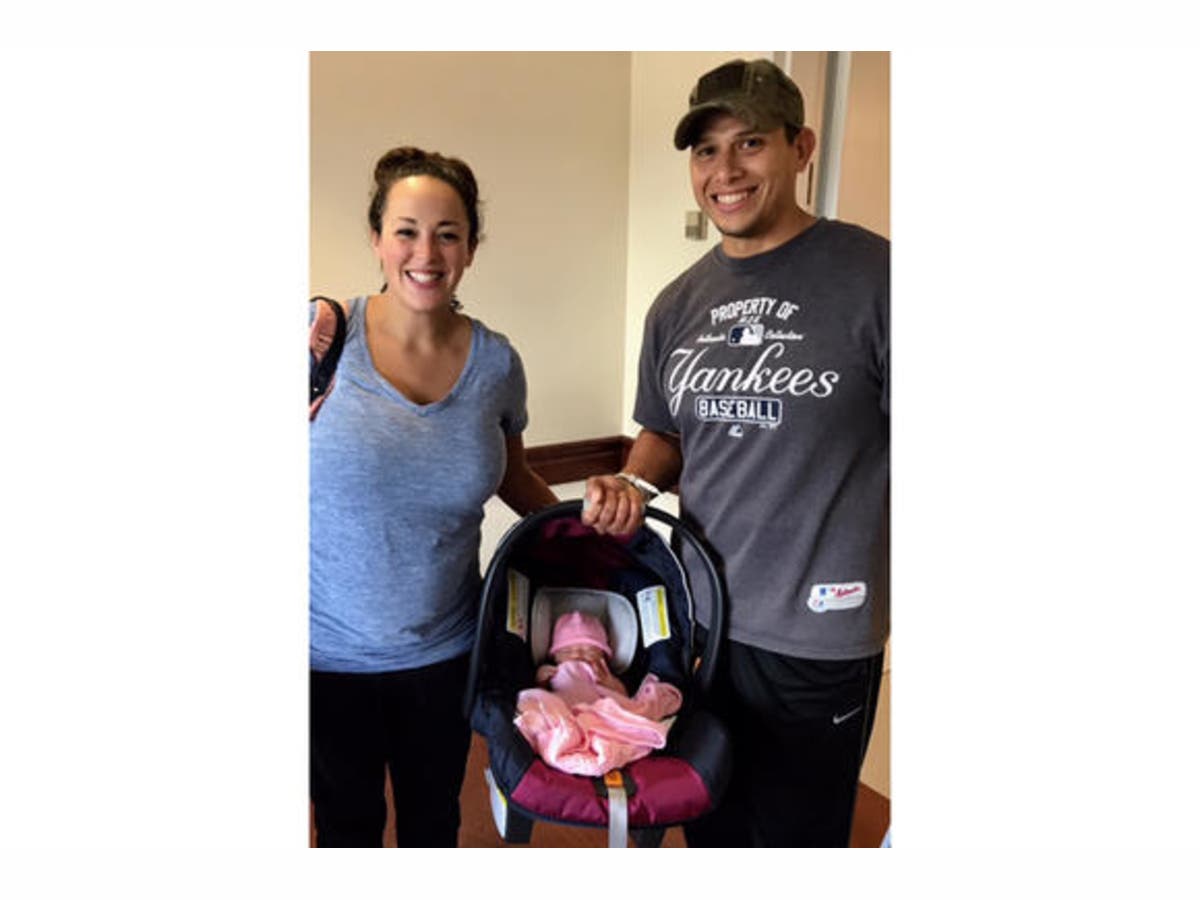
CROMWELL, CT — After learning she and her husband would be having a baby, Sarah Alicea expected the following months to be the best of her life. What followed instead was a time of high stress, uncertainty and great frustration.
According to officials of the American Civil Liberties Union, Alicea was forced to go on unpaid leave from her job as a police officer for the Town of Cromwell for the last four months of her pregnancy, rather than temporarily modifying her job duties.
An ACLU attorney blasted the town's decision saying, "If having a baby means losing a paycheck, the playing field will never be even" for women. (For more information on this and other neighborhood stories, subscribe to Patch to receive daily newsletters and breaking news alerts.)
Find out what's happening in Westportfor free with the latest updates from Patch.
“After my husband and I learned that we were expecting our first child, we were ecstatic," Alicea said in a release provided by the ACLU. "Our excitement soon turned into anger and frustration at how my department and the Town of Cromwell treated me."
Cromwell Town Manager Anthony J. Salvatore released the following statement to Patch:
Find out what's happening in Westportfor free with the latest updates from Patch.
“The Town of Cromwell does not comment on the substance and details of pending lawsuits and claims," Salvatore said. "However, what I can say is that the Town of Cromwell believes it has complied with state and federal law as well as the terms of the collective bargaining agreement. The Town intends to defend these allegations.”
In response to this, a pregnancy discrimination charge against the town was filed this week by the ACLU and the American Civil Liberties Union of Connecticut with the federal Equal Employment Opportunity Commission, and state Commission on Human Rights and Opportunities on her behalf.
“As a woman in law enforcement, I have become accustomed to being the minority, but one thing that I did not anticipate was the unfair treatment I endured just because I decided to become a mother,” Alicea said. "This roller coaster of emotions and uncertainty has added an enormous amount of stress to what should be the happiest time in my life.”
Gillian Thomas, a senior staff attorney with the ACLU’s Women’s Rights Project, echoed Alicea's concerns regarding her role as a woman in law enforcement.
“This case, in addition to seeking justice for Officer Alicea, is fundamentally about a woman’s right to equally participate in society,” Thomas said in a release. “If having a baby means losing a paycheck, the playing field will never be even.”
According to ACLU officials, Alicea has worked for the Cromwell department as a patrol officer for four years. She also serves as a school resource officer during the academic year and was previously a police officer for New London.
Dan Barrett, legal director of the ACLU of Connecticut and an attorney on the case, said Alicea is considered the primary source of income for her growing home.
Statement of Harm
According to the complaint's Statement of Harm obtained by Patch, Alicea informed CPD’s Chief of Police Denise Lamontagne in March that she was roughly 20 weeks into her pregnancy and that she would need to temporarily modify her duties until her due date in August.
She then provided Lamontagne with a list of several job tasks she still was capable of performing, and was told her request would have to be approved by Town Manager Anthony Salvatore. She was also told to obtain a note from her doctor detailing what work she could perform safely.
Salvatore allegedly later told Alicea the department did not have light duty and that she must stop working and begin her leave under the Family and Medical Leave Act (“FMLA”) if she could not perform in full duty capacity.
“By denying Sarah Alicea’s request for light duty, the town broke state and federal anti-discrimination laws," Barrett said in an email. "Federal and state law requires the town to attempt to reasonably accommodate a pregnant worker’s request for alternative work.”
According to ACLU officials, federal law requires employers (including public employers) to treat pregnant workers the same as other workers similar in their ability or inability to work. Connecticut law also requires employers to make a reasonable effort to transfer pregnant employees to any suitable temporary position.
Barrett said the ACLU and ACLU of Connecticut have previously succeeded in similar pregnancy discrimination cases.
According to Barrett, these cases include a federal jury’s verdict against a Suffolk County, New York police department in 2006. That case found the department discriminated against women officers by denying them access to limited duty positions, such as working the precinct desk, during their pregnancies.
Another similar case involved a settlement in 2013 of its complaint against the Wallingford Police Department on behalf of police officer Annie Balcastro, who was denied a “light duty” assignment by the department while she was pregnant.
“In addition to seeking justice for Sarah Alicea and her family, this case is fundamentally about a woman’s right to be treated fairly in a public workplace and to equally participate in society," Barrett said. "We hope that the court will award Sarah Alicea with just compensation for the injustice she has faced, and that her lawsuit will prevent other pregnant workers from experiencing this kind of discrimination.”
State Rep. Liz Linehan, a Democrat, criticized the actions of the town in this case, noting that new legislation taking effect October 1 is intended to prevent exactly these situations, according to a release
“The discrimination described by police officer Sarah Alicea is a story many women know all too well. In 2017 employers continue to punish women for starting a family, and it is especially disappointing for a municipality to discriminate against pregnant employees,” Linehan said in a release. “We all lose when women are unfairly sidelined at work. The costs to the woman and her family are tremendous, and it hurts our economy to push out productive employees. Unfortunately, this case is a perfect example of why we strengthened legal protections for pregnant women this year – the discrimination is still happening and we cannot afford to ignore it.”
A public act was signed into law last month that expands protections for pregnant women under Connecticut’s anti-discrimination law.
The act was introduced by Linehan and other female legislators. It requires employers to provide reasonable accommodations for pregnant workers and enumerates job modifications that would apply, such as being allowed to sit while working or take more frequent breaks.
The act also prohibits limiting or segregating an employee in a way that would deny her employment opportunities due to her pregnancy and forcing a pregnant employee to accept an accommodation if she does not need one.
Image via ACLU of Connecticut
Get more local news delivered straight to your inbox. Sign up for free Patch newsletters and alerts.