Community Corner
Patch Picks: Westport’s Early Philanthropists
Here, we take a non-exhaustive look at how three Westport landmarks derived their names. Hint: no corporations were involved.
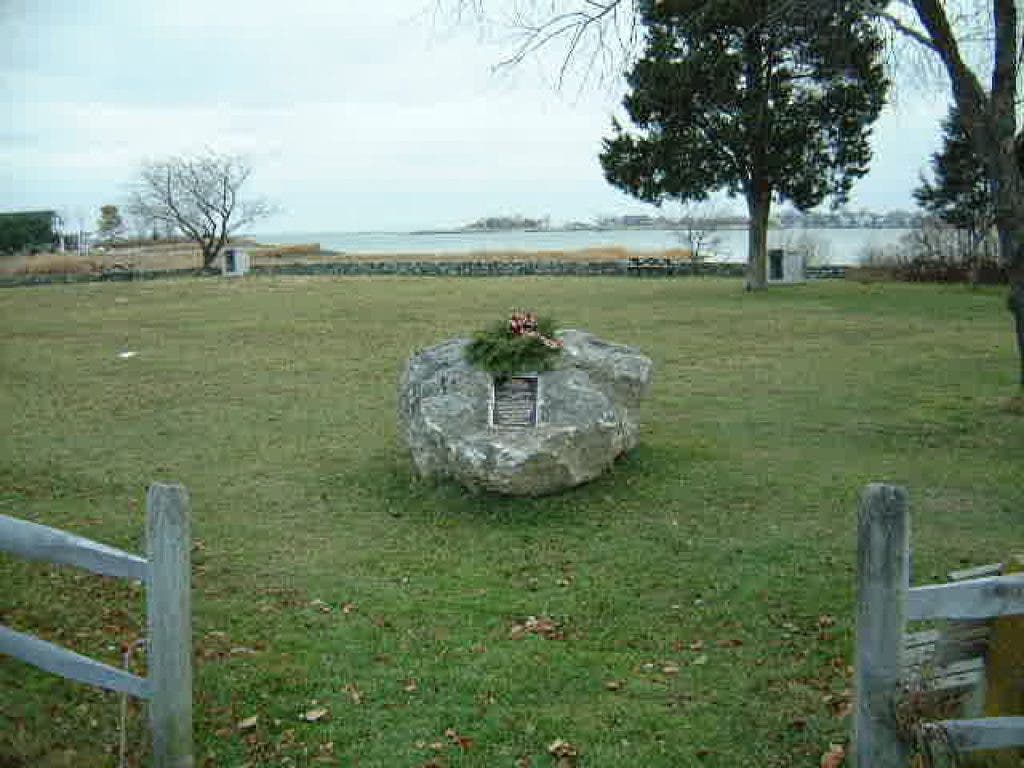


Just about a month ago, Westport celebrated the 176th anniversary of its first town meeting, which was held at Saugatuck Congregational Church on June 16, 1835, three weeks after being incorporated on May 28.
In Westport, Connecticut, Klein reports this interesting financial fact about Westport: The first town budget, presented in December of 1835, was $608.42. One year later, there was a balance of $242.31. His study of our town’s ‘rise to prominence’ also reveals the history of three well-known landmarks:
Jesup Green
Find out what's happening in Westportfor free with the latest updates from Patch.
In 1939, the green was named for Morris Ketchum Jesup, who donated the Jesup house to the Saugatuck Congregational Church shortly before his death in 1908. Jesup was born to Charles and Abigail Jesup in 1830. After his father’s sudden death, Jesup, his seven siblings, and their mother Abigail were left penniless.
In 1842, 12 year-old Jesup began working as ‘an errand boy’ at Rogers Locomotive Works, one of his godfather Morris Ketchum’s firms. He worked his way up, eventually achieving prominence in the railroad industry, and later moved into banking. After amassing an impressive fortune, he retired in 1884 to dedicate himself to philanthropic causes. Among those causes: heading the American Museum of Natural History, donating paintings to the Metropolitan, commissioning ‘a five-year anthropological expedition to Alaska and Siberia,’ and supporting Robert Perry’s Arctic explorations. Greenland’s northern tip, Cape Morris Jesup, is also named for him.
Find out what's happening in Westportfor free with the latest updates from Patch.
Staples High School
Horace Staples personally funded the high school that bears his name. Staples set up shop in Saugatuck in 1827 and earned his fortune through hardware sales, shipping, and banking. He also served as a volunteer with the Saugatuck Fire Company. Klein writes that Staples initially intended to bequeath funding for the high school in his will. But in the early 1880s, amid concerns that the town’s lack of ‘educational advantages’ was sending families to Norwalk and other towns, he accelerated his plan.
The high school, then located on Riverside Avenue, was dedicated on April 26, 1884 to great fanfare. Businesses closed early as town members flocked to the ceremony, which was attended by ‘sirens, bells and whistles’ and a poetry reading. Sixty students then attended the school and ‘paid an annual tuition of $16 to $20 per year.’ The tuition was dropped in 1898, the year after Staples’ death at 95. The school’s funding was then split between Staples’ estate, which covered two-thirds of the budget, and the Town of Westport, which paid the remaining one-third. In 1909, the Town of Westport assumed control of the high school.
Winslow Park
The park is named for Richard Henry Winslow. Like many Westporters of our era, Winslow came to Westport from New York. The Mayflower descendent was born in Albany in 1806 and built his fortune in ‘banking, stocks, and money exchange,’ having been elected as the New York Exchange’s vice president in 1838.
In Westport, Winslow built his Compo House mansion, where he lived out his life, in 1853, hosting such luminaries as President Millard Fillmore and jeweler Louis-Francois Cartier, whose watches grace the wrists of some 21st Century Westporters. In 1959, Winslow donated the sum of $420.50 to Compo Engine Company Number 2 for the purchase of a new fire engine. Politics also called to Winslow, and he served in the Connecticut House of Representatives both in the General Assembly (1859) and the State Senate (1860).
On the spiritual front, Winslow was one of 19 former Christ Church members who spearheaded the establishment of The Memorial Church of The Holy Trinity. The idea for a second Episcopalian church arose after ‘an internal dispute about installing a new organ.’ The new church ‘was consecrated in 1863,’ though the two churches would ultimately merge into Christ and Holy Trinity Church in 1944.
Have a good story about a Westport landmark?