Business & Tech
Matsu Sushi Continues Court Fight, Workers Respond: Update
Two former chefs at the Westport restaurant won labor grievances against the owners, and have called for a boycott until they are rehired.


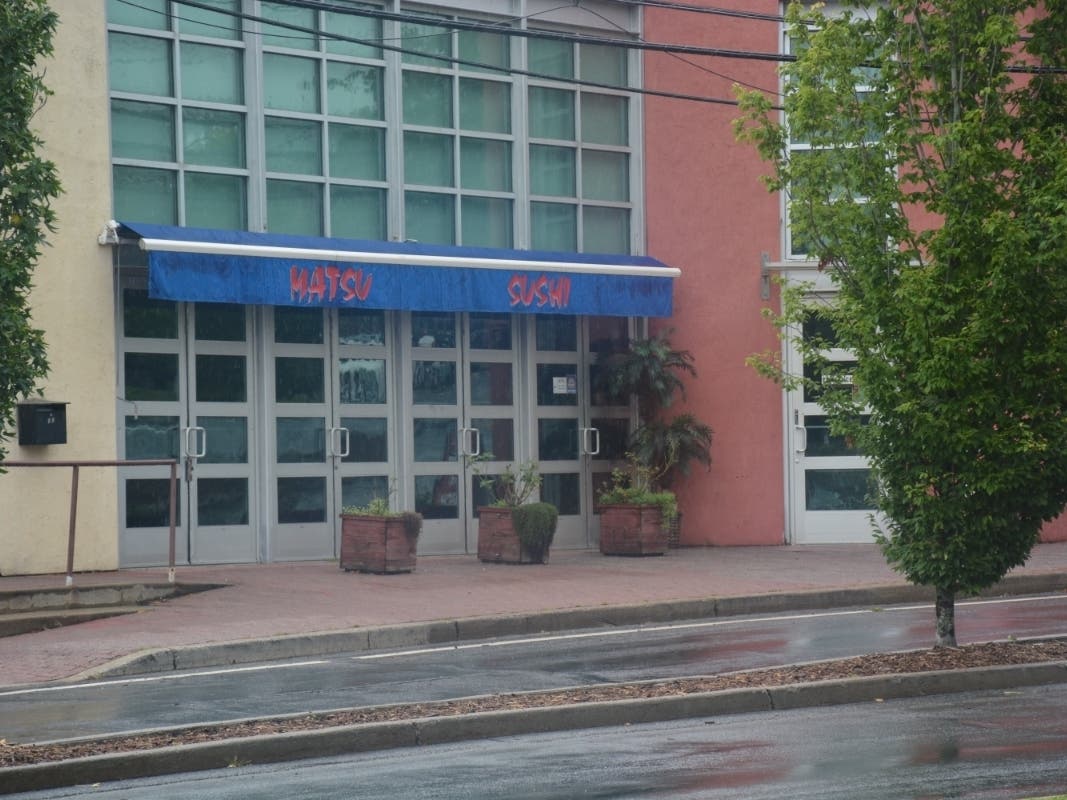
WESTPORT, CT — As the boycott of the restaurant continues, the owners of Westport's Matsu Sushi have issued a new statement that stresses that they do not intend to bend to the fired chefs who want their jobs back.
Earlier this month, Jianming Jiang and Liguo Ding were joined by family members, state Sen. Will Haskell (D-26th) and others at a protest in front of the Jesup Road business. The demonstration called on customers to boycott the eatery until the owners agree to labor relations rulings that ordered Matsu Sushi to reinstate the two.
According to Sarah Ahn from the Flushing Workers Center, a labor group that represents Jiang and Ding, in addition to losing their jobs and tens of thousands of dollars in lost wages, Ding and Jiang also are out more than $150,000 they gave to co-owner Marty Cheng as an investment in the business.
Find out what's happening in Westportfor free with the latest updates from Patch.
In Monday's statement, Matsu Sushi wants to make the distinction that the ongoing dispute is more of a business disagreement than a labor relations situation.
"The Matsu corporation is currently involved in a business dispute among equity partners involving capital investment," the owners said. "Recent reports of worker exploitation are simply wrong and solely meant to damage the reputation of the Matsu Sushi restaurant in Westport, hurt business there and scare the owners into paying them thousands of dollars rather than resolve the issues on the merits in a court of law, which is what the owners have sought.
Find out what's happening in Westportfor free with the latest updates from Patch.
"We understand the maneuvers are designed to gain leverage in the dispute but it's still disappointing to see long-time partners and colleagues who have shared in the financial success of the restaurant as equity partners (shareholders) attempting to disrupt the very business that has produced that success with false claims and threatened boycotts," the owners continued.
"A trial to be held in U.S. District Court for the District of Connecticut this fall will show that our partners received financial returns that were multiple times their initial investment. Far from earning minimum wage, as has been alleged, for their labor, in many years our partners were earning thousands of dollars extra each month in dividend checks – on top of their wages. It was a second investment in our now closed Darien location that didn't produce the same returns for investors that has brought us to this point of dispute.
"Matsu corporation looks forward to presenting its side in this dispute at trial, along with all documentation, and we maintain that we're open to a fair resolution to the dispute with our long-time partners. In the meantime, we will continue to provide the excellent service and sushi that our customers have come to expect at Matsu Sushi in Westport for nearly 20 years."
Patch reached out to the Flushing Workers Center on Monday for a comment and received the following response, which compares the owners to "sweatshop bosses":
"The characterization of the labor dispute by Marty Cheng and Michael Cao is completely false," Ahn wrote. "In fact, Cheng and Cao took advantage of the workers' long-standing relationship that once was a good relationship and their desire for stable employment to steal upwards of $44,000 from hard working individuals. They promised the money will be returned at the end of their employment and in the meantime, if they worked hard and the business was profitable, they would receive bonuses. These bonuses, not dividends, most definitely did not amount to thousands of dollar each month.
"This is a scheme we see in the worst cases of sweatshop bosses. To use deposits into a business, which often just ends up in the bosses’ pockets, to further exploit and underpay their workers. It adds a layer of fear so workers are less likely to speak out against not being paid proper wages and poor conditions (such as having to work 36 hours) because it is not only their jobs on the line but also their hard earned money.
"Furthermore, regardless of Cheng and Cao's scheme, they clearly broke the law when they fired the workers for refusing to work the 36-hour shift. There is no question about this as the National Labor Relations Board has ruled twice that they were illegally fired. Even if the bosses do not want to resolve the matter, the bosses should reinstate the workers as both parties await trial.
"The workers have courageously come forward after it became clear that Cheng and Cao never intended to return their deposits that they have long promised they would. The community should continue to condemn such practices that takes advantage of workers and keeps them in the shadows."
Get more local news delivered straight to your inbox. Sign up for free Patch newsletters and alerts.