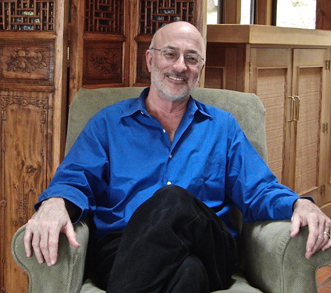
Here we are at the beginning of another year, many of us making familiar promises to ourselves about the great life changes that we’ll make this year. I invited Dr. Bader—a fellow psychoanalyst, writer and a political activist—onto my blogtalk radio show to talk about New Year’s resolutions and why they don’t work. He recently published an article in the Huffington Post on the subject, and I was thrilled that he agreed to join me this first week of 2014 to discuss his theory.
According to Dr. Bader, the basic reason that resolutions do not work is that our conscious intent to change does not take into account what is happening in our unconcious mind. As an example, Dr. Bader gave a pretty depressing statistic: the average dieter puts on 107% of the weight that they attempt to take off in a year’s time. Why is that? Well, there is obviously something pulling the average dieter away from her conscious intent. Most of us try a strategy, and when it doesn’t work, we simply try another strategy, only to fail again. Dr. Bader encourages us to step back and look at why, exactly, our bad habits keep coming back. There is a reason, and that reason is usually unconscious. To change a habit, one must make the unconscious conscious.
This is much easier said than done, of course. Dr. Bader suggests practicing mindfulness to uncover your unconscious motives. When you set an intent, do you feel a resistance? What is keeping you from feeling total “loyalty” to that new intent? Take over-eating, for example. At the root of many over-eating behavior is a feeling of disconnect. Until that emotion is made conscious and addressed, any intent to change the habit will not work. To borrow Dr. Bader’s metaphor, unconscious emotions are an underto tugging at us, making our conscious intent impossible to implement until we free ourselves from that invisible but powerful force.
Find out what's happening in Westportfor free with the latest updates from Patch.
Another huge obstacle is the shame we feel when we fail to change. There is such a cultural stigmatism against needing help and asking for it, so instead of acknowledging our inner lives, many of us tune out completely, then beat ourselves up for our consequent inability to change. This is a destructive cycle that leads to very low self-esteem. To uproot and release this deep shame, Dr. Bader reminds his clients that asking for help is a sign of strength, while floundering in the same, destructive patterns indicates weakness. For many of us, this is difficult to digest. We are so conditioned to think of failure as proof that there is something very wrong with us! Instead, we have to remember that failing does not make us failures. Failing is simply an indication that we are moving toward our goal.
Even when we are able to get past our shame and tune into the unconscious feelings that dictate our habits, we have another hurtle to jump: the fear of success, and the uncomfortable reality of achieving success and realizing it isn’t what we expected. Most of us don’t believe we resist success. A client who wanted to lose 90 pounds, for example, asserted that she would love to be skinny. She wasn’t afraid at all. But when she tuned in deeper, she found another fear: what if she does lose all this weight and people still don’t like her? People who do acquire what they desire often feel anxiety, guilt, and disappointment. What if people don’t like your new skin? What if loved ones resent you? Worst of all is the discovery that the change hasn’t “fixed you.” A job promotion will not make you feel like a complete and successful person. That is an internal state, and you have to delve into your irrational, unconscious emotions to change that state.
Find out what's happening in Westportfor free with the latest updates from Patch.
So for those of us who still want to follow through on those resolutions, does Dr. Bader have any advice? Well, he doesn’t believe in New Years resolutions—he thinks the fiction of yearly renewal sets us all up for failure. But he does recommend that you not look at your habits as the enemy. They are coping mechanisms—sometimes brilliant ones. You developed them for a reason. To change them, you must first understand them. So good luck, and Happy New Year!