Neighbor News
Re-Thinking Education for Highly Anxious Middle and High School Students
Does your Wilton student become so anxious that they begin to avoid schoolwork and social interaction?
WILTON, CT — Anxiety is one of the most vexing of all human problems, causing an incalculable amount of suffering for millions of people. Anxiety is an internal experience marked variously by tension, fear, and worry. Fear and anxiety can manifest similarly; however the former is a reaction to an identifiable external danger, whereas the latter may be an inappropriate or outmoded internal experience. Anxiety has cognitive (fears, worries, obsessions, compulsions), affective (tension, distress), and physiological symptoms (increased sweating, heart rate, etc.). Anxiety, and associated disorders, appears in many forms (see Table 1 for a summary).
The experience of anxiety can range from mild to severe. At the mild end, anxiety can actually have a facilitating effect on the performance of simple tasks (Yerkes & Dodson, 1908). At the severe end, however, anxiety can be quite disabling. Anxiety can be experienced in the neurotic range, with ego-dystonic symptoms experienced as intrusions and also in the psychotic range, with a deep sense of existential dread. Thought-disordered individuals often experience deep existential anxiety and suffering. The prevalence of anxiety disorders ranges from 8 to 9 percent of adolescents in the United States (Lewinshon, 1993).
Anxiety makes all of the challenges of growing up more difficult. Home life can be complicated by anxiety and the entire family can suffer along with the anxious child. School is another setting that is massively complicated by a child’s anxiety. Large, complex school systems can be insensitive to childhood anxiety. Anxious children are often quiet and inwardly turned; so they are easily ignored. The can be misunderstood and under-diagnosed. Anxious children often refuse to participate or under-participate in class because they are too afraid to speak. They are often unwilling to ask for help; and so they suffer in silence. Sadly, these children are often quite bright and motivated to learn; however, they are simply crippled by their anxiety. Consequently, they end up getting cheated out of living up to their academic potential.
Find out what's happening in Wiltonfor free with the latest updates from Patch.
Unfortunately, there are many anxiety triggers a regular education setting, including building size, student population, pace of instruction, separating from parents, and demands for social interaction. The anxious student can end up feeling very frightened and alone for much of the school day. A large body of scientific research indicates that significant anxiety has deleterious effects on all education-related psychological functions including sensation/perception, attention, cognition, learning, and memory (Eysenck, et al., 2007). This means that they have more difficulty paying attention, encoding information, problem-solving, and retrieving information, which makes education especially challenging. In other words, anxious learners cannot think as deeply or productively as they might be able to with less anxiety.
Some students become so anxious that they begin to avoid schoolwork and social interaction. At times, children with anxiety can begin to avoid school completely. Children in this category are considered school refusers. School refusal occurs in five percent of students and in equal rates across gender. Empirical research suggests that there are three types of school refusers: school phobic, separation-anxious, and generally anxious/depressed (King & Bernstein, 2001). However, a small percentage of school refusing students have no identifiable co-occurring mental or physical disorder.
Find out what's happening in Wiltonfor free with the latest updates from Patch.
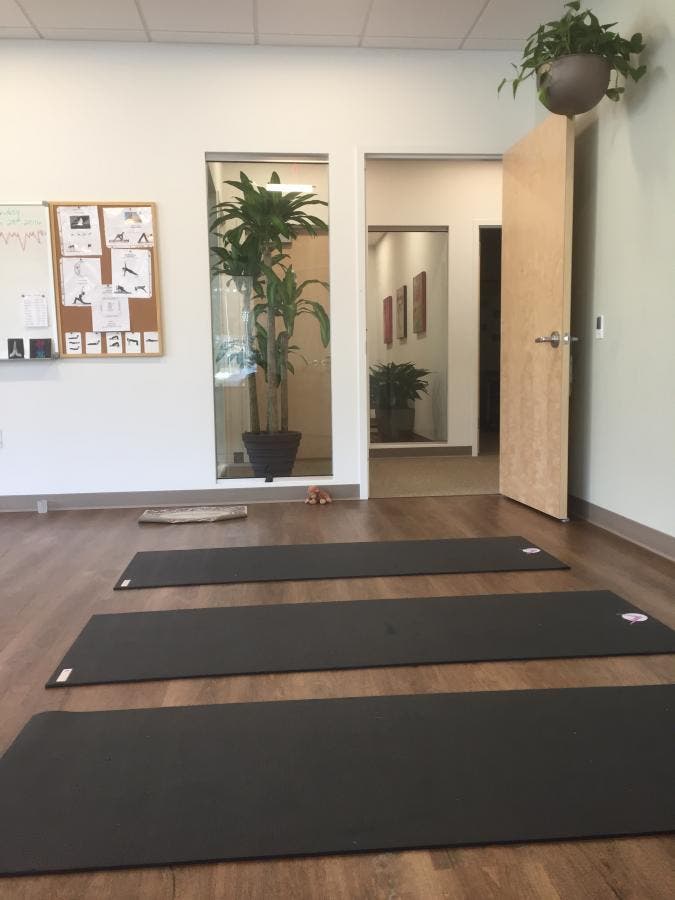
In order to meet the educational needs of highly anxious students, we created the Westport Day School (WDS). WDS is an alternative educational setting designed specifically for students who suffer from significant anxiety. The WDS experience cultivates mindfulness, ethical sense, and wisdom in students by employing a model of education therapy and by focusing on the student-teacher relationship. The result is an exceptionally warm, welcoming, and calm academic setting for students who have had a difficult academic journey.
Relational and motivational strategies to help fragile learners become fascinated by education. WDS is NOT a behavioral program and does not admit students with behavioral difficulties. Students are supported directly and indirectly by a clinical team including a clinical psychologist, social worker, and art therapist.
WDS targets student anxiety in a number of ways. For example, the class size is small, teachers are warm and supportive, and homework is modified as needed. We do not have bells, which can startle anxious students. Transition time between classes is limited. We focus on the quality of the student-teacher relationship and regard it as a primary vehicle for change. The relationship with the teacher allows the anxious student to take some appropriate academic and social risks with support.
In larger settings, anxious students turn inward and stop participating in class. Our small class size (six students per class maximum) allows for teacher-facilitated social practice. We run a social-thinking curriculum continuously throughout the day; so students are able to practice healthy, safe social interaction. In this way, anxious students are able to come out of their shells and get the benefits of full academic participation.
References
Eysenck, M., et al. (2007). Anxiety and cognitive performance: Attentional control theory. Emotion, 7, 336-353.
King, N. J., & Bernstein, G. A. (2001). "School refusal in children and adolescents: A review of the past 10 years." Journal of the Academy of Child and Adolescent Psychiatry, 40, 197-205.
Lewinshon, P. M., Hops, H., Roberts, R. E., Steeley, J. R., & Andrews, J. A. (1993). Adolescent psychoapthology: Prevalence and incidence of depression and other DSM-III-R disorders in high school students. Journal of Abnormal Psychology, 102, 133-144.
Yerkes R. M. & Dodson J. D. (1908). The relation of strength of stimulus to rapidity of habit formation. Journal of Comparative Neurology and Psychology, 18, 459–482.
Table 1: Anxiety and Related Disorders.
Anxiety Disorders
· Separation Anxiety Disorder
· Selective Mutism
· Specific Phobia
· Social Anxiety Disorder (Social Phobia)
· Panic Disorder
· Panic Attack (Specifier)
· Agoraphobia
· Generalized Anxiety Disorder
· Substance/Medication-Induced Anxiety Disorder
· Anxiety Disorder Due to Another Medical Condition
· Other Specified Anxiety Disorder
Unspecified Anxiety Disorder
Obsessive-Compulsive and Related Disorders
· Obsessive-Compulsive Disorder
· Body Dysmorphic Disorder
· Hoarding Disorder
· Trichotillomania (Hair-Pulling Disorder)
· Excoriation (Skin-Picking) Disorder
· Substance/Medication-Induced
· Obsessive-Compulsive and Related Disorder
· Obsessive-Compulsive and Related Disorder Due to Another Medical Condition
· Other Specified Obsessive-Compulsive and Related Disorder
· Unspecified Obsessive-Compulsive and Related Disorder
Trauma- and Stressor-Related Disorders
· Reactive Attachment Disorder
· Disinhibited Social Engagement Disorder
· Posttraumatic Stress Disorder
· Acute Stress Disorder
· Adjustment Disorders
· Other Specified Trauma- and Stressor-Related Disorder
· Unspecified Trauma- and Stressor-Related Disorder
Note: Adapted from DSM-V.