
It’s like comparing apples to... well, apples.
Wilton residents who order groceries from Stop & Shop's Peapod.com can either buy an organically grown Fuji apple for 89 cents or a conventionally grown Fuji apple for 79 cents.
Both types deliver that same fall-fresh crispness, that burst of tartness; both contain the requisite vitamins and fiber, and neither hides fat, sodium or cholesterol. But one costs a bit less than the other. So what’s one to do?
Find out what's happening in Wiltonfor free with the latest updates from Patch.
At $7.7 billion a year, the market for organically-grown produce is here to stay. But whether it’s actually healthier is another question. In fact, no evidence exists that the content of organic food is significantly more nutritious than non-organic food, according to a recent American Journal of Clinical Nutrition report. Researchers reviewed more than 50 studies that measured the nutrient content of organic and non-organic foods. As expected, their conclusion drew mixed reactions.
“It’s about the local environment,” said Tim LaBant, chef of The Schoolhouse in Cannondale.
Find out what's happening in Wiltonfor free with the latest updates from Patch.
The Schoolhouse prides itself on the fact that every forkful of food it serves comes from ingredients that grow no more than three miles from the kitchen.
Most nutritionists agree food grown and raised organically probably tastes a bit better. That’s important if the goal is to get people to eat more fruits and vegetables. That’s why when First Lady Michelle Obama decided a garden should adorn the lawn of 1600 Pennsylvania Avenue, the nutritionists across the nation beamed.
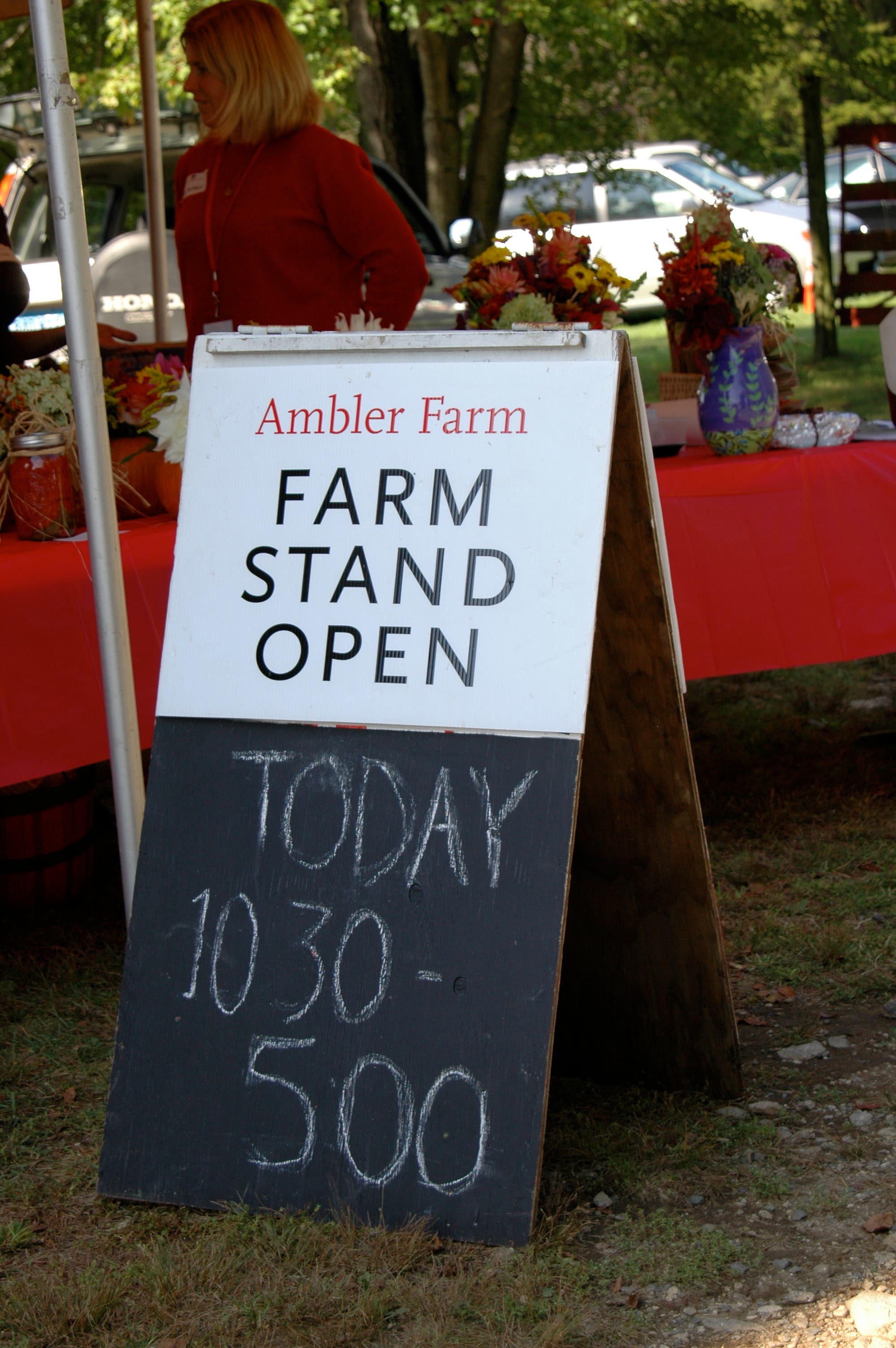
At Wilton’s Ambler Farm, those who frequent the farm stand know the produce was plucked from the ground that morning, said Farm Manager Ben Saunders.
"Our kids have come to camp here in the summer and learned all about gardening," said Wilton resident Jane Mitchell Reyes, who recently enjoyed Ambler Farm Day.
Still while taste may turn consumers on, price turns them off.
Organically grown eggplants can cost $2.99 each versus 99 cents each for those grown conventionally. Organically grown grape tomatoes may coast $3.99 a pint versus $2.50 a pint for those grown conventionally. Suddenly that eggplant Parmesan baking in the oven isn’t so inexpensive.
Higher production costs mean increased prices when it comes to organic farming. On average, yields are between 10 and 20 percent lower than conventional agriculture. And organic farmers must weed some crops, such as onions and carrots, by hand. They aren’t allowed to use herbicides, according to U.S. Department of Agriculture guidelines.
John Plasko of Norwalk's Fodor Farm has worked with Wilton's Millstone Farm.
"The food just looks better," Plasko said.
At Millstone Farms the idea is that "there is an essential difference between swallowing something filled with manufactured ingredients and eating a fresh tomato."
For some, it’s the fact that organic farming appears to be healthier for the planet. Water conservation, the use of traps rather than pesticides, and crop rotation mean less stress on the soil. For some, that's reason enough to favor organically grown.
“It’s sustainable stuff,” LaBant said of using local, organically grown food. “You learn to think about what Mother Nature wants you to do, not just what your bank account wants you to do.”