Business & Tech
Tomato Blight Hits Home (and The Schoolhouse)
Late Blight affects Wilton Farms and restaurants, alike.
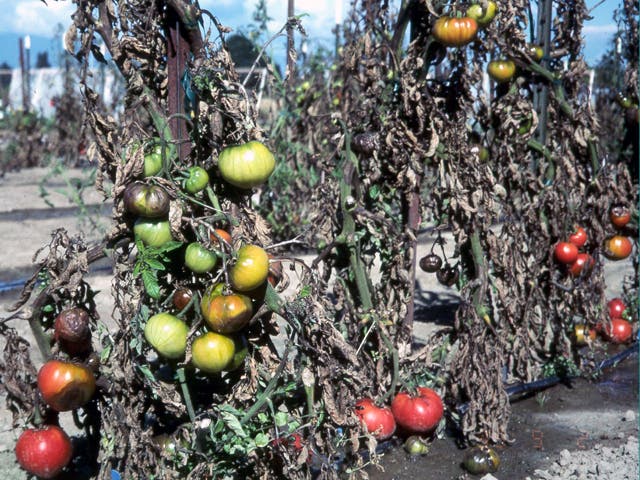
When life hands out lemons, make lemonade–so goes the old adage. Or, in the case of Chef Tim LaBant of The Schoolhouse Restaurant in Cannondale: “When life hands you green tomatoes, make green tomato soup.”
Like many local gardeners and farmers, LaBant has had to contend with this summer's late blight. The potentially devastating fungus was confirmed in six of Connecticut’s eight counties. Although the fungus is harmless to human health, many Wilton farms lost pounds of produce to the disease.
“We got the blight, it did arrive here,” said Annie Farrell, of Millstone Farm in Wilton. “We were able to pull several hundred pounds of green tomatoes and ripen them inside. But we had to pull about 400 plants and make them disappear. You cannot even compost them.”
Find out what's happening in Wiltonfor free with the latest updates from Patch.
The blight, the same affliction responsible for the 1840 Irish Potato Famine, causes brown and white blemishes to bloom across the red orbs. In a matter of days, toxins infect the entire plant and the airborne fungus can kill both tomato and potato plants. Once a plant has been infected Farrell said there is little that can be done to save it.
The disease, Phytophthora infestanstans, usually strikes plants in the waning weeks of summer. This year the wet weather, coupled with temperatures that often lingered between 60 and 70 degrees, provided an Eden of sorts for blight to thrive. However, the blight doesn’t seem to be a new or mutant strain, according to the Connecticut Agricultural Experiment Station.
Find out what's happening in Wiltonfor free with the latest updates from Patch.
Late blight invaded farms across New England in July, according to the Connecticut Northeast Organic Farming Association (NOFA). Most likely the fungus arrived on tomato plants from the South, which were then purchased by home gardeners at big box stores.
“One of the things people want to do is be careful of where they get their seedlings next year,” said Bill Duesing, executive director for Connecticut NOFA.
Although it’s hard to gauge just how much money was lost due to the blight, area farmers said healthy tomatoes became like precious gems, meted out to area restaurants and customers. At Millstone, they plucked green tomatoes before blight hit.
“We kept prices the same, we didn’t gouge anyone. After all we’re asking people to take a chance on us, so we kept things at a normal price,” Farrell said.
Chef LaBant was happy to buy the hard, knobby tomatoes from Millstone.
“It was fun for us to relish the reality of the situation,” said Tim LaBant. “It affected our menu a bit, but we like to get the local, organic, sustainable stuff.”
Because late blight threatens each summer, local farmers and gardeners often wrestle with the question of whether to spray. There are few options for farmers. At Ambler Farm, on Hurlbutt Road, farm manager Ben Saunders, together with a posse of volunteers, worked to save as many plants as possible. But according to Duesing, certified organic farmers are nearly crippled when waging war on blight since they aren’t supposed to use pesticides at all.
Instead, farms like Millstone plan on growing their seedlings under row covers next year. The silk-like, fine meshed cover permits sunlight to filter through, but affords some protection from airborne diseases.
In the meantime, local gardeners and farmers have been advised to uproot infected plants, bag them and trash them. In addition, Duesing suggests that people think about crop rotation next year. In other words, avoid planting tomatoes or potatoes in the same patch.
To combat potato blight, an article published by the University of Connecticut advises people store tubers from diseased fields separately from tubers from healthy fields. The potatoes should be stored dry and at the lowest possible temperature to suppress pathogen growth and spread.