Neighbor News
Missouri Commercial Litigation Law related to Intellectual Property
Never steal what isn't yours
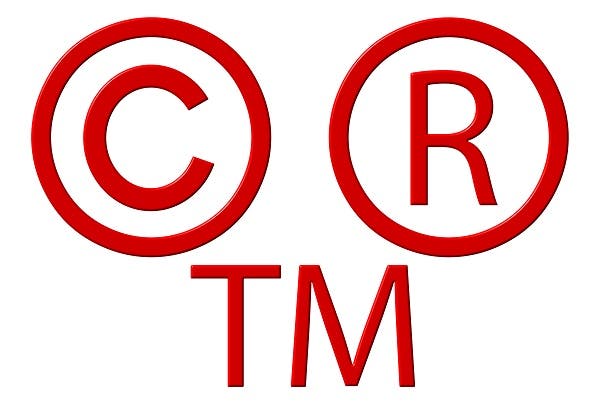
Intellectual property is a field of law that has accumulated unprecedented interest over the last couple of years. This has been credited to the need to acknowledge the original innovators and owners of new innovations and other intellectual property. The State of Missouri has taken laudable steps in order to ensure that aspects of commercial litigation in matters of intellectual property are adequately addressed. The commercial litigation in Missouri are also in compliance with the specifications of the American Intellectual Property Law Association.
Categories of Intellectual Property
By definition for the purposes of commercial litigation, intellectual property in Missouri has been afforded the definition of any creation of the mind. Some of the most common examples of intellectual property rights include patents, copyrights as well as the rights drawn from industrial designs. While the mentioned categories are the general broad classification, specific aspects of intellectual property that might be involved in commercial litigation include artistic works such as music and literary pieces, words, symbols, inventions and discoveries, phrases and designs. The commercial litigation will seek to afford the owners of every aspect of intellectual property exclusive rights that are exclusive for their creations.
Leading laws in Intellectual Property Commercial Litigation
The courts in Missouri are governed by the case precedent system. This means that the decisions that have been made over the same facts in issue by a court of competent jurisdiction will be binding on the other courts. The American Inventors Protection Act was passed in the year 1999 provided the framework for the state and federal agencies to follow in intellectual property protection. The United States Patent and Trademark Office serve as the primary and leading office in the matters and have agencies across the entire country.
Find out what's happening in Windsorfor free with the latest updates from Patch.
Specific aspects of Intellectual Property
In Commercial Litigation, in order for the courts to award an individual claiming ownership to any intellectual property, the onus is on them to prove that they are indeed the original developers of that aspect.
A patent refers to a document that is issued by the federal government and has the effect of granting the owner rights that are legally enforceable and this excludes other individuals from practicing the invention that has been described and specified in the document. This right has been allowed and has a time limitation of twenty years from the time of its filing. The reason behind this is to encourage the public in disclosing any technical advances that they have made as well as being an incentive in investing in a commercial manner over the same issue. This has a dual effect. On the one hand, the advancements in technical innovations are favored and on the other hand the inventors are rewarded for their particular creations. Just like any other property, the right that has been patented can be duly sold, inherited, mortgaged, rented and in other circumstances subjected to taxation. The public members are the ones that benefit most from intellectual property rights. Once the period has come to an end, such right expires and can be renewed by the owner.
Find out what's happening in Windsorfor free with the latest updates from Patch.
Qualification for registration
The owner of a patent can apply for its registration if it is filed in a timely manner and also meets a number of specifications. First, the patent has to be new as well as useful. Secondly, the patent has to be unobvious and distinguished. The time limit has been placed at one year from the date of discovery and this right ceases after the expiry of this time. A resident in the state of Missouri with an interest in filing for a corresponding foreign patent has to do it first in the United States. It is worth noting that the courts will usually analyze all the specified aspects in all issues of commercial litigation in disputes that relate to intellectual property. Specifically, in terms of obviousness, it has been held that the difference between an ordinary people with expertise in that field should not have appreciated that such invention was possible at the time it was made. This has however proved to be a contentious issue in a number of case laws and thus has to be determined on a case to case basis putting in to consideration the specific circumstances of each case.
Obtaining Intellectual Property Rights
Due to the appreciation that intellectual property rights have been afforded, an individual can obtain a patent in a procedure that has been specified by the United States Patent and Trademark Office. However, it has been noted that one of the most significant and integral steps that has to be met is that the records must have been properly recorded. This has been credited to the fact that the specific date of invention has to be well understood in order for the right to be assigned. This step will involve the invention date and any other modifications that were made up to the commercialization stage.
Another integral step is that the invention should clearly and without ambiguity be able to offer a proper description of its purpose with both words as well as pictures. All the stages have to be reviewed by at least one person that has the ability to appreciate the relevance and importance of such invention without bias. This is in most cases an expert in that field.
Trademarks will also be analyzed in the same manner in commercial litigation disputes. They can be created in two ways. One of the ways is through the filling of a mark with the United States Patent and Trademark Office and the other way is by commercially using that mark in a product or a component that is associated with that service. This is also the case for copyrights as well as any other factors that may be deemed as meeting the threshold to warrant recognition as intellectual property by the courts of law. The State of Missouri has consistently sought to appreciate a proper balance between the commercialization of intellectual property as well as maintaining justice in commercial litigation matters of intellectual property.