Politics & Government
What Impact did Malloy's Budget Have on Windsor Locks and East Windsor's State Education Funds?
A total of 28 Connecticut communities had their Education Cost Share funds cut entirely and 111 others had its funds reduced.



EDITOR'S NOTE: This article ran earlier this week, and is being re-run today in case you missed it.
By Brian McCready (Patch Staff)
Gov. Dannel P. Malloy’s proposed budget, which plugs a $922 million projected deficit does so with unprecedented cuts to the state’s Education Cost Share grant.
Find out what's happening in Windsor Locks-East Windsorfor free with the latest updates from Patch.
For the first time since the ECS formula was adopted in 1983 some Connecticut communities would receive no financial assistance from the state for education costs, the Connecticut Mirror reports.
Communities in Fairfield County, Litchfield County and some towns in New Haven County were hit the hardest.
Find out what's happening in Windsor Locks-East Windsorfor free with the latest updates from Patch.
Overall, ECS funds under Malloy’s proposal, which still needs General Assembly approval, would be eliminated for 28 communities and 111 others would see a reduction in aid next year, according to documents Malloy released earlier this week. A total of 29 low-performing communities including Stamford and Danbury would actually see its aid increase under Malloy’s proposal.
Related story: Malloy's New Budget Proposal: Layoffs, Cuts and Closures
Altogether, the cut to the ECS would be $53.4 million between Malloy’s February and April recomendations. This year about $2 billion has been allocated to Connecticut communities through the ECS formula.
In speaking with reporters, Malloy said, “the proposal creates a more equitable distribution of education cost sharing,” according to the CT Mirror.
Towns with the biggest reduction in aid include: Fairfield, Greenwich and West Hartford, which would all see a $3 million or more reduction. Communities losing $1 million or more include: Darien, Enfield, Madison, New Canaan, Ridgefield, Torrington, Waterford, Westport and Wilton.
How did Windsor Locks and East Windsor do?
Windsor Locks was originally expecting to receive $5.274 million, which was reduced in February by Malloy to $5.269 million, but was restored by the governor to its original $5,274,785.
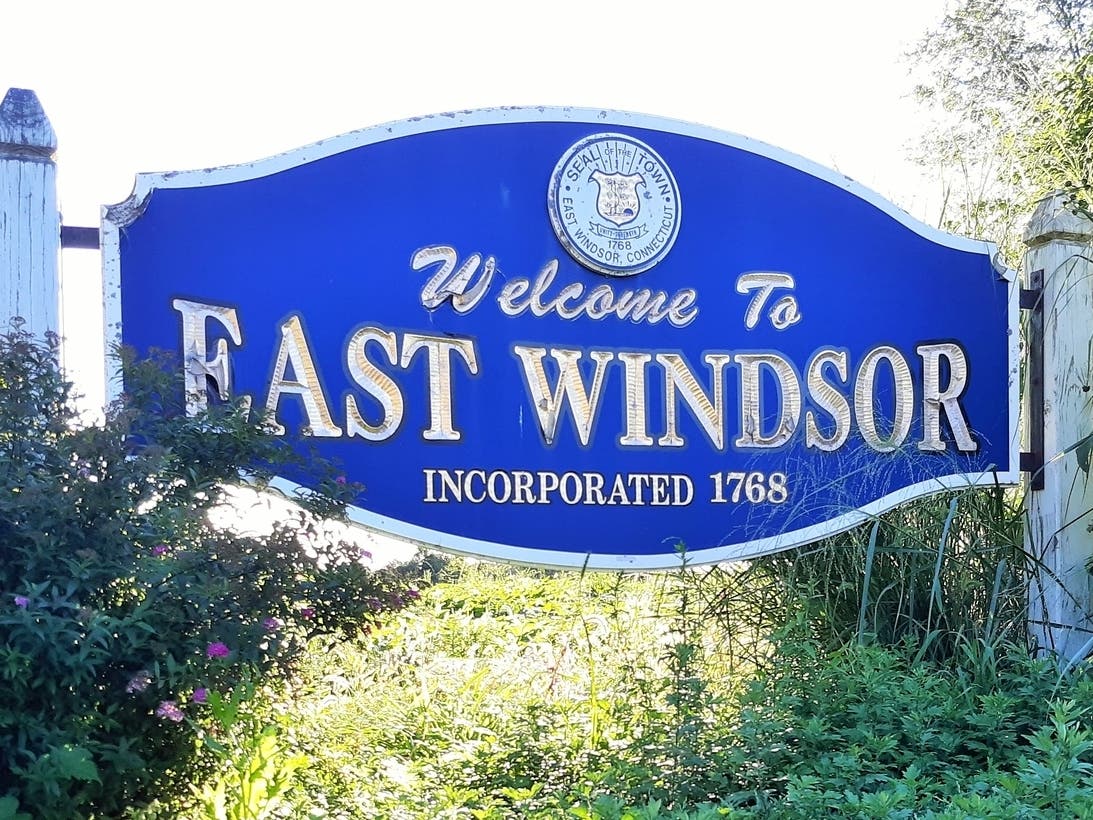
East Windsor was originally expecting to receive $5.810 million, which was reduced in February by Malloy to $5.809 million, but was restored by the governor to its original $5,810,543.
Already the proposal has become a pill some legislators won’t swallow, including Malloy’s fellow Democrats.
State Rep. William Tong (D-Stamford, Darien) said he would fight any proposal that seeks to eliminate education funds to his district.
“One of the main factors that has made Connecticut an attractive place to live has been our educational system,” he said. “To eliminate funding in this critical area at a time when we are doing our best to improve the quality of living and make Connecticut attractive to business would be a disastrous mistake.”
The Connecticut Association of Public Superintendents told the Hartford Courant that “we are really disappointed in the proposal,” while adding Malloy had previously worked to protect cuts to the ECS grant for all Connecticut communities.
Madison Superintendent of Schools Thomas Scarice issued a blistering critique of Malloy’s proposal to eliminate his town’s $1.7 million in ECS funds calling it “irresponsible.” He said to cut school system’s education funding, coupled with numerous unfunded state mandates forced on local systems is “nothing less than unspeakable.”
“However, perhaps even more frustrating for districts is that for about four years now we have endured a State Department of Education completely consumed by enforcing compliance to "one size fits all" mandates, policies that are just bad for education, such as, a state testing system, the SBAC, that has been eliminated by over half of the other states that originally signed on, countless wasted hours and money enforcing evaluation schemes that do little to nothing to impact real teaching and learning, and overall policies that are simply not supported across the profession,” Scarice continued.
Scarice went on to say “most reasonable people are fed up with the rigid "one size fits all" mandates.”
Get more local news delivered straight to your inbox. Sign up for free Patch newsletters and alerts.