Neighbor News
State Representative and City Council Member Ask Attorney General to Investigate City’s Vehicle Towing
Wilmington towed more vehicles in six years than all other responding Delaware cities combined
WILMINGTON, DE — State Representative Josué Ortega and Wilmington City Council Member Shané Darby today asked the Delaware Attorney General’s Office to open an investigation into the City of Wilmington’s vehicle towing, impoundment, and parking-debt collection practices. The request rests entirely on records the City itself produced through the Delaware Freedom of Information Act and on the City’s own written responses to public-records requests.
The referral identifies documented anomalies in impound data covering 19,083 vehicles towed between 2020 and 2025, along with fiscal-year fee totals, outstanding-debt extracts, and repeated written responses from City officials. It does not allege wrongdoing by any individual or ask the Attorney General to accept any conclusion. It asks that the Attorney General’s office investigate specific questions the officials say can be answered only by a body with independent authority to compel records from the City and its towing contractor.
Records from other Delaware municipalities show that Wilmington towed 19,083 vehicles between 2020 and 2025 — more than the combined total from every other responding Delaware city. On a per-capita basis, Wilmington’s tow rate is roughly twice that of comparable Delaware cities.
Find out what's happening in Wilmingtonfor free with the latest updates from Patch.
Before filing, these questions were raised directly with City officials in July, giving the City until August 14 to respond or to announce its own audit. The City did not respond.
Both officials bring direct history to the request: Darby sponsored the Council’s 2024 resolution calling for a comprehensive audit of these practices, which the administration refused, and Ortega served in the City’s Office of Constituent Affairs from 2016 to 2021, fielding residents’ towing complaints that could not be answered from the records available.
Find out what's happening in Wilmingtonfor free with the latest updates from Patch.
Concerns identified in the referral
- • The City cannot show it collects the debt that justifies the tow. Asked in writing for the ticket money collected through towing, the Assistant City Solicitor responded that the City “does not maintain records responsive to this request.” The City’s reported fee revenue matches a flat release-fee alone, with no accounting for the underlying citation debt.
- • The most common outcome is the owner losing the car. Roughly 29 percent of all towed vehicles — and about 58 percent of those towed for parking debt — were scrapped rather than returned to their owners. Under the arrangement, the towing contractor retains the full value of the scrapped or resold vehicle, and the City waives the owner’s underlying ticket debt when title transfers to the contractor.
- • Enforcement is small and uneven relative to the pool of eligible vehicles. More than two thousand vehicles carry debt above the City’s stated boot threshold, but only a small fraction are towed in a given month, and the highest-balance debtors remained untouched — raising questions about how targets are selected and whether enforcement is uniform.
- • The appeal process produced no recorded win for any vehicle owner. Against roughly 4,564 tows over an eighteen-month period, just 30 owners filed appeals, and not one appeal is recorded as resolved in the owner’s favor — with hearings conducted inside the same City department that orders the tows and collects the debt.
- • Wilmington’s tow volume is an outlier among Delaware municipalities. Wilmington towed more vehicles between 2020 and 2025 than all other responding Delaware cities combined, and towed at roughly twice the per-capita rate of comparable Delaware cities. Newark, a city of comparable size, uses vehicle immobilization rather than towing — keeping vehicles with their owners and returning them once debt is resolved. The referral treats the tow-and-forfeit model as a policy choice rather than a necessity of Delaware law.
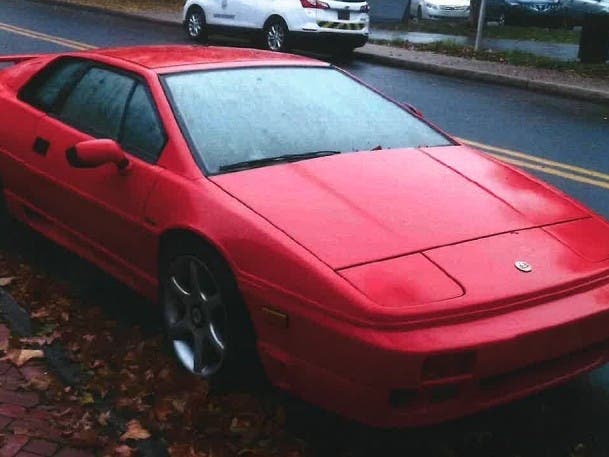
- • Vehicles held for years — and the contractor’s own records don’t back up the City’s account. Across 2020–2025, 182 vehicles the City ordered towed under its collection-related accounts were held more than 180 days; 58 show no recorded release or disposition of any kind, with some held more than five years. The City identified five of these vehicles as disposed of through Justice of the Peace Court lien actions filed by its towing contractor — but the contractor’s own operational records for those same vehicles show no release, sale, or disposition entry at all, and a $0.00 balance years after impound. One, a 1990 Lotus Esprit, has exactly one entry in its entire record: the day it was towed. Photographs in the City’s own production show the vehicles intact, and published valuation guides put the five at roughly $55,000 or more combined at today’s private-party prices — assets carried on the contractor’s books at $0.00 each.
- • The City acknowledged these record gaps in writing seven years ago — under a different contractor. In November 2018, responding to a AAA Mid-Atlantic records request, an Assistant City Solicitor stated in writing that the City had “never received” vehicle-sale records from its towing contractor and promised monthly vendor submissions going forward. AAA’s June 2019 report found that of 3,671 vehicles towed over fifteen months, only 468 owner notices were recorded and 1,320 vehicles were apparently never released — under the City’s previous towing contractor. The contractor has changed since; the referral documents that the record gaps have not.
"The reason we are asking the Attorney General to look at this is straightforward. Some of the questions raised by those records can be answered only by an office empowered to compel the City and its towing contractor to produce records that a member of the public cannot reach on their own. That is the office’s role, and that is what we are asking it to do," said State Representative Josué Ortega. "Delawareans expect that when a government takes a person’s car, the records will show the debt that justified the tow. When those records cannot be produced, an independent look is warranted."
“A significant portion of my district is inside the City of Wilmington. My constituents drive, park, and pay parking tickets in this city. Some of them have had their vehicles booted or towed. A number of them will never see those vehicles again," said Rep. Ortega. "That is not, by itself, a scandal. Cities tow cars. But how a city tows cars matters. The records raise questions and I owe it to my constituents to see answered."
"City Council has the authority to legislate parking-enforcement policy, to review contracts, and to ask questions of the administration. We use those tools. But the Council does not have the authority to compel the production of records from the City’s own administration or from a private contractor with which the City has a business relationship," said Wilmington City Council Member Shané Darby. "The questions raised in this referral — what the City actually collects when it tows a car for parking debt, whether the debt that justified the tow is being tracked and reconciled, how enforcement targets are selected among thousands of eligible vehicles, and why not one appeal is recorded as decided in an owner’s favor — those are questions that require access to records the Council cannot reach on its own. This request is not adversarial to the City of Wilmington. I represent the City. I want its systems to work fairly, uniformly, and lawfully. The Attorney General’s office is where residents can expect an independent investigation when questions arise that cannot be answered through the City’s ordinary processes. That is what we are asking for."
About the referral
The referral is submitted to the Attorney General’s office and asks the office to open an investigation of specific, documented anomalies in the City’s towing, impoundment, and parking-debt collection practices. It relies exclusively on records produced by the City of Wilmington in response to public-records requests, including annual towed-vehicle impound reports covering FY2020–FY2025 (19,083 records total), fiscal-year tow-release-fee revenue reports, outstanding-debt extracts, and multiple written responses from City officials.
The referring officials are not asking the Attorney General to reach any conclusion. They are asking that the office investigate questions that can be resolved only by an authority with the power to compel records from the City and its towing contractor.