Health & Fitness
McClellan Takes Command and Surveys the Union Positions Around the Nation's Captial
An ambitious young general, taking command after Manassas, recognizes the need for stronger defenses.
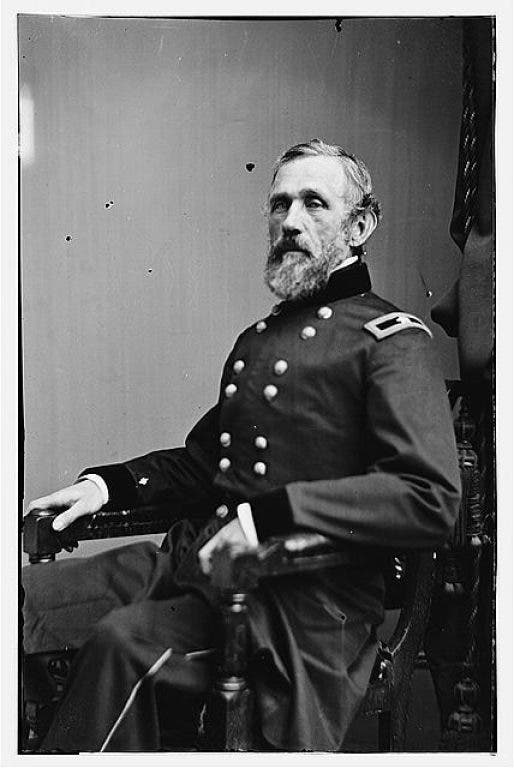

At the end of July 1861, Major General George B. McClellan, fresh from victories in western Virginia, arrived to take command of the Union Army around Washington. The recent loss at Manassas was on McClellan's mind. As he later wrote, "[t]he result of the first battle of Manassas had been almost to destroy the morale and organization of our army, and to alarm government and people." (George B. McClellan, Report on the Organization and Campaigns of the Army of the Potomac, p. 44 (1864).) McClellan saw himself as just the person to save the Union. In a July 27, 1861 letter to his wife, Mary Ellen, McClellan bragged that "I see already the main causes of our recent failure -- I am sure that I can remedy these & am confident that I can lead these armies of men to victory once more."
As the new commander, one of McClellan's first tasks was to survey the existing defenses around Washington. He told Mary Ellen in the same letter that he would "start tomorrow very early on a tour through the lines on the other side of the river -- it will occupy me all day long & a rather fatiguing ride it will be -- but I will be able to make up my mind on the state of things." Other such inspections continued into August. On the second, he informed Mary Ellen that he had "looked at some of the works" in Virginia.
McClellan's inspection of the lines around the nation's capital led him to one conclusion -- "[t]he national capital was in danger. It was necessary, besides holding the enemy in check, to build works for its defense, strong and capable of being held by a small force." (Report, p. 44.) In Virginia, he noted "the troops were stationed at and in rear of Fort Corcoran, Arlington, and Fort Albany, at Fort Runyon, Roach's Mills, Cole's Mill, and in the vicinity of Fort Ellsworth, with a detachment at the Theological Seminary." (Report, p. 50.) However, "[t]here were no troops south of Hunting Creek, and many of the regiments were encamped on the low grounds bordering the Potomac,—seldom in the best positions for defense, and entirely inadequate in numbers and condition to defend the long line from Fort Corcoran to Alexandria." (Report, p. 50.) Things were no better on the Maryland side, where "upon the heights overlooking the Chain Bridge, two regiments were stationed, whose commanders were independent of each other." (Report, p. 50.) Moreover, "[t]here were no troops on the important Tenallytown road, or on the roads entering the city from the south." (Report, p. 50.) Camps "were located without regard to purposes of defense or instruction" and "the roads were not picketed." (Report, p. 50.)
McClellan recognized the sheer vulnerability of the capital to a Confederate attack:
Find out what's happening in Georgetownfor free with the latest updates from Patch.
In no quarter were the dispositions for defense such as to offer a vigorous resistance to a respectable body of the enemy either in the positions and numbers of the troops, or the number and character of the defensive works. Earthworks in the nature of "tetes-de-pont" looked upon the approaches to the Georgetown aqueduct and ferry, the Long Bridge, and Alexandria by the Little River Turnpike, and some simple defensive arrangements were made at the Chain Bridge. With the latter exception, not a single defensive work had been commenced on the Maryland side. (Report, pp. 50-51.)
The new commander worried that "[t]here was nothing to prevent the enemy shelling the city from heights within easy range, which could be occupied by a hostile column almost without resistance." (Report, p. 51.)
McClellan wasted no time in addressing the situation. He "at once gave the necessary instructions" to his Chief Engineer, Major John G. Barnard, "for the completion of the defenses of the capital." (Report, p.62.) Before long, Barnard had soldiers at work on strengthening the Arlington line of defense. What followed in the coming months and years would make Washington the most heavily fortified city in the Western Hemisphere. McClellan is often the focus of criticism and downright scorn, but his instrumental role in organizing the defenses of Washington should not be overlooked.
Find out what's happening in Georgetownfor free with the latest updates from Patch.
Ron Baumgarten writes the blog "All Not So Quiet Along the Potomac: A DC Lawyer On The Civil War." To read more of his work, click here