Business & Tech
Georgetown Business Leaders Sound Off About the Neighborhood's Future
As other areas of the city draw diners and bar customers, Georgetown businesses ponder a more welcoming climate for customers and entrepreneurs alike.


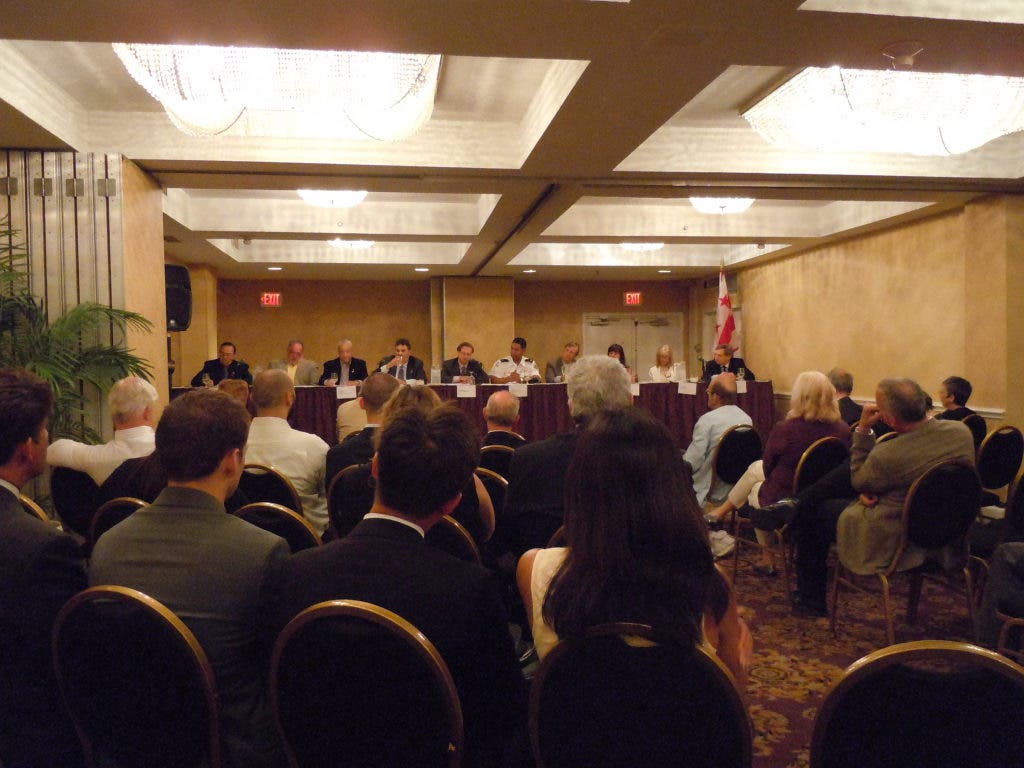


Georgetown business owners and community organizations offered their reflections on the neighborhood's business climate and the loss of customers to "edgier" areas of the city, during a panel discussion Wednesday evening.
The Georgetown Business Improvement District and the Georgetown Business Association coordinated the panel discussion and Q&A at the .
Anthony Lanier, the principal partner at EastBanc said "we have to define what we want to have." Georgetown has to "strive for excellence to differentiate [Georgetown] from other vibrant areas" he added.
Find out what's happening in Georgetownfor free with the latest updates from Patch.
Jennifer Altemus of the Citizens Association of Georgetown called for balance in the future growth of the neighborhood.
"We have to be really careful as we move forward," she said. Altemus favors the voluntary agreements often used with restaurants to determine hours of operation saying, they have "worked well for us."
Find out what's happening in Georgetownfor free with the latest updates from Patch.
Restaurateurs were not shy about their concerns and gripes with the neighborhood. Britt Swan, of Serendipity and other D.C. restaurants, unabashedly told the audience, "we could have brought to anywhere in this city," though he decided on Georgetown.
Greg Casten, owner of many of the waterfront restaurants, said "running a restaurant is never easy," but it is especially hard in the current economic conditions.
Paul Cohn of Capital Restaurant Concepts said though he has issues getting permits and running a business downtown, in Georgetown, "I have many more issues."
Cohn bemoaned the loss of the younger customers, the young people who have made up the majority of the growth in the District over the past ten years. "They're not coming here," he said, referring to Georgetown.
Cohn said he wishes Georgetown residents still came to M Street, but said he fears that "we've loss that base."
Lanier countered that if restaurateurs want residents as customers, they need to reconsider where they locate.
"A neighborhood restaurant is in the neighborhood and not on M Street," he said.
Later Cohn explained that Georgetown was like H Street or 14th Street decades ago, "we're over that...we're old and settled."
Altemus chimed in, "we don't need to be edgy." Instead Georgetown needs high quality restaurants, the kind of places that residents would want to go to one or twice each week.
Lanier added that "14th Street and H Street have absorbed things we fought to get rid of."
ANC Commissioner Bill Starrels summed up the evening concluding that the future of Georgetown will rely on the entire community "working together for the common good" so that "vibrant businesses" can coexist with the community.
Panelists included:
Fred Moosally - Director, DC ABRA Board
Anthony Lanier - Principal Partner, EastBanc
Bill Starrels - ANC 2E Commissioner
Captain Gresham - DC Metro Police Department, Ward 2
Skip Coburn - Executive Director, DC Nightlife Association
Jennifer Altemus - President, Citizens Association of Georgetown
Linda Greenan - Vice President, Georgetown University
Greg Casten - Operations Director, Tony & Joe's, Nick's Riverside Grille, Cabana's
Paul Cohn - President, Capital Restaurant Concepts
Britt Swan - Rhino, Modern, Serendipity3, Sign of the Whale
Get more local news delivered straight to your inbox. Sign up for free Patch newsletters and alerts.