Politics & Government
High Speed Train Coming to DC?
With funds granted from US DOT, Baltimore-Washington Rapid Rail can begin planning and engineering analysis.

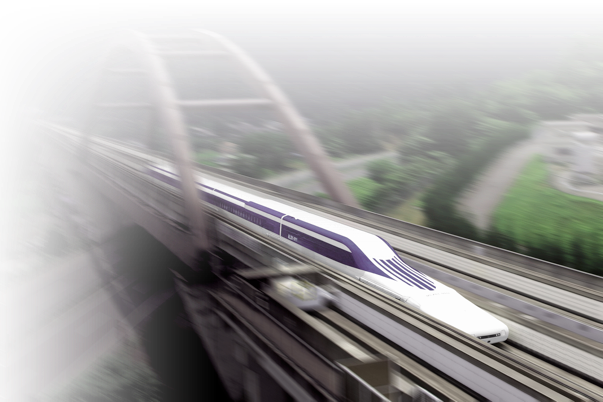
PHOTO of high speed train courtesy of SCMAGLEV.
_______________
Like the idea of getting from DC to Baltimore in just 15 minutes? It could soon become a reality, with a high-speed train that reaches speeds higher than 300 MPH.
Find out what's happening in Georgetownfor free with the latest updates from Patch.
The U.S. Department of Transportation has awarded $27.8 million in Federal Railroad Administration funds to support ongoing efforts by the private sector to bring Superconducting Magnetic Levitation (SCMaglev) trains to the Northeast region, the governor’s office in Maryland announced over the weekend.
The Baltimore-Washington corridor was one of three corridors in the United States eligible to apply for these funds for Maglev projects. The Maryland application for the federal grant was submitted in April with the understanding that the Japanese government will be a source of significant financial backing for the project, along with private-sector support from Baltimore-Washington Rapid Rail LLC.
Find out what's happening in Georgetownfor free with the latest updates from Patch.
“The ability to travel between Baltimore and Washington, D.C. in only 15 minutes will be absolutely transformative, not just for these two cities, but for our entire state,” Governor Larry Hogan said in a news release. “This grant will go a long way in helping us determine our next steps in this transportation and economic development opportunity.”
Earlier this year, Hogan joined executives from the Central Japan Railway Company (JR Central) and the Baltimore-Washington Rapid Rail to ride the 27-mile-long Yamanashi Maglev Line located outside of Tokyo.
The high-speed rail line is equipped with SCMaglev technologies, which uses magnetic forces to accelerate trains smoothly and rapidly to speeds of more than 300 miles per hour while levitating inches off the ground. The JR Central train achieved a record-breaking 375 miles per hour earlier this year.
During his trade mission to Asia that began May 26, Hogan and Japanese Prime Minister Shinzo Abe agreed on a Memorandum of Cooperation between the State of Maryland and the Government of Japan. Specific areas of cooperation outlined in the Memorandum of Cooperation included: high-speed rail, specifically SCMaglev; liquefied natural gas (LNG); life sciences; trade and investment; and academics.
“We are very pleased to see this funding announced,” said Japanese Ambassador Kenichirō Sasae. “Working with the United States Government, the State of Maryland and Baltimore-Washington Rapid Rail, we will prove that this cutting-edge Japanese technology will be a great asset to the busy Northeast Corridor.”
The Baltimore-Washington SCMaglev project is a privately sponsored initiative led by the Baltimore-Washington Rapid Rail, which envisions a 15-minute ride between downtown Baltimore and downtown Washington, D.C., with an interim stop at Baltimore/Washington International Thurgood Marshall Airport.
“The SCMaglev project has the opportunity to transform not only Baltimore but the entire Northeast corridor,” said Wayne Rogers, chairman and chief executive officer for Baltimore-Washington Rapid Rail. “We are excited for the help of the State of Maryland and the federal government to make this project a reality.”
With the grant funds now awarded, Baltimore-Washington Rapid Rail can move forward to initiate planning and engineering analysis and review compliance and permitting.
Get more local news delivered straight to your inbox. Sign up for free Patch newsletters and alerts.