Neighbor News
Anacostia Watershed Neighborhoods Help Clean Area Streams – and the Anacostia River
The DC Department of Energy and Environment works with neighborhood organizations to help clean streams and take ownership of the waterways
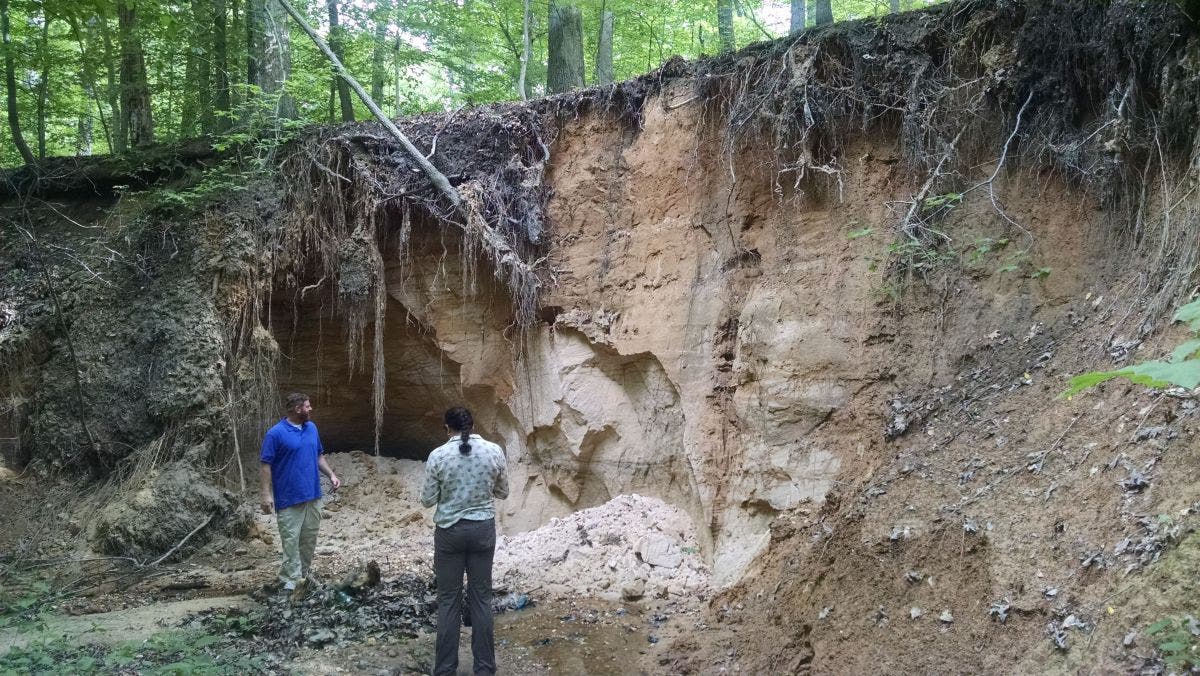
The Fort DuPont watershed in Southeast Washington DC is slated to become the District’s first healthy watershed once the planned “upstream-to-downstream” watershed-focused approach is fully implemented.
The Fort Dupont tributary system, primarily the Fort Dupont stream, has the potential for overall health largely because 85 percent of the watershed is forested which is rare in an urban jurisdiction.
Josh Burch, Environmental Protection Specialist, Department of Energy and Environment in Washington, DC., said “some areas are in good shape. We don’t need to do a full-on stream restoration for all 15,000 feet of stream within the Fort Dupont watershed. Some stream reaches need a lot of work but others can be left alone to regenerate over time provided we fix upstream and upland problem areas.”
Find out what's happening in Washington DCfor free with the latest updates from Patch.
Streams in the Ft. Dupont watershed are experiencing severe erosion due to the effect of impervious surfaces in the watershed. Some portions of stream bank have been left gutted after storms; it looks like small cliffs in some spots. “There has been as much as 15 feet of channel movement downward over time which means the banks are eroding at a high rate, pushing sediment to the Anacostia river,” said Burch.
These degraded stream reaches will be stabilized and restored partly through a National Fish and Wildlife Foundation (NFWF) grant that is focusing on catching and filtering stormwater in both the public spaces and private properties in the sub-watershed.
Find out what's happening in Washington DCfor free with the latest updates from Patch.
In locations where roadways cross the stream or train tracks, blockages can occur, and water will get backed up. One solution is to create a “nice stream network and add wetland acres to the stream tributary,” Burch said. First steps will be to work on installations to catch stormwater off the streets and parking lots before it gets to the stream.”
The Fort Dupont project is similar to a more visible project that is wrapping-up in neighboring Alger Park.
Residential drainage issues prompted concern among Alger Park residents and generated interest in the DC Riversmart Homes program which offers incentives to homeowners interested in reducing stormwater runoff from their properties.
Anna-Lee Stangl, a resident of Alger Park, has implemented many Riversmart conservation landscaping features including installing rain barrels and a rain garden-- “BayScaping,” on her property after signing up for a free audit.
“Projects can’t succeed without community support,” said Burch. “We get out and immerse ourselves in the neighborhoods and answer questions. People need to know and trust you in order to get a project done.”
This one-on-one approach was successful in Alger Park and will be also used to include the small community of residents in the upper part of the Fort DuPont watershed. . Burch said, “most of the time we go door-to-door and hand out flyers, or go to community or civic association meetings in the neighborhood to talk about the program. It takes a little time to explain why it’s important, that this is not a gimmick, and the city is subsidizing.”
Stangl has since become a bit of a poster child for the area as “now neighbors will come by and ask me what I planted—what is that flower?” Stangl said, “the program gave me a book of native plants for the DC area that I use all the time; I have planted cup flowers, wild blueberries, bee balm and the blue mist flower which Monarchs love.”
“We can do things to help the wildlife around us. I’m not sure I thought living in a city I’d be able to do that but I can and it’s really nice! I’m excited for my newborn son to grow up feeling that wildlife is all around even though we are living in the city.”
Burch adds: “it is gratifying to see the results of conservation that reaches deeply into a specific community. We are looking forward to achieving Fort Dupont’s healthy watershed designation that will spur interest and serve as a model for outreach and stormwater remediation in other urban centers, too.”