Neighbor News
The Arabia Foundation Adds Context to Events in the Middle East
The Arabia Foundation combats misinformation and helps to further develop American understandings about the region.
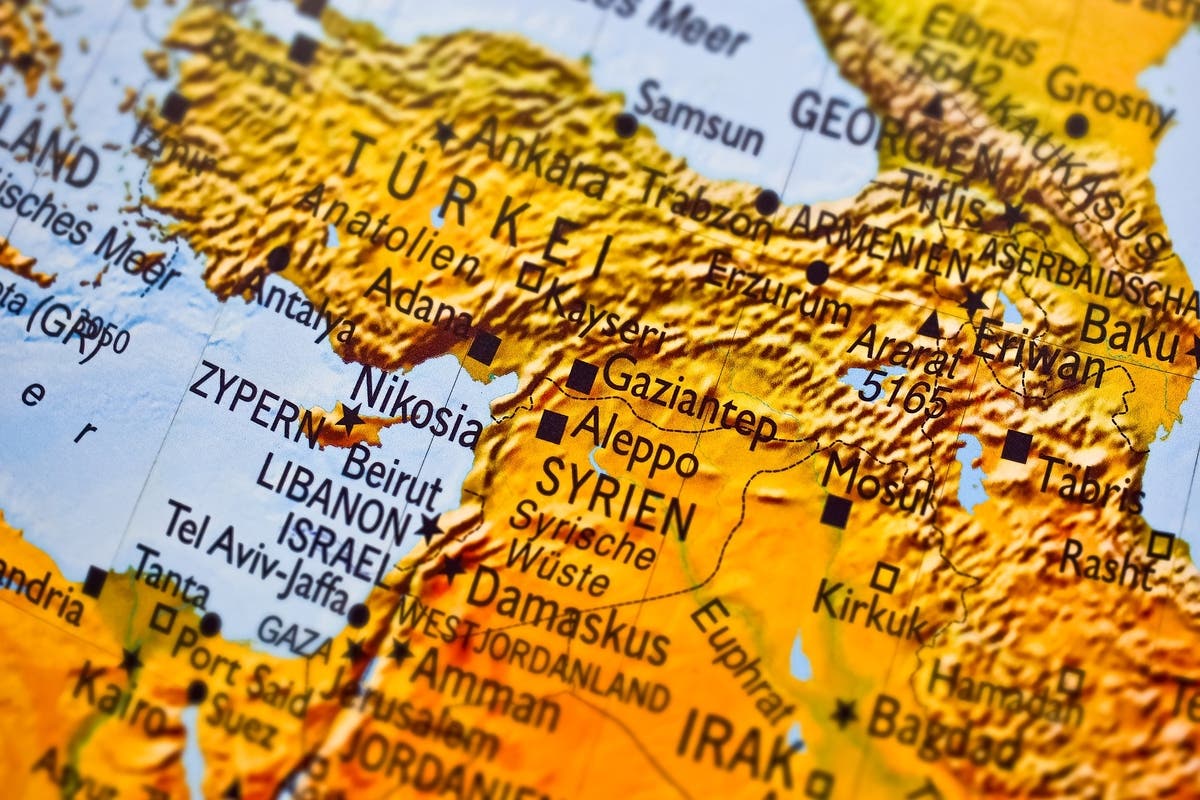
American audiences are well-apprised of developments in the Middle East -- or at least; it seems that way from a cursory glance over the major news networks. Every morning edition has a geopolitics update printed on the front page; every nightly news channel plans a ten-minute segment that outlines a new chapter in the saga of the United States' relationship with the region's nation-states. With the sheer volume of news that breaks across the country on a daily basis, it would seem reasonable to assume that the average news consumer could form a comprehensive and well-informed perspective about the region as a whole.
Unfortunately, the reality of media coverage of current events and geopolitical developments in the Middle East isn't as complete or contextually-rooted as one might hope or even expect. The coverage we see today is often limited and lacking in necessary context; the storied we tune into are simplified into readily-consumed, story-based "episodes," rather than conveyed in longer -- but less immediately captivating-- explanations. The lack of information then leads otherwise well-informed and receptive viewers to develop incomplete understandings that skew towards misunderstanding or even bias.
This effect is primarily due to the way international news is produced and presented in the digital era. The demand for fresh and easily-digestible news content is constant and ever-pressing. Network producers rarely have the time to dedicate days to gathering background contextual details or developing insightful analyses about a situation overseas. Moreover, there are usually only a few reporters who are actively covering stories in the Middle East, and those writers tend to center their attention on events that have a clear or immediate connection to their American audiences.
Find out what's happening in Washington DCfor free with the latest updates from Patch.
The lack of reporting resources leaves many worthy -- and often contextually valuable -- stories left uncovered, and others overhyped. This trend, paired with headline sensationalism, can inadvertently lead to American audiences developing a limited or even hostile perspective towards the Middle East and the people who call the region home.
Fortunately, this problem can be readily remedied with more information -- and the Arabia Foundation, a Washington D.C.-based think tank, intends to provide necessary context in spades.
Find out what's happening in Washington DCfor free with the latest updates from Patch.
Founded by scholar and entrepreneur Ali Shihabi in 2014, the Foundation launched as a 501(c)(4) nonprofit with the intent of bridging the gap between the common American perception of Saudi Arabia and the reality of the country. While the scope of the organization’s focus was relatively small at first -- based solely on Saudi Arabia -- it ultimately came to encompass current events and topics spanning the whole of the Arabian Peninsula. This expansion was due partly to necessity, given that the region was and continues to be in a period of fast-paced geopolitical and socioeconomic change that could -- and does -- have international implications. The organization maintains a headquarters in Washington D.C., where it could be readily accessible to any national policy makers, influential academics, and high-powered media professionals who seek a more nuanced view into happenings in the Middle East.
The organization believes in adding more context and nuance to the international conversation; today, the Arabia Foundation aims to combat misinformation and limited perspectives by producing reports, publishing commentaries, releasing analyses, and holding events that can further develop American understandings about the region and prompt constructive conversations about current events. To accomplish this, the organization relies on a contributor base of scholars, internationally-experienced professionals, and political activists to produce the Foundation’s intellectual content and provide new insights into relevant events. The organization’s collective experience is considerable, encompassing international relations, politics, finance, diplomacy, U.S. foreign policy, and more.
The Arabia Foundation’s work to orient nuanced perspectives into the national spotlight has been effective thus far; articles and reports from Foundation-affiliated scholars have been placed in notable publications including but not limited to the New York Times, Washington Post, Bloomberg, Reuters, and Politico. The organization’s founder, Ali Shihabi, has also been a guest on major news networks such as BBC News and CNN to share his perspectives about socio-political developments in the Middle East on-air.
The Arabia Foundation cannot combat the pervasion of misinformation about the Middle East alone; the oversimplified and under-reporting traps that major media outlets so often face are too pervasive. However, the Foundation does stand as real-time proof that given more information and greater context, the national conversation around the Arabian Peninsula and its geopolitical developments can become more nuanced and realistic.
Their work is valuable and, in a time when relations between the United States and the Middle East are so fraught with tension, essential. The D.C. policymakers, academics, and media professionals need nuanced insights to develop genuinely balanced perspective on the region and its relationship with the United States. We can only hope that the Arabia Foundation continues to provide contextually-driven perspectives on the region -- and that others take up the cause in the years to come.