Politics & Government
Unvetted Afghans are Congressional Priority
Hundreds of unvetted Afghans on the Defense Department's terrorism watch list

In early September, the House of Representatives returned to Washington, D.C. from its summer recess which signals the beginning of a dangerous, three-month legislative period. Between September and the year-end lame duck session, pitfalls abound.
One of the first House business matters will be to pass a Continuing Resolution (CR) that will extend existing government spending levels to December, and thus bypass the September 30 budget deadline. CR legislation keeps the federal government afloat and operating in the event that Congress doesn’t reach a funding agreement before the fiscal year ends. The fiscal year 2022 budget exceeds $6 trillion, the highest in the nation’s history. By 2031, the budget will soar into the stratosphere at $8.3 trillion. The exorbitant sums assure that the annual budget tug-of-war will be the usual partisan brouhaha.
Since Congress often works at cross purposes with the electorate’s wish list for productive actions that would improve their lots in life, Capitol Hill does all possible to keep the ugly wrangling behind closed doors. Congress prefers stealth, because CRs invariably provide an opportunity to add policy riders to advance favorite causes, normally special interest issues that are difficult to pass through a floor vote and are, for the most part, unpopular with the public.
Find out what's happening in Washington DCfor free with the latest updates from Patch.
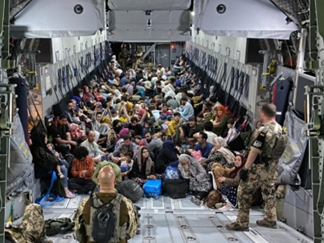
Take, for example, rewards for Afghans, always a high priority on the current Congress’ agenda. Topping the present congressional session is the Afghan Adjustment Act (AAA) which would eventually provide citizenship to that country’s evacuees, now residing in the U.S. Despite a dire warning from the Department of Homeland Security Inspector General that “DHS may have admitted or paroled individuals into the United States who pose a risk to national security and the safety of local communities,” a top bipartisan priority is Green Cards for Afghan evacuees. AAA supporters insist that the act is must-pass legislation.
Under the Biden administration’s Operation Allies Welcome, an ill-conceived plan put into place after the U.S. disastrously pulled out of Afghanistan, about 100,000 evacuees were granted parole. The parolees, the so-called “Afghans at-risk” or “displaced persons from Afghanistan,” have been granted work authorization, but don’t have the credentials to qualify for refugee status or for a Special Immigrant Visa which is given to translators or others who worked closely with the U.S. military. U.S. supervisory officials, however, have no clue who many of the paroled Afghans truly are. The IG audit found that 417 Afghans who were paroled had a first name recorded as “unknown,” and another 242 individuals had a last name recorded as “unknown.” Worse, more than 11,000 individuals had recorded birthdates of January 1. Worse still, hundreds of unvetted Afghans appeared on the Defense Department’s terrorism watch list.
Find out what's happening in Washington DCfor free with the latest updates from Patch.
The reality of how the resettlement played out stands in stark contrast to the promises Biden made to a nation angered by the grossly incompetent Afghanistan withdrawal that cost 13 U.S. military personnel their lives. Despite the Biden administration’s repeated assurances that the evacuees would be thoroughly vetted, over the last several months, the military bases where they were temporarily housed reported theft, domestic abuse and child molestation cases.
The unlimited immigration advocates have already scored an Afghan resettlement victory. DHS Secretary Mayorkas, the champion for unlimited immigration, designated Afghans for Temporary Protected Status, virtually assuring that they will never be removed from the U.S. And while now legally present, the TPS Afghans can compete with unemployed or underemployed Americans – another barrier for job-seeking citizens to surmount.
To plunge head-first into legislation that would grant unvetted Afghan evacuees citizenship, as Congress seems stubbornly intent on doing through the AAA, is foolhardy. The security stakes are too high, and the uncertainties among the evacuees’ personal histories are too many.
Joe Guzzardi writes about immigration issues and impacts. Read more at joeguzzardi.substack.com.