Politics & Government
Meteorologist Says Floridians Should Prepare for Tornadoes
There have been a record number of tornadic storms in the United States this year including the one that struck the Bloomingdale Patch area March 31.


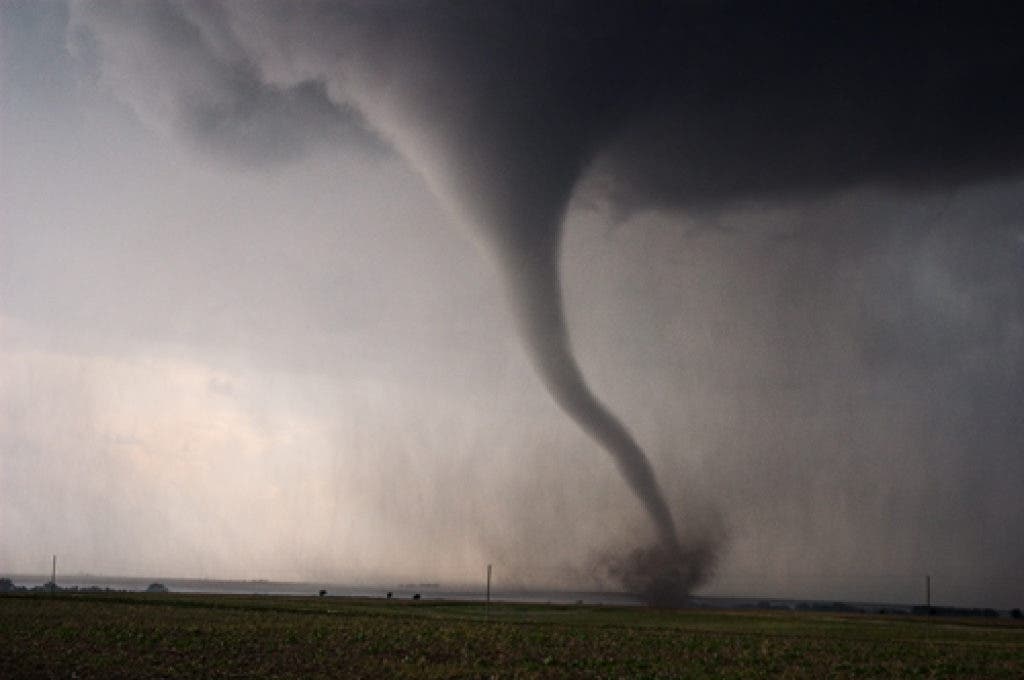
As parts of the country struggle to recover from devastating storms, Bloomingdale resident and warning coordination meteorologist for the National Weather Service-Ruskin, Daniel Noah, said area residents should be braced for storms in this area.
"Our thoughts and prayers go out to the victims of the record number of
tornadic storms in the United States this spring," said Noah in a press release. "The media reported over 231 fatalites from just the April 27th storms."
He offered some statistics to highlight the need for Floridians to prepare for tornadoes:
Find out what's happening in Bloomingdale-Riverviewfor free with the latest updates from Patch.
- Every year, an average of 1,200 tornadoes kill about 55 Americans, injure 1,500 people and cause more than $400 million in damage.
- More than 650 torandoes have been reported in 2011 as of April 27. Check out the graphics from the NWS Storm Prediction Center at: http://www.spc.noaa.gov/climo/online/monthly/2011_annual_summary.html
- The record number of tornadoes in one year was in 2004 with 1,819 and 66 fatalities. Hurricane Ivan produced a record 119 tornadoes over five days in 2004.
- Tornadoes are rated based on the Enhanced Fujita Tornado Scale (EF-Scale). Visit http://www.spc.noaa.gov/efscale/ef-scale.html to see the range of winds speeds.
- Florida has two tornado seasons. The summer tornado season (June through September) has the highest frequency of tornadoes. This includes tornadoes from tropical storms and hurricanes.
Most of these tornadoes have winds less than 100 mph and are on the ground for
a mile or less.
The deadly spring tornado season is February, March and April. These tornadoes are more powerful because the upper-level jet stream dives into Florida and allows the storms to form in a special way. Strong to violent tornadoes are just as likely to occur after midnight as they are in the afternoon. These tornadoes can have winds in excess of 175 mph, can be a mile wide, and can be on the ground for 20 miles or more.
Find out what's happening in Bloomingdale-Riverviewfor free with the latest updates from Patch.
- Since 1950, Florida has averaged 51 tornadoes a year, making Florida No. 4 for states that have the most tornadoes. Texas, Oklahoma and Kansas have more tornadoes than Florida.
- Florida Tornadoes from 1950 through January
- 3081 tornadoes
- 161 fatalities
- 3,340 injuries
- Florida has never recorded a F5 tornado (winds in excess of 200 mph) and has recorded two F4 tornadoes. The first was April 15, 1958, in Polk County with no fatalities and seven injuries. The second was April 4, 1966, when an F4 tornado crossed Pinellas, Hillsborough and Polk counties, resulting in 11 deaths and 530 injuries. Hillsborough County had three fatalities and 70 injuries.
- The deadliest tornado outbreak in Florida occurred in 1998 in Kissimmee. There were four killer tornadoes, one F2 and three F3, resulting in 42 deaths and 260 injuries.
- Another killer tornado struck The Villages and Lady Lake areas of northeast Tampa Feb. 2, 2007. It was an F3 tornado with winds up to 160 mph. There were 21 deaths and 76 injuries. In addition, more than 1,500 homes were damaged or destroyed with $160 million in damage.
Noah offers the following safety advice:
- Purchase a NOAA weather radio to monitor when storms loom.
- Manufactured homes are not safe during a tornadic storm. Seek shelter elsewhere before the storm arrives. West central Florida has the highest number of these homes when compared to the rest of Florida and 90 percent of them were built before the 1994 Building Code changes. Seek shelter before the storms arrive. Noah said those living in manufactured homes should ask themselves two questions: Am I in a tornado watch? Are storms headed in my direction? If so, find better shelter at a friend's or neighbor's house.
- Put on your shoes and put your cell phone in your pocket.
- Put on a helmet and get as many walls between you and the outside world as possible to keep the debris in the wind from finding you. Hold on tightly to one another.
- For more information on tornado safety, visit http://www.nssl.noaa.gov/edu/safety/tornadoguide.html or http://www.redcross.org/www-files/Documents/pdf/Preparedness/checklists/Tornado.pdf.
Get more local news delivered straight to your inbox. Sign up for free Patch newsletters and alerts.