
Sports
Tarpon Time Recalls Another Era
The beaches, passes and bays are holding tarpon, and anglers can attempt to tame this fish that has been said to have been around for more than 100 million years.
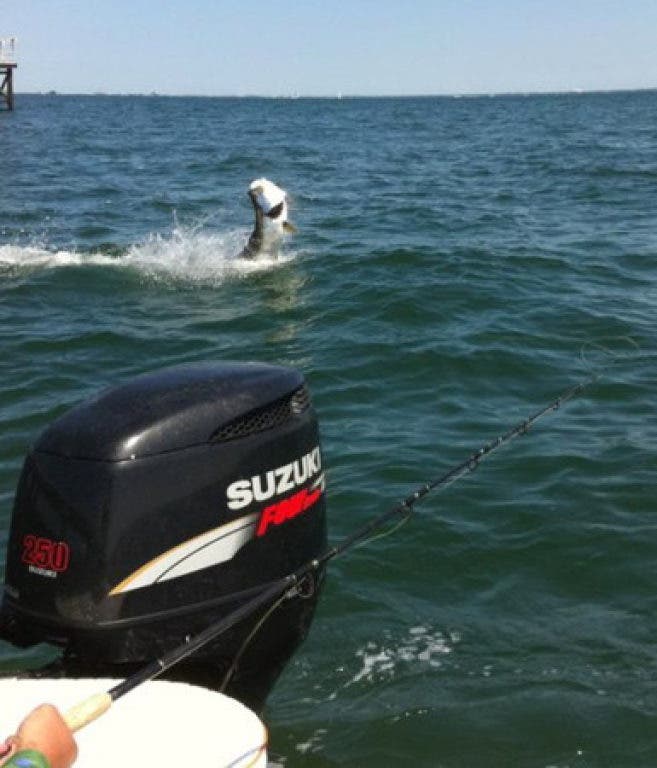
Some say dinosaurs are extinct.
Those people have never been tarpon fishing.
Tarpon, it has been said by various scientists, have been around for more than 100 million years. They can survive in salt and freshwater habitats, waters of varying pH levels and waters with low oxygen thanks to their swim bladders, which they use primarily to breathe.
Find out what's happening in Bloomingdale-Riverviewfor free with the latest updates from Patch.
A shake of their gil plates can snap 70-pound leaders like kindling in a bonfire. They are the true towing company of the sea. When agitated from a hook set, they pull drag with the force of a 350-horsepower, V-8 outboard. Anglers pull anchor. Their boat becomes a toy in bathwater.
On the Gulf Coast, tarpon seem to average about 70 to 120 pounds but can reach 280 pounds.
Find out what's happening in Bloomingdale-Riverviewfor free with the latest updates from Patch.
And the beasts are back. Some bumpers stickers claim, 'The South will rise again!" They must have been talking about Florida's late-spring tarpon run.
The silver kings are showing up in all the passes, off the beaches and up in the bays and rivers.
The fishing off the beaches will only improve until the June full moon, at which time they head offshore to spawn. It is well known the tarpon bite slows and almost vanishes days before, and during, that moon.
Stealth is key when tarpon fishing. Off the beaches, many captains sight-fish for tarpon, looking for their silvery backs to roll from the water.
It is important to not impede the direction of the tarpon's movement. Do not motor your boat in front of the tarpon. Instead, get to the side of tarpon and cast to a spot in front of their heads.
Don't assume tarpon will bite a specific bait at a given time. Many anglers have found a live crab to be the best bait, especially during fast outgoing tides that suck crabs off the bottom. But be “loaded for bear.” Tarpon might prefer a fly, artificial, threadfin, shad, shrimp or pinfish that moment.
If tarpon are not biting, wait until the change of the tide. If tarpon are not hitting after the tide makes a turn, toss the bananas overboard — the day could turn into a simple boat ride.
After a tarpon is hooked, proper technique can be the difference between a 25-minute fight that releases the tarpon in good condition and a three-hour battle that likely will leave the fish stressed and at risk of death from a shark.
When a tarpon runs, hold the rod in an opposite direction as the tarpon's movement so that the line runs straight across the tarpon's back.
Control the tarpon. Just as a defender in basketball is typically taught to make a player dribbling up the court change directions so the ball handler might wear down and fail to gain momentum, make the tarpon go where it does not want to go. When it runs left, angle the rod right, and so forth.
In the end, the angler is at the mercy of this mythological beast.
Bow to the king.
It's an old Florida anglers' expression. When the tarpon skyrockets from the water, thrust the rod forward at the fish to put slack in the line. Otherwise, the tarpon is likely to snap a taut line or shake the hook free.
Seasoned anglers know this as they know their alphabet (hopefully).
Those who haven't tamed a tarpon, consider cracking your comfort zone this month and try hooking into one of these fish — if you can call them a fish.
Hit a day when the tarpon are feeding, and you'll wonder what easily-amused film critic gave Jurrasic Park four stars.