Community Corner
Dangerous Duties Of Pasco’s Past Sheriff’s Deputies: Prohibition
In October 1922 Federal Prohibition Agent John Waters and Pasco Sheriff's Deputy Arthur Crenshaw were killed in an apparent ambush while investigating a lead on moonshine-related activities southeast of Dade City.
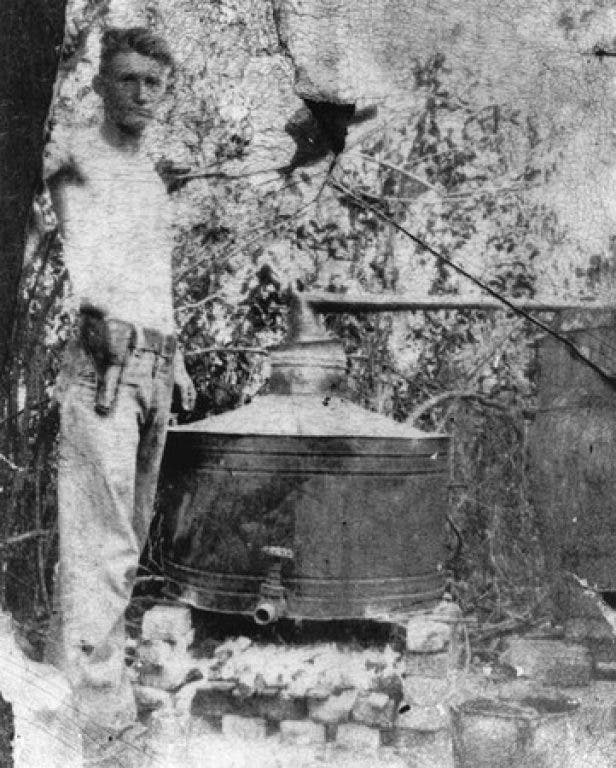

The National Prohibition Act of 1919 went into effect at midnight on Jan. 16, 1920, closing down bars, breweries, distilleries, and the like.
The enormity of the enforcement duties was not anticipated, and, consequently, the necessary resources to pursue violators were not allocated.
In most communities throughout our nation, including in Pasco County, the era of prohibition brought many new challenges for federal agents and local police.
Find out what's happening in Land O' Lakesfor free with the latest updates from Patch.
During the 12 years of prohibition, 1920-1933, hundreds of U.S. agents, police officers, and sheriff’s deputies lost their lives or were wounded in the line of duty.
But, relentless in their efforts, Pasco deputies routinely patrolled roads, engaged in countywide raids,and were none-discriminatory in their arrests.
Find out what's happening in Land O' Lakesfor free with the latest updates from Patch.
In August 1921, Mayor George J. Frese of San Antonio, Fla., was even arrested for violating the liquor laws. According to the Woodville Republican, Mayor Frese was arrested by Pasco County Sheriff Bart Sturkie, who claimed he was operating a moonshine still on the second floor of his residence on the most prominent corner in town.
This followed the Aug. 30, 1920, arrest of James Cooper and Pasco County Commissioner James Boyette in Tampa, as reported by the Associated Press.
After being stopped, the men attempted to escape in their vehicle, driving at a high rate of speed, prohibition agents said. Officers fired repeatedly into the car but only succeeded in stopping the vehicle when one officer jumped from the car he was riding in to the vehicle irt was pursuing and struck the driver with a blackjack.
Both men were charged with transportation and possession of 50 gallons of moonshine-- their point of departure, Pasco County.
Deputies often found themselves in these difficult and dangerous situations, whether a high-speed shootout or deep in the swamps and woods, where violators violently protected their illegal clandestine manufacturing of liquor.
In 1922, after receiving information of illegal activities in the woods southeast of Dade City, Prohibition Agent John Van Waters solicited the assistance of sheriff’s deputy Arthur Fleece Crenshaw of Trilby to investigate.
On the afternoon of Oct. 4, 1922, the officers headed towards the Sturkie and Lock ranches to serve search warrants for the barns and out buildings. With their investigation completed, around 6:00 p.m., the officers headed back to Dade City.
As Waters drove their Ford truck along the one-lane country road, he slowed as they approached a soft swampy area. At the same time they came under immediate gun fire in an apparent ambush that killed both instantly.
According to Deputy Sheriff J.L. Smith, the bodies of the two officers were discovered in the early morning hours of Oct. 5, 1922, by James L. Overstreet and his brother, who were reportedly on a return trip from Lakeland.
Overstreet reported finding the deceased officers’ truck on a road about three miles from the Withlacoochee River. Both deputies were wounded in the head and chest from shotgun fire. Waters was struck 10 times with buckshot and Crenshaw was hit 37 times.
The truck stalled but was still engaged in high gear as Agent Waters’ hands clutched the steering wheel and officer Crenshaw slumped over in the seat towards him. The truck also held a number of buckshot and one round from a high-powered rifle.
Oct. 6, 1922, Pasco county commissioners adopted a resolution in aspecial session that condemned the heinous crime and the lax enforcement of prohibition laws in the county. They offered a $5,000 reward for the arrest and conviction of the assassins and encouraged the sheriff to be more diligent in his enforcement efforts.
That same day, seven men were charged with first degree murder and, on Oct. 7, 1922, all were indicted by a grand jury. With headquarters in Pasco, these men-- Taft Overstreet, Paul Overstreet, Bascom Overstreet, Bird Overstreet, George W. Overstreet, Preston Overstreet, and Wilson Connell-- were all reportedly part of the notorious Overstreet Gang.
While indictments were handed down, Preston and Paul Overstreet were the only men ever tried for the crimes. Circumstantial evidence existed in their case but physical evidence was found lacking, as instructed to the jury by Judge M.A. McMullen. Both men were acquitted of charges in January 1923 and eventually returned to their illicit business.
During 1924 elections, Pasco County voters chose Isaac Washington Hudson Jr. as sheriff over Bartow Sturkie. Hudson was an ardent supporter of prohibition and despised illegal intoxicants. During his first six months in office, he raided 164 moonshine stills, according to the recollection of his son Deputy Leon Hudson.
Under the new sheriff, federal agents and local deputies also put pressure on organizations such as the Overstreet Gang. During a Feb. 24, 1925, raid, Pasco Deputy C.C. Walker was forced to shoot and kill Preston Overstreet and Neal Wilson during a shootout.
According to the Herald Journal, officers located three stills and decided to wait for their owners return. When two men appeared in an automobile, deputies ordered them to exit the car. The two men, Overstreet and Wilson, opened fire on deputies who returned fire, killing both.
An inquest in Dade City found Deputy Walker acted in self-defense, and he was exonerated of any blame.
In February 1926, following Preston Overstreet’s death, the alleged leader of the notorious Overstreet Gang, Bascom Overstreet, was arrested and held in jail in Bradenton on charges of possession of liquor.
By 1927, Pasco deputies were conducting three to four raids a week, including an April 13, 1927, raid on the home of known Overstreet associate Wilson Connell. No arrests were made, but deputies documented the activities.
The following week, April 22, 1927, deputies made a rather significant bust in the small Catholic community of St. Joseph. Here, they confiscated and destroyed 60-gallons of moonshine, a 500-gallon copper still, 4,000 gallons of sour mash used to make moonshine, and various other items.
During their various raids, deputies confiscated any and everything at the still site including trucks, cars, handguns, rifles, buckets, barrels, tools, corn, sugar, lumber, and in one case a dog.
But, these raids often seemed to have little effect on the illegal operations. In many instances, charges were fought in court and often the arrested parties were acquitted and returned to business a few weeks later.
As Prohibition became increasingly unpopular, especially in the big cities, repeal was eagerly anticipated by everyone, including law enforcement.
On Dec. 5, 1933, prohibition was repealed after President Franklin Roosevelt signed into law an amendment to the National Prohibition Act.
According to a government study conducted in more than 30 major U.S cities during the prohibition years of 1920 and 1921, crimes increased by 24 percent-- theft and burglaries increased by 9 percent, homicide by 12.7 percent, assault and battery rose by 13 percent and drug addiction by 44.6 percent. Police department costs rose by 11.4 percent.