Schools
FIU Gets $3.4 Million to Fight Zika
Florida has reported more than 1,000 cases of the mosquito-borne illness.


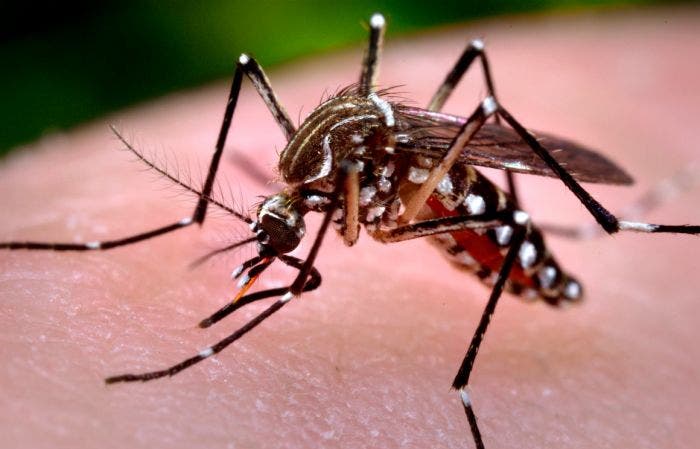
MIAMI — With Zika still a threat, Florida International University announced on Friday that it has received $3.4 million in grant money to fight the mosquito-borne illness.
FIU researchers will target the transmission and impact of the disease using a variety of methods, according to university officials.
Florida health officials confirmed a new locally acquired case of the Zika virus in Miami-Dade County in January and three new cases of locally acquired Zika in December.
Find out what's happening in Miamifor free with the latest updates from Patch.
Sign up for our free Daily Newsletters and Breaking News Alerts for the Miami, FL Patch
The disease has been linked to serious birth defects, including microcephaly, when contracted by expectant mothers during pregnancy. Microcephaly is a birth defect where a baby’s head is smaller than expected when compared to babies of the same sex and age. Babies with microcephaly often have smaller brains that might not have developed properly.
Find out what's happening in Miamifor free with the latest updates from Patch.
FIU's Herbert Wertheim College of Medicine received nearly $2 million of the grant money from the Florida Department of Health to study how Zika breaches the blood brain barrier to invade and kill neurons and other brain cells.
“We hope to find out how the virus gets into the brain, the mechanism by which it enters the cells, and then what kinds of therapies can be effective in eradicating it,” said project lead Nazira El-Hage, a professor in the department of immunology.
The team, which includes Distinguished Professor Madhavan Nail, will look at using Nair’s patented nano-technology to deliver an experimental drug called Beclin1 through the nearly impermeable blood brain barrier to kill the virus inside the brain.
According to the Centers for Disease Control and Prevention Florida had a total of 855 travel-related cases of Zika and 214 locally transmitted cases as of Wednesday.
The balance of the FIU grant money went to the Biomolecular Sciences Institute in the College of Arts, Sciences & Education, including nearly $200,000 from the Florida Department of Health to expand research on mosquito genetics and $1.2 million from the Centers for Disease Control and Prevention (CDC) that will be go to a new multi-university center dedicated to stopping the spread of Zika and other mosquito-borne illnesses.
Biologist Matthew DeGennaro who leads these projects, studies how ###em, the principle vector of dengue, chikungunya, and Zika, find their human and plant hosts in the hopes of identifying molecular targets in mosquitoes for better repellant design, according to university officials.
His research team is developing new bait that could lure female mosquitoes to lay eggs in a trap that then kills the eggs.
“The collaboration and statewide approach to fighting Zika in Florida is the best sign of hope that we can beat this,” DeGennaro said. “The academic world is trying to respond to this crisis, and by working together along with mosquito control and others, we can find effective solutions that will stop these cycles of disease.”
The Florida Department of Health’s Zika Research Grant Initiative is focused on vaccine development, diagnostic testing, therapeutics, and health effects of Zika. The CDC grant is part of nearly $184 million in funding to support efforts to protect Americans from Zika and associated adverse health outcomes.
“Many FIU researchers are working on Zika-related projects that have the potential to help the South Florida and global communities,” said FIU Vice President for research and economic development Andres Gil. “We have significant expertise in this area and are well positioned to make a difference.”
South Florida has been called ground zero in the Zika fight. While the last Zika zone in Miami was lifted in December, scientists are quick to point out that vector-borne diseases — those transmitted by mosquitoes, ticks, sandflies and other arthropods — are a continuing threat with South Florida's warm and humid climate.
Photo courtesy of Florida International University
Get more local news delivered straight to your inbox. Sign up for free Patch newsletters and alerts.