Neighbor News
Join UF Croc Docs at CrocFest, held at Zoo Miami, to support international American crocodile conservation
CrocFest is an event that brings together the public, crocodile enthusiasts and conservationists from around the world.
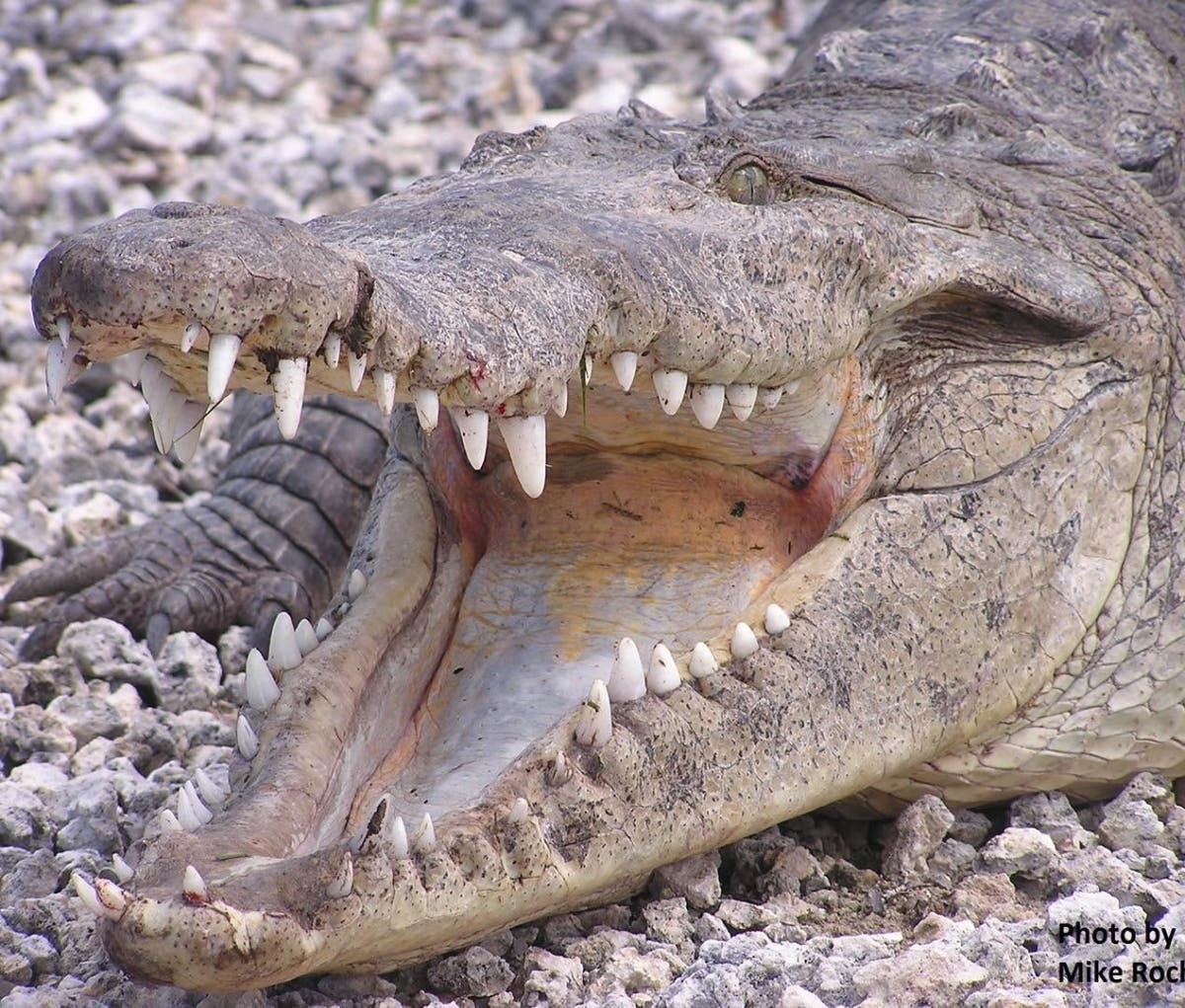


American crocodiles in Belize and Jamaica face distinct threats, and researchers at the University of Florida Institute of Food and Agricultural Sciences (UF/IFAS) are leading an international conservation effort to help protect both populations.
In Belize, development and competition with a co-existing crocodile species are threatening the genetic integrity of one of the country’s last American crocodile populations. Meanwhile, in Jamaica, habitat loss, human-crocodile conflict and the aftermath of a devastating hurricane have pushed crocodiles into places where they are vulnerable to injury, conflict and death.
“The public can help by attending Miami CrocFest on Oct. 24, where proceeds will support our research project, “A Tail in Two Countries: Helping the American Crocodile Facing High threats in Belize and Jamaica,” said Venetia Briggs-Gonzalez, research ecologist at UF/IFAS Fort Lauderdale Research and Education Center (UF/IFAS FLREC) and lead principal investigator with The UF Croc Docs.
Find out what's happening in Miamifor free with the latest updates from Patch.
Tickets are $30 for adults, $10 for children ages 5 to 17 and free for children age 4 and younger. Guests receive admission to Zoo Miami exhibits and CrocFest activities beginning at noon, including dinner and beverages, a silent auction, a live auction featuring unique items and opportunities to engage directly with leading crocodile researchers and conservation professionals.
CrocFest is an event that brings together crocodile enthusiasts, conservationists and the public from around the world. It has raised over $1 Million dollars for international crocodile conservation over the past 10 years. The research project, by Briggs-Gonzalez with UF Croc Docs members and co-principal investigator Joseph “Joey” Brown of Hope Zoo in Jamaica, is built on partnerships with local collaborators in Belize and Jamaica that helps to inspire stewardship for crocodile conservation and foster national pride.
Find out what's happening in Miamifor free with the latest updates from Patch.
The goal is to raise funds through CrocFest to support fieldwork, train local personnel, provide equipment, GPS transmitters and field access transportation as well as critical operational needs at facilities temporarily housing displaced crocodiles in Jamaica.
The 12-month project focuses on the American crocodile, Crocodylus acutus, a new world crocodilian species that is listed as vulnerable by the International Union for Conservation of Nature (IUCN) and is nationally protected in both Belize and Jamaica under their Wildlife Protection Acts. Researchers will study distinct populations in both countries, where the species faces very different threats.
Research in Belize will be on one of the country’s last potentially genetically pure American crocodile populations. Researchers will survey Lighthouse Reef Atoll, a small group of offshore islands, for the first time in more than two decades, to determine the presence of these crocodiles, and where they may be nesting and whether they remain genetically distinct from hybrids with Morelet’s crocodiles that inhabit mainland Belize.
“American crocodiles, even though they’re the most widely distributed crocodile species, are threatened because they are hybridizing with similar crocodile species in so many places,” said Briggs-Gonzalez. “As scientists, we want to be able to identify populations that are genetically intact, because this is critical to species survival.”
In Jamaica, researchers will address increasing human-crocodile conflict and habitat disruption by translocating adult crocodiles from high-conflict urban areas to more suitable, natural habitats. Researchers will aim to translocate 10 adult crocodiles from high-conflict areas and fit them with GPS transmitters to track their movements and habitat use. Juveniles from the Holland Bay Crocodile Sanctuary will be introduced to natural habitats on Jamaica’s north coast, where researchers will monitor their movements and home range establishment.
“We want to be able to remove animals from places where they are not wanted, and relocate them to places where crocodiles have historically occurred, but populations have declined,” said Brown. “Then we want to be able to track those animals that we release and see where they go. And especially to figure out why they are attracted to artificial wetlands.”
The research will be conducted with local partners, including the Lighthouse Reef Research Repository in Belize, Holland Bay Crocodile Sanctuary and Hope Zoo in Jamaica, and Gatorland Global of Florida. In addition to collecting vital crocodile data, researchers will work with local personnel to strengthen conservation capacity in both countries.