Health & Fitness
Liver Transplant Performed by UM Doctors On 11-Year-Old
The Clearwater child's liver was so bad it was equivalent to that of a person who had been drinking their whole life.


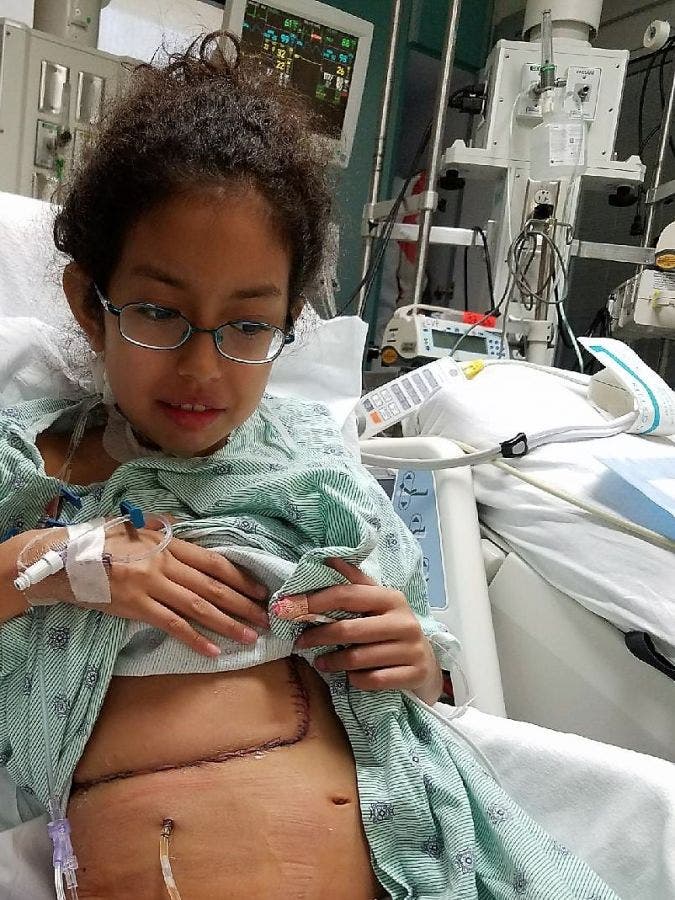
MIAMI, FL — Just days after her father returned from an overseas deployment as a military contractor in March surgeons at the University of Miami Health System say they performed a lifesaving liver transplant on an 11-year-old Clearwater child. The girl is expected to make a full recovery. She charmed reporters on Tuesday, conceding that most of her friends aren't likely to see her story in the news.
"My friends usually don't watch the news, but I'm pretty sure some of my family does," Victoria Rojas confided to reporters at a Jackson Memorial Hospital press conference. "So, I want to to say 'thank you' because they helped me get through this." (Sign up for our free Daily Newsletters and Breaking News Alerts for the Miami Patch.)
The fifth grader said she felt "good" after the surgery and was excited to receive a transplant after being sick for so long.
Find out what's happening in Miamifor free with the latest updates from Patch.
A week after her father, Jenaro Rojas returned from his overseas deployment, the Rojas family received the news that they had been waiting for — that doctors had a liver match for Victoria. With the March surgery now behind her, Victoria is on the road to recovery, according to UHealth officials.
Find out what's happening in Miamifor free with the latest updates from Patch.
Victoria began showing signs of jaundice – an unnaturally yellow discoloration of her skin and eyes – in April 2016. She underwent a series of diagnostic tests, which determined that she had autoimmune hepatitis type 1 liver disease. The chronic disease causes the body’s immune system to attack the liver and cause it to become inflamed, often leading to liver failure, according to UHealth officials.
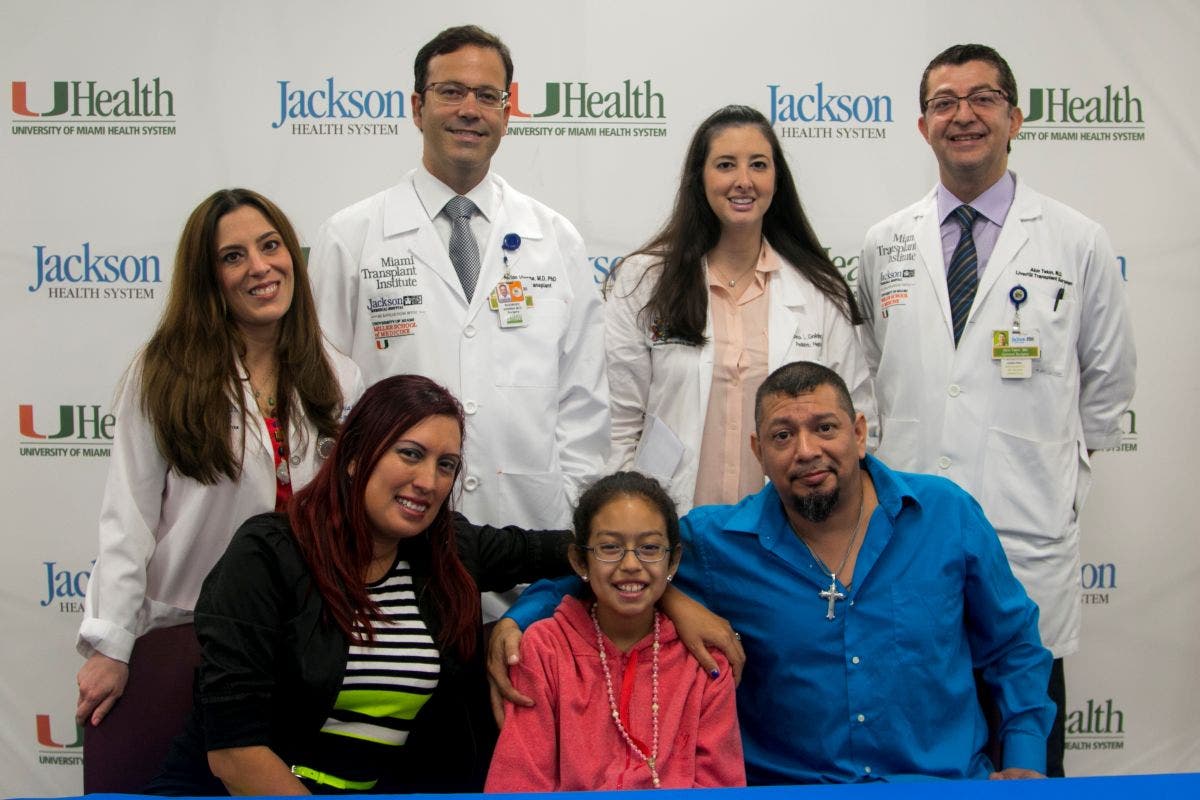
"I felt very unhelpful, useless," her father, Jenaro Rojas, acknowledged to reporters on Tuesday.
“The doctor told us that her liver was so bad it was equivalent to that of a person who had been drinking their whole life,” added Victoria's mother, Mary Ann Rojas. “She was rarely sick. I couldn’t believe my baby was going through this.”
Victoria spent the next several weeks in the hospital, as her mother desperately searched for solutions and the best care for her daughter. To make matters worse, Victoria's father still deployed as a military contractor.
“I’ve traveled to five continents for years on dangerous missions,” said Jenaro. “But seeing my baby hurt and me feeling helpless has been the most pain I’ve ever endured.”
Victoria’s doctors in Clearwater referred her to the Miami Transplant Institute (MTI) at the University of Miami/Jackson Memorial Medical Center in Miami.
Despite the uncertainty of Victoria’s condition, the family felt comfortable having the surgery after meeting with University of Miami Health System pediatric hepatologist Dr. Jennifer Garcia,
“Upon first meeting Victoria, it was clear her autoimmune disease had progressed to end-stage liver disease,” Garcia explained. “She had developed ascites, fluid in her abdomen, and esophageal varices at risk for bleeding, enlarged veins in the feeding tube that connects the throat to the stomach. There was no doubt that she would need a lifesaving liver transplant in order to achieve a good long-term outcome."
During this time, Victoria was on immunosuppression for her autoimmune disease. She suffered heavy side effects such as hallucinations and memory loss that caused her to be home-schooled.
“I would always talk to Victoria and tell her that everything will be okay, and that we will get through this easily,” said the girl's father. “Being home-schooled was hard for her because she was involved in school activities and she missed her friends.”
Over the next several months, Victoria’s medications decreased and her father was once again deployed. Doctors determined that Victoria’s best chance at survival was a liver transplant. By the end of 2016, she was placed on the national waiting transplant list.
“Victoria was sad and kept asking: ‘Why me? What did I do that this happened to me, and why didn’t this happen when I was a baby?’” her mother recalled.
Still, the family turned to their faith and grew more united, particularly when Victoria's father returned home from his last deployment on March 13.
The family drove to Miami, where UHealth transplant surgeon Dr. Akin Tekin led the five-hour surgery at Jackson Memorial Hospital.
“We had faith in God and the doctors,” said Victoria's mother. “When we saw Dr. Tekin, it was a relief to know my daughter was fine, and we are so thankful for the empathy of Dr. Tekin during the most vulnerable moment of our lives.”
In time Victoria will be able to return to school, play sports and have a normal childhood again.
“Victoria is smiling more, walks more, is ecstatic, and is eating more,” said her mother. “She is no longer on pain medication and she is stronger than ever.”
As Victoria recovers, her father feels grateful that he could be by her side during her recovery. He is scheduled to leave again in a few weeks for a 10-month overseas deployment. But he can go now go with peace of mind.
“We’re all fighting for the same cause: for Victoria to live a healthier and normal life again,” her father explained.
April is National Donate Life Month and because of Victoria’s successful transplantation journey, the family now wants to advocate for this cause.
“We are thankful to the donor family that saved my daughtcer’s life,” said Victoria's father. “I am forever in your debt.”
A GoFundMe page has been set up to help the family. It had raised $1,570 of a $50,000 goal as of Tuesday.
Photos of Victoria Rojas and medical team courtesy of University of Miami Health System
Get more local news delivered straight to your inbox. Sign up for free Patch newsletters and alerts.