Politics & Government
It's Official: NPR Selling Downtown Church Properties
But it won't be officially official until the council formally agrees to sell the parcels in its updated CRA plan, then approves the plan -- and then finds buyers.
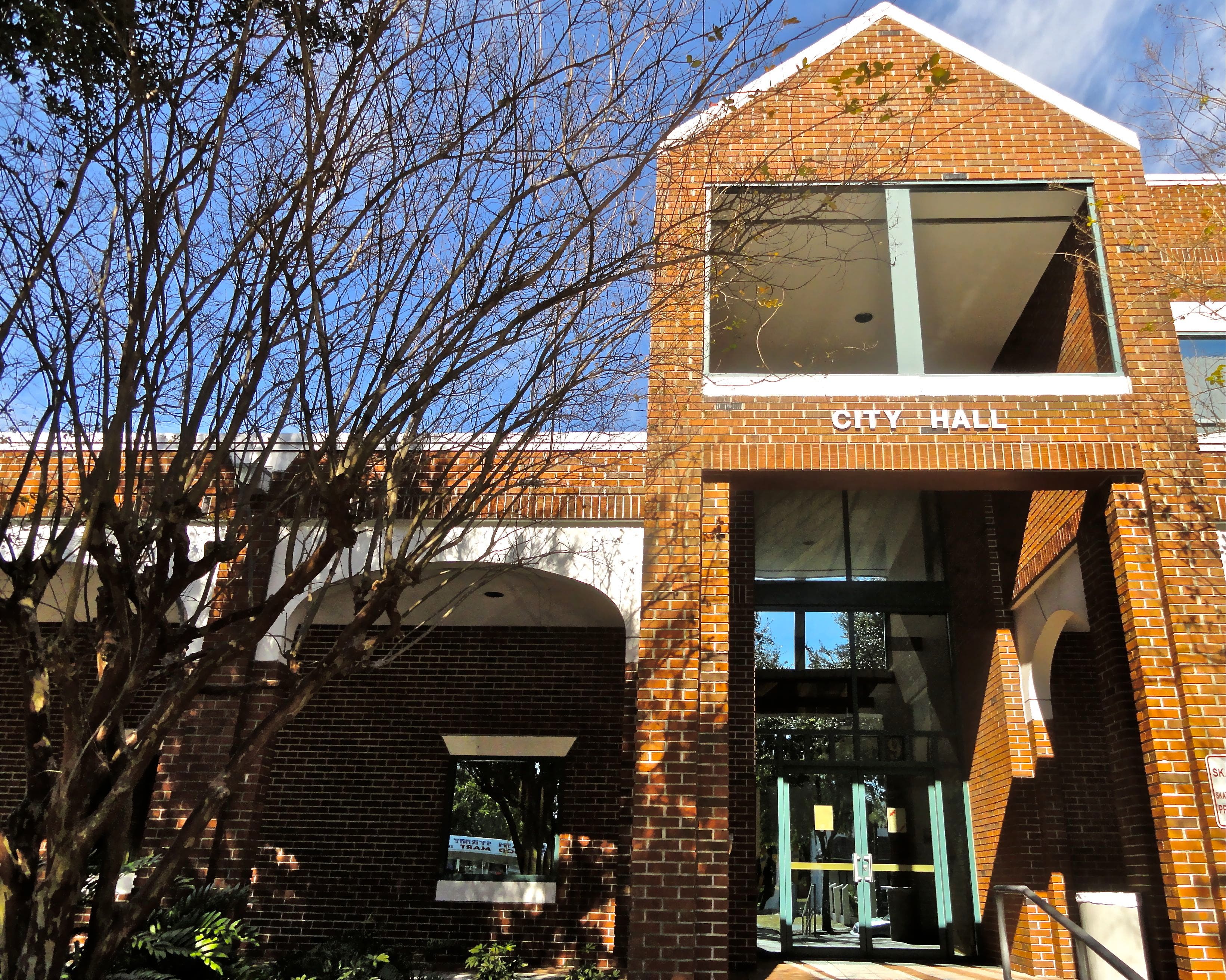
Now, it's official: The city of New Port Richey is selling the site of the former First Baptist Church on Circle Drive and the former Gateway City Church on River Road.
But it won't be officially official until the council plugs the intent to sell the city-owned properties into the New Port Richey Community Redevelopment Agency's and formally approves that plan during a regular council meeting.
Oh, and finds buyers.
Find out what's happening in New Port Richeyfor free with the latest updates from Patch.
The New Port Richey City Council Tuesday, June 14, informally reviewed a proposal to increase residential density on the Gateway City Church property and a suggestion to allow Realtors to handle the sales during a workshop on CRA-related issues.
Several council members thought they'd already agreed to sell both properties.
Find out what's happening in New Port Richeyfor free with the latest updates from Patch.
"I thought we were already actively marketing the property but, because of the economy, we hadn't gotten any bites yet," Councilwoman said.
Last summer, the council agreed to pay AECOM Technical Services, Inc., of Long Beach, Calif., and Real Estate Research Consultants (RERC), of Orlando, $50,000 to jointly analyze the city's options and recommend how the CRA plan should be rewritten.
Following face-to-face meetings in December and January phone interviews, AECOM and RERC presented tentative recommendations during a two-hour public hearing in March.
The consensus was the city must aggressively entice purchasers of the former churches and it renew its focus on smaller neighborhood plans.
The council reviewed the proposed 50-page CRA Strategic Redevelopment Action Plan (SRAP) but has not formally adopted it -- something it must do before it can legally package the properties for sale, City Attorney Susan Churuti said.
The SRAP calls for intensifying the residential zoning for the 2.3-acre former Gateway Church site from 5 units to 10 units per acre -- doubling its multi-unit capacity to 23.
The city paid $1.05 million for the church on River Road in 2006. The structure has been empty since May 22 when the Gateway Church, which had been paying $3,500 a month to lease the building, left.
There was little dissent in increasing density, although Councilwoman Ginny Miller said the parcel is "pretty darn close" to the U.S. 19 commercial corridor and could be better served with a "transitional" zoning, such as medical offices.
There is no reason to change the density entitlements for the former First Baptist Church site, at the corner of Circle and Center avenues on Orange Lake, which the city purchased in 2005 for $3.1 million, City Development Director Lisa Fierce saidl
The 2.9-acre parcel is already zoned to allow up to 43 units -- 15 per acre -- which is "adequate for now," she said.
Councilwoman Judy DeBella Thomas wondered if it was prudent to change the zoning and residential densities before knowing what prospective buyers are looking for.
"This seems backward to me," agreed Miller, especially when packaging the former First Baptist Church site for sale.
Miller said since the city bought the parcel, it has been approached by "two or three groups with all sorts of ideas" about how to use it.
The city, which spent $85,000 to demolish the 54-year-old church building last summer, has been asked at different times by different groups to consider allowing the site to house a concert hall, performing arts center, and cultural center.
More formal proposals have included a Cleveland developer's now-defunct plan for a $14.4 million, 72-unit affordable housing project for the elderly.
Why chisel zoning and density entitlements into granite now instead of remaining flexible on how the property could be used? Miller asked.
City Manager John Schneiger said the council can always change the zoning and density later, but granting these entitlements now would enhance the properties appraisals, a necessary legal precursor to putting them up for bid.
Miller said city officials may not be the best people to orchestrate the properties' sales.
"Why not use a Realtor?" she asked. "Why don't we have people who do this for a living actually bid to market it? In this market, we would probably find a glut of people who would take it on for a fee at the end."
Churuti said there is no legal prohibition against a government allowing a Realtor to handle the sale of municipal-owned property as long as there is a plan that allows for that.
No problem, DeBella Thomas said.
"Just put it on Craigslist that we can do that," she said, noting the city's sales pitch should be, "Will sell to suit."