Community Corner
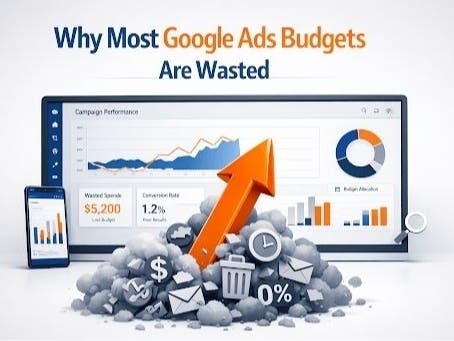
Why Most Google Ads Budgets Are Wasted; The Fix Has Nothing to Do With Better Targeting
From a Brand Partner: The real reason Google Ads underperform lies beyond targeting - in the system behind the click.
In the digital advertising world, one refrain is almost universal: “Improve your targeting. Sharpen your keywords.” Google Ads platforms and agencies alike preach this advice as the primary cure for under-performing campaigns. But recent data and marketer experience suggest a different reality and one that’s far more costly if ignored.
The hard truth: most Google Ads budgets are wasted not because of poor targeting, but because of broken experiences, misaligned offers, faulty attribution, and fundamental misunderstandings about how demand works.
As businesses pour dollars into paid search with the belief that better audience segmentation is the silver bullet, they overlook the structural issues that actually determine whether a campaign succeeds or fails.
The Misleading Fixation on Targeting
Targeting and keyword optimization are undeniably important components of a Google Ads campaign. Precision matters; matching intent with search terms and delivery with audience segments is foundational.
Yet, focusing almost exclusively on these elements is like fixing a leaky faucet while ignoring the burst pipe behind the wall.
“The data shows that even when ads are perfectly targeted, the vast majority of clicks never convert,” says Stephan, Founder of Get the Clicks, who specializes in Ads management. “That means the problem isn’t who you’re targeting; it’s what happens after they click.”
This insight reflects a growing consensus among performance marketers: clicks without conversion are sunk costs.
Landing Experience: The Silent Budget Killer
A well-targeted ad that drives a click is only half the equation. The landing experience, the web page a user sees after engaging the ad, shapes whether that click becomes a lead, a sale, or a lost opportunity.
Here’s where many businesses stumble:
- Slow-loading pages frustrate users and increase bounce rates.
- Cluttered or confusing layouts fail to guide the visitor toward the desired action.
- Inconsistent messaging between the ad and the landing page undermines trust.
For example, a search ad promising a “Free Consultation” that sends users to a generic services page with no reference to that offer doesn’t just miss opportunities; it destroys relevance.
Research consistently shows that even modest improvements in landing page experience can lead to dramatic increases in conversion rates, sometimes without spending a single extra dollar on ads.
Misaligned Offers: When Value Isn’t Clear
Another common culprit of wasted spend is offer misalignment. Advertisers assume that any offer is enough to capture demand. In reality, the offer must be relevant, compelling, and aligned with what the audience actually wants.
Too many campaigns fall into the trap of promoting a service instead of a solution to a problem. For instance, saying “Learn more about our services” is weak. But “Get a guaranteed 20% reduction in costs or your first month free” is strong.
Audiences respond to clear value propositions, not abstract promises. When the offered value is vague or irrelevant, even expertly targeted ads will underperform.
Attribution: The Black Box That Bleeds Budgets
Attribution, understanding which ads or touchpoints drive conversions, is one of the most misunderstood aspects of digital campaigns. Traditional last-click attribution models give all credit to the final click before a conversion, ignoring the complex paths many customers take.
This oversimplification leads to two major problems:
- Misjudging performance: Some ads or keywords may appear ineffective when they are actually initiating interest earlier in the funnel.
- Misallocating budget: Dollars get pulled from channels that are undervalued and pushed toward ones that merely capture attention later in the journey.
As a result, advertisers frequently scrap high-intent campaigns prematurely or double down on surface-level interactions that add little real value.
“Without accurate attribution, marketers fly blind,” Stephan explains. “You can optimize every keyword under the sun, but if you don’t know how value flows through your customer journey, you're just rearranging deck chairs on a sinking ship.”
Demand Generation vs. Demand Capture: The Fundamental Distinction
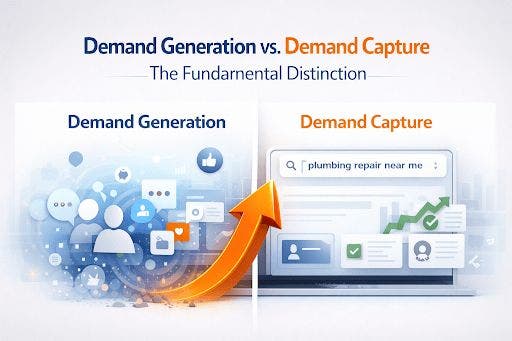
Perhaps the most common and costly misunderstanding in paid search strategy is the difference between demand generation and demand capture.
Demand capture targets users who are actively searching for a known solution, such as someone looking for “plumbing repair near me,” where intent already exists.
Demand generation, on the other hand, focuses on building awareness and interest among audiences who may not yet realize they have a problem or need a solution.
Google Ads is highly effective at capturing existing demand, but many businesses mistakenly expect it to generate demand on its own. When results fall short, the issue is rarely the platform. Strong performance requires pairing Google Ads with broader brand-building efforts that generate initial interest, then strategically capturing that demand once it materializes.
The Solution: A Holistic Approach That Fixes the Real Problems
So what’s the fix if better targeting isn’t the answer? The solution lies in addressing the full system surrounding a Google Ads campaign, not just the inputs. Performance improves when businesses optimize the post-click experience by ensuring landing pages load quickly, communicate clearly, and align precisely with ad messaging.
Equally important is crafting value-aligned offers that speak directly to audience needs rather than relying on generic service descriptions. Strong results also depend on robust attribution models that reflect real customer journeys, allowing budgets to be allocated based on true impact rather than surface-level clicks.
Finally, advertisers must understand the distinction between demand generation and demand capture, and integrate both rather than relying solely on paid search to do all the work.
At Get The Clicks Orlando, we specialize in diagnosing these hidden levers of performance. By fixing the full campaign system, not just keywords, businesses unlock real Google Ads returns.
About Us
GTC (Get The Clicks) Orlando is a performance marketing agency dedicated to helping businesses maximize the impact of their digital advertising investments. We specialize in campaign strategy, landing page experience optimization, attribution modeling, and demand-generation integration. To learn more, contact us at 407-476-0203 or visit our website.
This is a paid post contributed by a Patch Community Partner, a local brand partner.. The views expressed in this post are the author's own, and the information presented has not been verified by Patch. To learn more, click here.