Health & Fitness
Blog: All Pet Vaccines are NOT Created Equal
Certain breeds of dogs are more prone to having a reaction to vaccines. Malignant tumors can form in some cats as a result of certain vaccine ingredients.
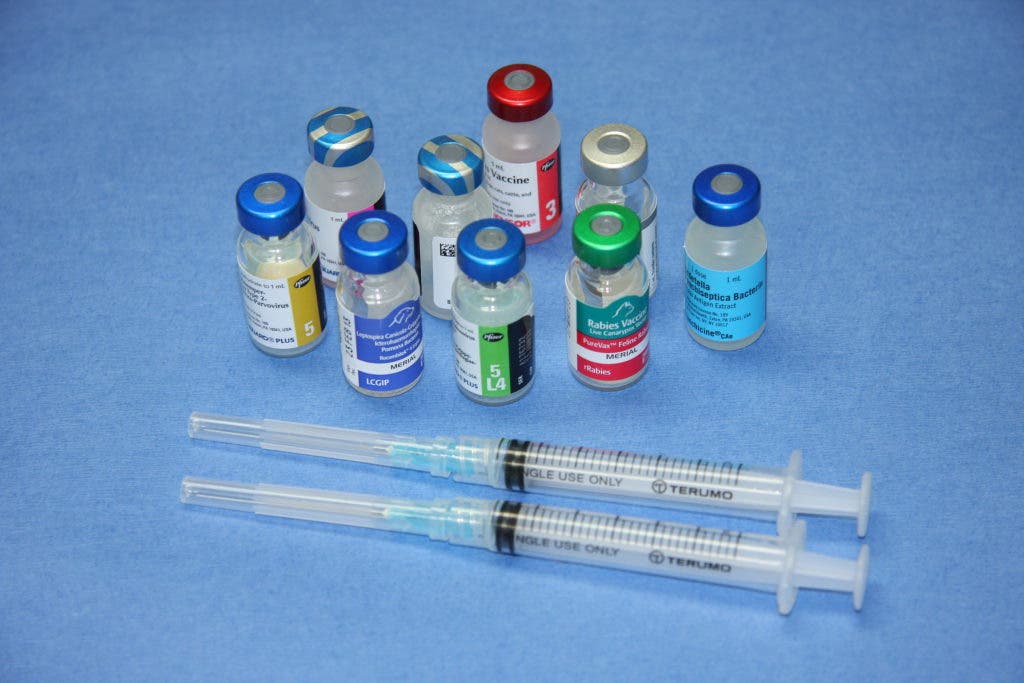


I’ll bet you didn’t know that there are no less than nine different manufacturers of vaccines for dogs and cats currently licensed by the USDA? Of the major manufacturers, there are still no less than 15 varieties of rabies vaccine and well over 100 of all the other vaccines and vaccine combinations for dogs and cats.
Do you know which of these would be the best vaccine for your pet? Most are pretty effective at preventing the diseases they are labeled to protect against, but there is more to the story than that.
Some vaccines are quite reactive, meaning they are more likely to cause a vaccine reaction than the less reactive vaccines. The ideal rate of vaccine reaction should be less than one-half of one percent (per the immunology guru, Dr. Craig Datz). There are a few brands out there with much, much higher rates of reaction. Certain breeds are more prone to reactions to their immunizations. Allergic-type reactions are more common in Dachshunds, Chihuahuas, Pugs and Schnauzers to name a few. Inflammatory skin reactions (vasculitis & panniculitis) are more common in the poodles, Bichons and many terriers. There are other differences too.
Find out what's happening in Palm Harborfor free with the latest updates from Patch.
The biggest issue involves cat vaccines. Cats have a peculiar response to chronic inflammation and can form malignant tumors called fibrosarcomas in response to the chronic inflammation that can be caused by certain vaccine ingredients. Some vaccines contain adjuvants, which are used to stimulate a greater immune response to the vaccine. Unfortunately, they also seem to lead to greater inflammation in cats which can lead to this very aggressive malignant tumor in a small number of cats.
So, only vaccines that do not contain adjuvant are recommended for cats these days. But guess what? Yes, there are still many more feline vaccines that contain adjuvant out there than there are those without them. And guess which costs more? Yep, the vaccine without adjuvant costs a great deal more than the ones with it. So when your cat gets a “cheap” vaccine, which type of vaccine do you think your cat is probably getting? Do your cat a favor and make sure she/he only receives vaccines that contain NO adjuvant.
Find out what's happening in Palm Harborfor free with the latest updates from Patch.
Be aware, there is only one Feline Leukemia vaccine and there is only one rabies vaccine that is free of adjuvant! And if your cat has had a three-year rabies vaccine, they had adjuvant. There are simply no three-year rabies vaccines without adjuvant yet. This is a complex issue that I have tried to simplify, so see this article if you prefer more in-depth information about this phenomenon.
Some types of vaccines will generate protection faster than others. Some are labeled to prevent disease while other labels read "an aid in the prevention" of said disease.
Hmmm, that doesn’t sound the same and these labels are guided by the FDA trials to prove the effectiveness of the tested products. Can a vaccine work even better than the label states? Absolutely yes! The label all depends on how the study was designed however many years ago when it was performed for the FDA approval.
But, it is often all the information we veterinarians have to work with. The actual manufacturing processes for vaccines are “trade secrets”, so it is very difficult to compare one vaccine to another directly. There are no good head to head studies pitting one vaccine against another, in the lab or in real world conditions. What we do have are good studies showing how long it takes the specific product to stimulate immunity in the pet and the typical duration that immunity should last based on an average population. We also have our own and our colleague’s experiences with reactive vaccines to help guide us in our product choices.
So, how do vets choose which products to use? Well, hopefully the decision is based on which products are the most effective with the least frequency of adverse reactions or side effects for the patients. Unfortunately, this is typically not the least expensive product.
Frighteningly, there are even some vaccines marketed for owner self-vaccination online and in feed stores that use outdated technology and are not even very effective. These are typically manufactured by obscure companies using old technology and are marketed directly to pet owners. Unfortunately, some breeders don’t realize this and purchase these vaccines to give their breeding animals and puppies. Given that Parvo is still alive and well in most communities, this is scary! Thankfully, none of the vaccines made by our current manufacturers that sell directly to veterinarians have issues with effectiveness.
Some vaccines are sold in multi-dose vials rather than individual doses. So the vial is punctured ten or more times to pull out vaccine, each potentially contaminating the remaining product. And if it isn’t mixed thoroughly before withdrawing the dose, the dose may not be exactly as the manufacturer intended. The individual vials may cost a bit more, but they remove those potential problems with vaccine administration.
To my dismay, I just found a Distemper-Parvo vaccine from a major manufacturer being sold online at a cost that is one-fifth of what I pay for my vaccine to protect against the same diseases! Care to guess whether this is a highly reactive brand vaccine? So, I choose to pay five times as much for a safer product even though both vaccines prevent Distemper and Parvo viruses in dogs. And believe me, if it’s your dog that reacts to immunizations, you’ll be glad I paid more to reduce that risk. Oh, that’s right, most pet owners have no idea that there is any difference in vaccines and that some cost much more than others. Unfortunately, like so many things in life, you get what you pay for. But now you do know that all vaccines are not created equal. Hopefully you will now be armed to ask the right questions and be an educated consumer. Your animals will thank you for it!
(We will address the frequency of immunizations in another blog soon.)