Health & Fitness
My Spay-Neuter Adventure in Colombia
An article about my trip with World Vets to spay & neuter animals in Colombia.


So, I've been quiet for a good while... that is a bit unusual!
In fact, I've only recently returned from a trip to Colombia with World Vets. World Vets is a young, but dynamic NGO (non-governmental organization) doing great works for animals, primarily in under-developed regions of the world. This particular venture was a pilot trip to San Andres Island, Colombia. This small island has a significant over-population problem involving both dogs and cats. Like many under-developed regions, the more typical method of dealing with strays is by poisoning, a cruel solution at best. The governor of San Andres is to be commended for being open to more progressive solutions. The government and local rescue organizations joined together to help organize this event. Many of the stray dogs live on or around the island's military base, so the military was actively involved as well.
We spent one day setting up and three days performing surgery & examining animals. The final total was 208 animals sterilized and another 100 receiving medical consultations and veterinary care. All those spayed or neutered also received deworming medications, immunizations including rabies and treatment for fleas & ticks. A few animals had other procedures in addition to sterilization such as removal of large tumors and the removal of a very painful glaucomatous eye that was beyond salvage. A few pets received treatment for a type of debilitating contagious tumor called Canine Transmissible Venereal Tumor (TVT). A similar transmissible tumor is killing Tasmanian Devils in Australia and biopsy samples were taken from these dogs to contribute to a major TVT study in England.
Find out what's happening in Palm Harborfor free with the latest updates from Patch.
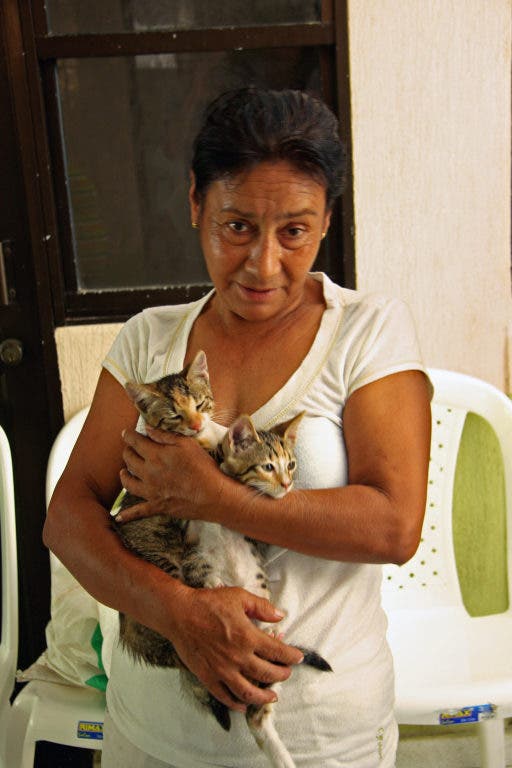
Although many of these animals were strays and street dogs, a large number actually had owners. In this environment, ownership may be loosely defined and may mean they occasionally feed the animal although some were what we think of as house pets. More than a few cats presented to be spayed along with their current litter of kittens. We happily spayed Mom and her kittens! Several of the strays we treated were adopted after surgery. Many of the soldiers brought in strays from the base that they had become attached to & they made sure those dogs had surgery & immunizations too. The local volunteers, government employees and military were phenomenally helpful and very patient with our broken Spanish. The owners often waited hours in line before their pet was taken for surgery and then waited more until they were awake enough to be carried home. Nonetheless, everyone was polite and cheerful and patient with the lines. On the last day, we arrived shortly after 7 am and there was already a long line of people waiting their turn. We were welcomed with warm smiles and proud owners shared their pets names with us as we took a few photos. We did not leave that night until 8:30pm. Among the people waiting there was no sense of entitlement, no evidence of unpleasantness as they waited, no rude or impatient behavior. Everyone seemed very grateful that we were there to help.
It was a very gratifying experience overall. Despite the bugs, the lack of hot water, the lost luggage and the airline food that nearly killed me. (The Bogota airport is not the best place to spend seven hours in the bathroom vomiting, I assure you!).
Find out what's happening in Palm Harborfor free with the latest updates from Patch.
So, did we make a difference? I'd sure like to think so. There's no question we made a difference in the lives of those 300 plus animals and their owners. But can sterilizing 208 animals accomplish much? Well, certainly this first trip should not be the last as there are many more animals on San Andres that need care. But, if you understand reproduction, trust that just a few hundred fewer animals reproducing can make a difference, especially on a small island. To put it into perspective, think about cat reproduction for a moment….
Two uncontrolled breeding cats, plus all their kittens and all their kittens’ kittens, if none were ever neutered or spayed at a rate of
- 2 litters per year
- 2.8 surviving kittens per litter
- 10 year breeding life for each cat
Could theoretically add up to
- Over 11 million cats in 9 years and 80 million cats in 15 years!!
(To see this data in more detail, go to http://catnet.stanford.edu/articles/cat_overpopulation.pdf )
So, yes, I feel confident we made a difference when it comes to the "big picture" as well as in the lives of those pets we touched. What do you think?