Community Corner
Why Does Hair Grow Back After Laser Hair Removal? What Maintenance Treatments Are For
Laser hair removal offers long-term reduction, but regrowth is possible. Here's why Palm Harbor patients may need occasional maintenance.

This is a paid post contributed by a Patch Community Partner. The views expressed in this post are the author's own, and the information presented has not been verified by Patch.
Seeing a few hairs come back after finishing laser hair removal does not necessarily mean the treatment failed.
Laser hair removal is designed to produce long-term hair reduction by targeting pigment in active hair follicles. But hair follicles do not all grow at the same time, hormones can influence future growth and some follicles may eventually begin producing hair again.
The American Academy of Dermatology says many patients remain hair-free for months or even years after completing treatment. When hair does return, it typically grows back finer, lighter and less noticeably than before. Some patients may eventually need maintenance laser sessions to preserve their results.
For patients in Palm Harbor, Dunedin, East Lake, Tarpon Springs and Safety Harbor, understanding that difference can help set realistic expectations before the first appointment.
Refresh - Aesthetics & Wellness’ “Your Bush! Our Business!” laser hair removal campaign gives patients another way to learn about treatment by calling 855-BYE-BUSH (855-293-2874).
Explore Laser Hair Removal at Refresh in Palm Harbor
Why isn’t laser hair removal always permanent forever?
The wording matters.
FDA-cleared hair-removal devices may be indicated for permanent reduction in hair regrowth, which the FDA defines as a long-term, stable reduction in the number of hairs growing back after completion of a treatment regimen. That is different from promising that every follicle will permanently stop producing hair for the rest of a patient’s life.
The American Academy of Dermatology similarly notes that many treated body areas can remain hair-free for long periods, but some regrowth can occur.
That is why a provider should talk about long-term reduction, not guarantee that every single hair will disappear forever.
Why do some hairs survive the original treatment series?
Hair grows in cycles.
Laser treatment is most effective when a follicle is in its active growth phase. Since only a portion of the hairs in a treatment area are actively growing at any one time, one appointment cannot effectively target every follicle.
That is why patients usually need a series of treatments spaced apart rather than one long session.
The American Academy of Dermatology says most patients need multiple laser treatments, with appointments often spaced about four to six weeks apart depending on the area and the individual patient.
As previously inactive follicles enter the growth phase, later appointments give the laser another opportunity to target them.
What does regrowth usually look like?
Hair that returns after a successful laser series is often different from the hair a patient started with.
According to the American Academy of Dermatology, regrowth tends to be:
- Less dense
- Finer
- Lighter in color
- Less noticeable
Patients may therefore see a few isolated hairs or patches rather than a complete return of the original hair pattern.
The amount of regrowth varies from person to person.
Can hormones cause hair to come back?
Yes.
Hormones influence hair growth, which is one reason results can vary by body area and individual patient.
The American Academy of Dermatology specifically notes that laser hair removal is generally less permanent on a woman’s face because hormonal influences can lead to continued or renewed hair growth.
Hormonal changes related to aging, pregnancy, menopause or certain medical conditions may also affect hair-growth patterns.
That does not automatically mean laser treatment has stopped working. It can mean new or previously less-active follicles have become more noticeable.
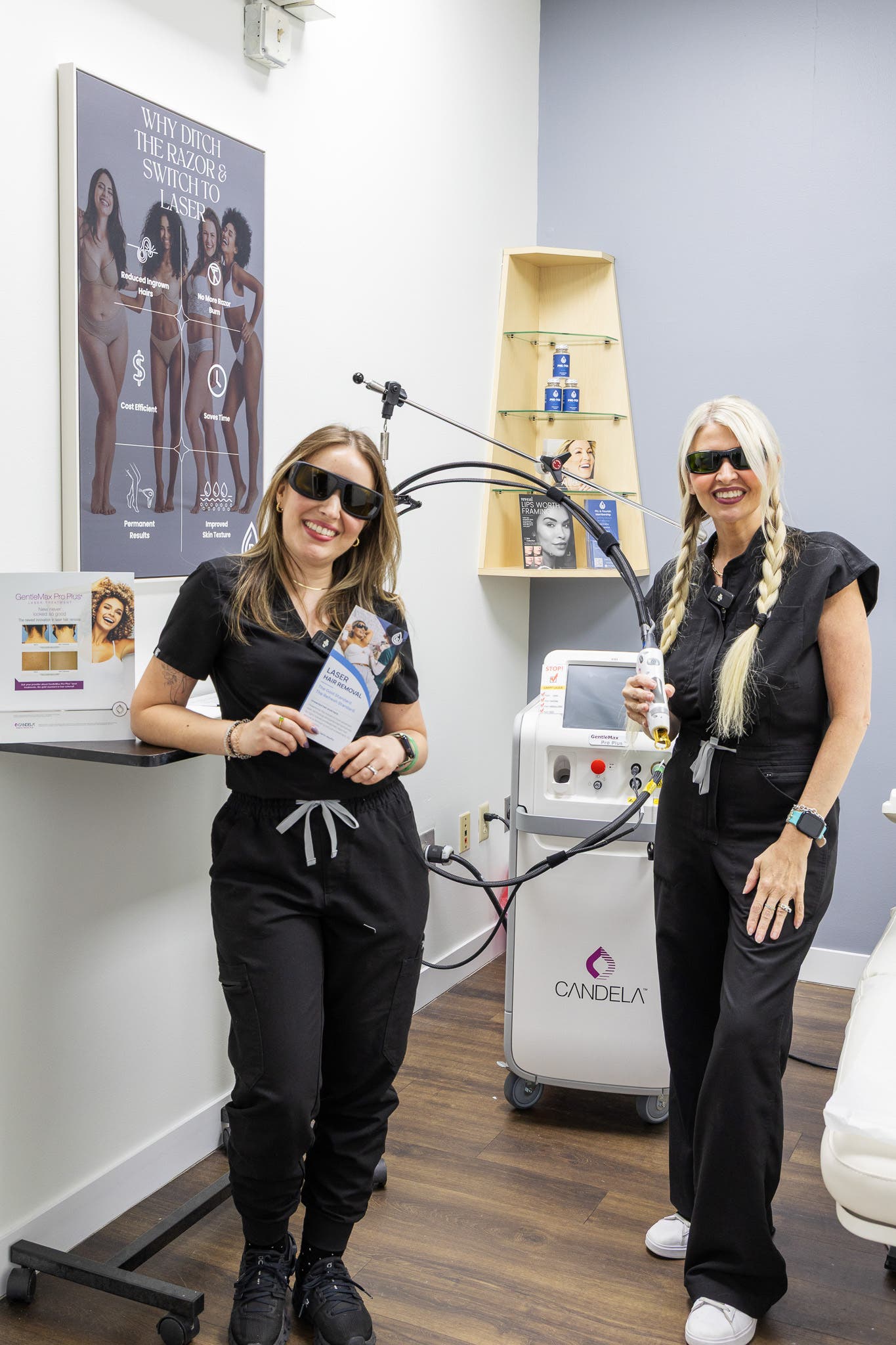
What is a maintenance laser hair removal treatment?
A maintenance treatment is an additional laser session performed after someone has already completed the main treatment series.
Instead of restarting the entire process from the beginning, the provider targets areas where noticeable regrowth has developed.
The American Academy of Dermatology notes that maintenance treatments may be needed when hair begins to return after the initial results.
Some patients may need them occasionally, while others may go long periods without needing another session.
There is no universal maintenance schedule that applies to everyone.
How often do you need maintenance?
It depends on the patient.
Factors can include:
- The area being treated
- Hair color and thickness
- Skin tone
- Hormonal influences
- How well the hair responded during the original series
- How much regrowth actually bothers the patient
Someone who notices only a few fine hairs may choose to wait.
Another patient may prefer an occasional touch-up before the regrowth becomes more noticeable.
A provider can determine whether enough active hair is present for another session to be worthwhile.
Does needing maintenance mean you have to start over?
Usually, no.
A maintenance treatment is different from repeating the entire initial series.
If the majority of follicles remain reduced and only a small percentage of hair has returned, the provider can focus on the regrowth rather than treating the area as though no laser treatment had ever been performed.
The goal is to maintain the reduction that has already been achieved.
What areas are more likely to need touch-ups?
Hormone-sensitive areas can be more unpredictable than some body areas.
The face, chin and neck may be more influenced by hormonal changes, particularly in women. The American Academy of Dermatology specifically distinguishes facial hair from many other body areas when discussing long-term permanence.
Areas such as the underarms, legs, back and bikini region may also experience some eventual regrowth, but the pattern and amount vary significantly.
That is why maintenance should be based on actual regrowth rather than a predetermined calendar.
Should you shave between treatments?
Generally, yes, if needed.
Shaving cuts the hair at the skin’s surface without pulling the follicle out.
Waxing and plucking are different because they remove hair from the follicle, which can interfere with the laser’s ability to target pigment within that follicle.
Patients should follow the specific preparation instructions provided by their laser provider before each appointment.
What if the hair starts growing back thicker?
That should be discussed with the treating provider.
Normal post-laser regrowth is generally expected to be reduced or finer, not progressively thicker across the entire treatment area.
If someone notices a significant change in the amount, density or distribution of hair, particularly in a hormone-sensitive area, a provider may want to consider whether another factor is contributing.
Hair growth can sometimes provide clues about hormonal or medical changes that have nothing to do with the laser itself.
How do you know when it is time for another treatment?
There is usually no reason to schedule maintenance simply because a certain number of months have passed.
Instead, watch the treatment area.
A maintenance visit may be worth discussing if:
- A noticeable amount of hair has returned
- Shaving is becoming more frequent again
- The returning hair is dark enough for the laser to target
- A previously smooth area has developed scattered patches of regrowth
- Your provider determines enough follicles are actively growing to justify another session
If only a few hairs are visible, a provider may recommend waiting.
Why do laser settings matter?
Hair removal is not one-size-fits-all.
The laser settings need to account for factors such as skin tone, hair color, hair thickness and the area being treated.
The Palm Harbor Refresh location describes its aesthetic treatments as individualized rather than identical for every patient, with providers evaluating the patient’s concerns and goals before creating a treatment plan. The office currently offers laser services, including laser hair removal.
That individualized approach becomes especially important for maintenance because the remaining hair may look very different from what was present during the first session.
Can you wait too long between maintenance treatments?
There is usually no requirement to maintain a rigid schedule once the initial series is complete.
If regrowth does not bother the patient, there may be no reason to treat it immediately.
Waiting also allows enough active hair to develop for a treatment to make sense.
The right timing depends on the pattern of regrowth and the provider’s assessment rather than a fixed expiration date on previous results.
What should you ask before starting laser hair removal?
Before starting a series, patients should understand the long-term plan, not just the first appointment.
Useful questions include:
- How many initial sessions do you expect I may need?
- How far apart will those treatments be?
- Is my hair and skin type appropriate for this laser?
- What kind of reduction is realistic for this area?
- Could hormones affect my results?
- What should I do between sessions?
- How will I know if I need maintenance later?
- What happens if my hair-growth pattern changes?
A good consultation should explain both the initial treatment series and what may happen months or years afterward.
Laser hair removal in Palm Harbor
Refresh - Aesthetics & Wellness offers laser hair removal at its Palm Harbor office as part of its laser and aesthetic services. The practice emphasizes individualized treatment plans based on each patient’s concerns and goals.
The office serves patients throughout Palm Harbor and nearby communities including Dunedin, East Lake, Tarpon Springs and Safety Harbor.
Refresh’s “Your Bush! Our Business!” campaign is designed to make conversations about unwanted hair a little less awkward. Patients interested in laser hair removal can call 855-BYE-BUSH (855-293-2874) to learn more about treatment and available options.
The important thing to understand before starting is that laser hair removal is a process.
The original treatment series targets follicles across multiple growth cycles. The long-term result is a reduction in unwanted hair, and some patients may eventually need an occasional maintenance session as follicles become active again.
A few hairs returning later does not automatically erase the progress made during the original series.
Refresh - Aesthetics & Wellness, Palm Harbor
34866 US Hwy 19 N #27, Palm Harbor, FL 34684
(727) 222-4625
Monday through Friday, 9 a.m. to 5:30 p.m.; Thursday until 7:30 p.m.
Call 855-BYE-BUSH (855-293-2874) to learn more about Refresh laser hair removal.
This article is general information, not medical advice. Laser hair removal results vary based on hair color, skin tone, treatment area, hormonal influences and individual response. Maintenance treatments may be needed over time, and treatment recommendations should be based on an evaluation by an appropriately trained provider.
This post is an advertorial piece contributed by a Patch Community Partner, a local brand partner. To learn more, click here.