Business & Tech
Parkinson’s Test Takes Out Guesswork for Sarasota Memorial Doctors
New scan confirms Parkinson's diagnosis that left once left doctors and patients uncertain for years.
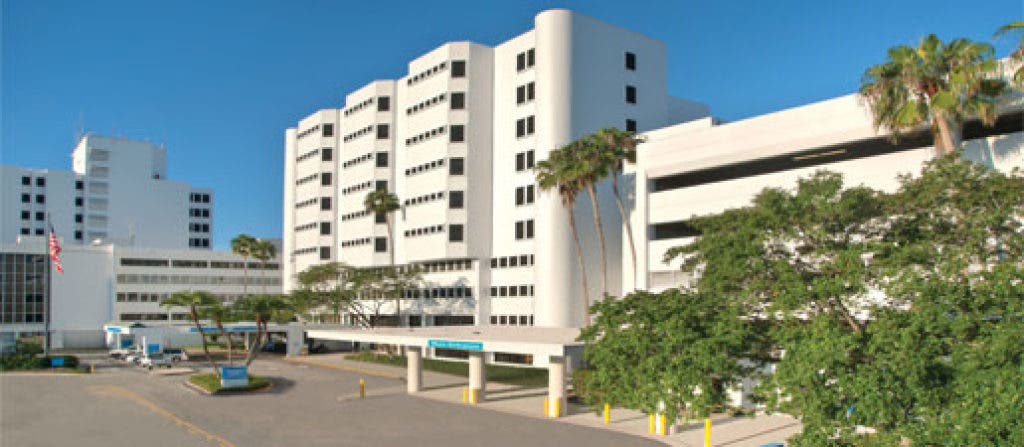

Medicine may seem like an exact science with conclusive tests and hard data, and when you go to the doctor, you expect to leave the appointment knowing what’s wrong. But in truth, there are many conditions that force a physician to rely only on his or her observational skills to make a diagnosis.
Determining if patients are suffering from Parkinson’s disease was one of those conditions—until last year, that is. Now, physicians at Sarasota Memorial Hospital have the tools to test with 95 percent certainty if a patient has Parkinson’s—a diagnosis that at one time often evaded both physician and patient for years.
“In the past, 25 percent of people who were told they have Parkinson’s were misdiagnosed. An MRI could not diagnose this and there was no other scan that could either. This test really puts all of that to rest,” said Dr. Dean Sutherland, a Sarasota neurologist who specializes in Parkinson disease.
Find out what's happening in Sarasotafor free with the latest updates from Patch.
Parkinson’s disease is characterized by mild tremors that get significantly worse over time, leading to difficulty walking and performing daily tasks. It affects about a million Americans, according to the Parkinson’s Disease Foundation and is caused by low levels of dopamine in the brain. Until now, those levels were impossible to detect, making it difficult to differentiate symptoms of Parkinson's from similar conditions, like essential tremor, which is unvoluntary shaking.
The new testing technology, a high-tech brain scan paired with a new drug, together called DaTscan, make it possible for the doctor to determine if someone is, indeed, lacking in dopamine and in which part of the brain the deficiency is occurring. The drug is injected (which may cause a rash or itching) and binds to the dopamine and the scan, called a single photon emission computed tomography (SPECT), produces images of the dopamine levels.
Find out what's happening in Sarasotafor free with the latest updates from Patch.
With this quicker diagnosis, Parkinson's patients are treated earlier and can live better, fuller lives with properly managed symptoms, Sutherland said.
“This is a really big improvement,” said Sutherland, who worked with the hospital and DaTscan manufacturer General Electric Co. Healthcare to bring the technology to Sarasota in October 2011.
Before the test was approved for use in the United States by the Food and Drug Administration last year, it could take up to six years for a definitive Parkinson’s diagnosis. Over those six years, the person’s quality of life could diminish significantly, Sutherland said.
Patients lose the ability to perform everyday tasks for themselves, suffer from muscle stiffness, have trouble getting in and out of chairs or cars and 30 percent to 50 percent of them suffer from depression.
“Every year their quality of life goes down,” he said. “As you can imagine, if you’re 62, if you’re diagnosed with Parkinson’s, you want to have 20 years of good life ahead.”
And those who can know with certainty that they do not have Parkinson’s can be rest assured that they’re getting the proper treatment as well.
“The medications we use for Parkinson’s are somewhat toxic,” Sutherland said. “You don’t want to be told you have Parkinson’s if you don’t.”
Sutherland reports that since the hospital acquired DaTscan, the test has accurately diagnosed patients 95 percent of the time.
“It’s been useful every single time I’ve ordered it,” he said. Since Parkinson’s is a disease that most commonly strikes the older population, Sutherland anticipates the scan will get plenty of use.
“The population is getting older,” he said. “The number of Parkinson’s cases is going to double in the next 15 years—just like Alzheimer’s. The longer you live, the more likely you are to get it.”
Yet with the introduction of this new diagnostic technology, earlier treatment can help ease the symptoms of Parkinson’s and ensure those later years are well-lived.