Home & Garden
Shark Researchers Cast Net in Gulf Waters
OCEARCH is currently running an expedition in the Gulf of Mexico with a Sarasota scientist onboard.


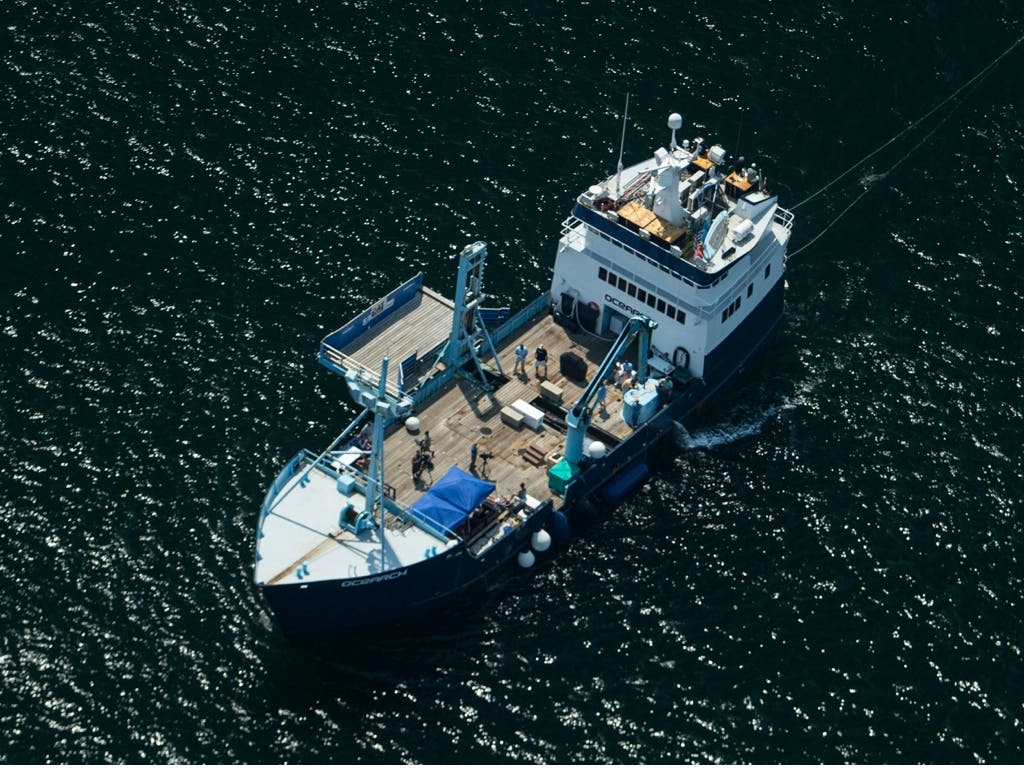

The nonprofit research organization that has made headlines around the world courtesy of its famous tagged sharks like Mary Lee and Betsy has turned its attention to the Gulf of Mexico.
OCEARCH kicked off an expedition Thursday with the focus of gaining a better understanding of how apex predators in the Gulf’s waters migrate. The hope is to also gain insight about the interaction between sharks and the thousands of oil and gas rigs found in the Gulf.
The latest expedition, underwritten by Caterpillar, “is the first large shark expedition like this on the western Gulf,” Chris Fischer, OCEARCH founding chairman and expedition leader, told Patch. The ultimate goal is for the capture, tag and release mission to provide an “explosion of data on the Gulf” in relation to large shark movement.
Find out what's happening in Sarasotafor free with the latest updates from Patch.
While fans of the Discovery Channel’s Shark Week festivities might recognize OCEARCH as the organization that helps shark fans track great whites like Katharine and Mary Lee, the Gulf expedition has its sights set on learning more about mako, tiger and hammerhead sharks, Fischer said. That, however, doesn’t mean great whites won’t be tagged if scientists come across them.
See Also:
Find out what's happening in Sarasotafor free with the latest updates from Patch.
- Betsy the Great White Shark Swimming St. Pete’s Waters
- Katharine the Great White Shark Returns to Florida
- Tampa’s ‘Old Hitler’ Featured on Shark Week
The desire is especially to tag a number of hammerheads because there’s “so little data,” he said.
Fischer said he’s thrilled to help pioneer data on Gulf sharks and he’s not alone in the sentiment.
Sarasota’s Mote Marine Laboratory is also a partner along for this ride of the M/V OCEARCH.
Dr. Heather Marshall, a postdoctoral research fellow at Mote, is serving on the scientific team. It’s her job during captures to draw blood samples from the sharks. Those samples will benefit a number of research projects, including her own study into the stress levels of caught-and-released sharks. Blood samples will also be used to better understand sharks’ reproductive health and habits, and their dietary choices, among other points of interest to marine scientists.
Blood draws are “a really nice, minimally invasive way to learn about the biology of shark(s),” Marshall said. While her own research into shark stress levels will benefit from the expedition, blood samples she draws will go to other scientists, as well, to help them “really start piecing together the reproductive migration pattern, which is still really poorly understood.”
Marshall is no stranger to OCEARCH research missions. She also took part in several other ventures, including a recent one to the Galapagos Islands.
The Harte Research Institute for Gulf of Mexico Studies at Texas A&M is partnering with OCEARCH for this expedition with Dr. Greg Stunz, professor of marine biology, serving as lead scientist.
“Little is known about shark migration patterns in the Gulf and particularly in the western region,” Stunz explained in a pre-launch media release. “Our aim is to change that by providing migration data through satellite tags along with a wealth of other scientific data tools.”
As for shark interaction with oil rigs and platforms, the desire is to better understand the role rigs that have been turned into reefs play in Gulf ecology.
“A lot of these rigs are 50 to 70 years old with priceless reefs growing on the structure(s) underwater,” Fischer said. “There are 4,000 rigs in the Gulf and they’re all like an oasis.”
Research gleaned from the expedition is hoped to show how important these structures are and what a catastrophe it would be if they were removed, Fischer said.
While the latest expedition just got under way, shark lovers who want to watch the project as it unfolds can follow the M/V OCEARCH via the organization’s website. Whether the Gulf expedition will uncover the next OCEARCH “celebrity” shark remains to be seen.
To keep up with the efforts, visit OCEARCH online. Shark lovers are also welcome to donate to the cause via the website and they can follow the action on the organization’s social media channels.
The Mary Lee Twitter stream will also have some updates on the progress as it moves forward. That tagged shark has a following on Twitter that’s more than 90,000 strong.
It is unclear at this time just how long the M/V OCEARCH will remain in the Gulf. The focus right now is on the western side of the body of water, but Fischer said weather conditions and timing may enable some tagging efforts a little closer to Florida.
Photos courtesy of OCEARCH
Get more local news delivered straight to your inbox. Sign up for free Patch newsletters and alerts.