Sports
Historic Tampa Black Golf Course During Segregation To Get Makeover
Opened as the second golf course for Black golfers in Florida in 1961, the Rogers Park Golf Course is about to undergo major renovations.


TAMPA, FL — After reaching the conclusion that the 70-year-old historic Rogers Park Golf Course is no longer up to par, the Tampa Sports Authority is embarking on a makeover that includes installing some of the latest golf technology and building a 9-hole short course for beginners.
The sports authority, which manages the city-owned golf course at 7910 N 30th St., Tampa, has unveiled enhancements that include a high-tech driving range called Toptracer, a computerized system that traces and analyzes shots from the driving range.
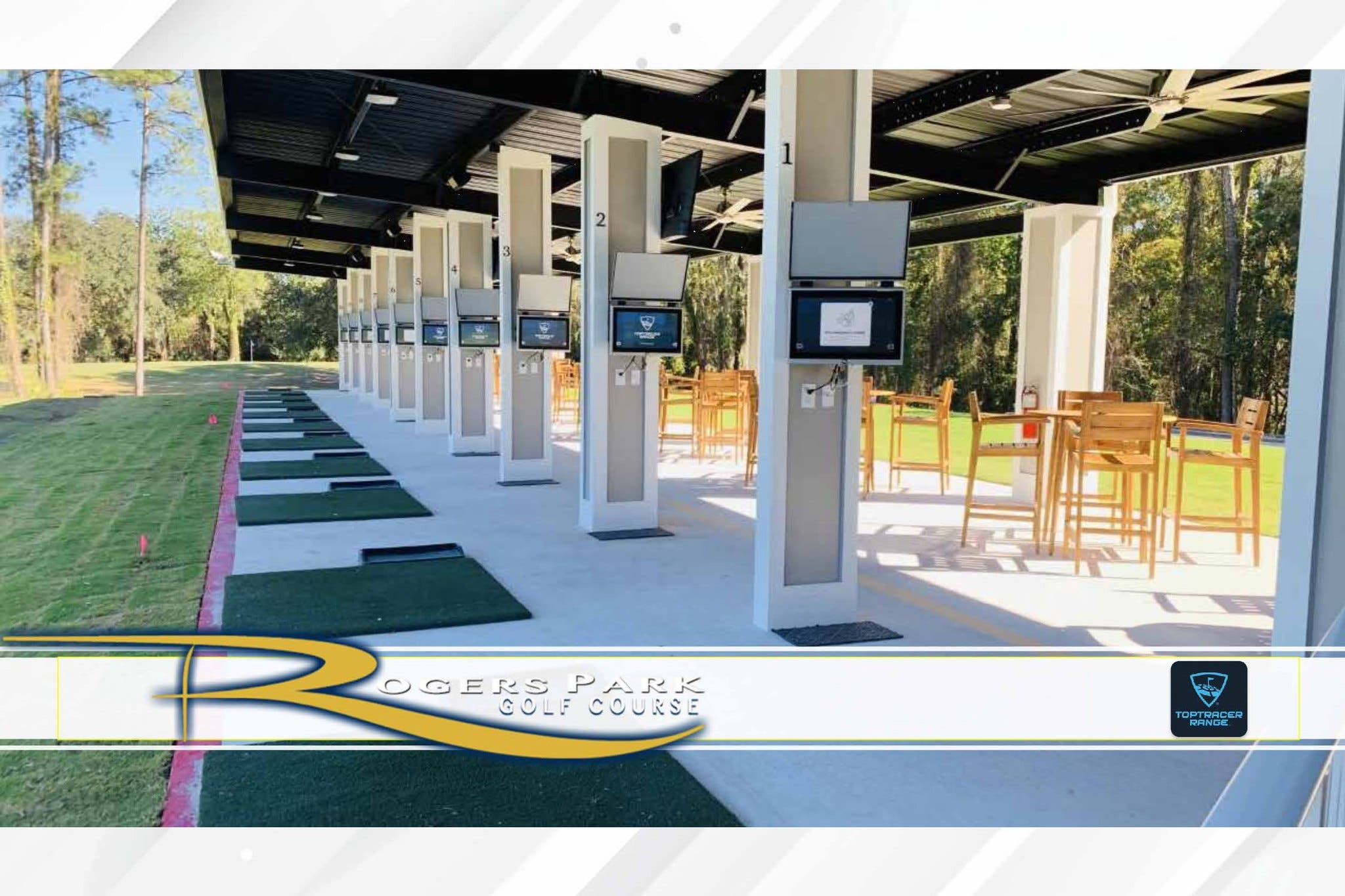
Enhancements will include a high-tech driving range called Toptracer, a computerized system that traces and analyzes shots from the driving range.
The authority also plans to expand its partnership with the First Tee program, a national junior golf program operated in Tampa in conjunction with the Tampa Metropolitan Area YMCA.
Find out what's happening in Tampafor free with the latest updates from Patch.
The program began in 1991 as Urban Junior Golf at Rogers Park Golf Course and became part of the First Tee program in 1999.
First Tee will fund a beginner-friendly par 3, 9-hole short course.
Find out what's happening in Tampafor free with the latest updates from Patch.
The short course will consist of holes ranging from 60 to 120 yards long, using the land that sits between the 12th, 13th, 16th and 17th holes of the current Rogers Park 18-hole course.
The layout of the short course at Rogers Park was designed by renowned golf course architect Steve Smyers and will be built by ABM Industries during the summer and fall.
The short course will have natural fairways and greens, and artificial tee boxes to help reduce the wear and tear that comes with course play.
"The First Tee is an amazing program that is helping millions of kids all throughout the country," said First Tee Tampa Bay board chairman Gary Koch. "Here in Tampa, we have one of the largest and most successful chapters in the network, and a big reason for that is our incredible board of directors and other volunteers. With their help, we were able to raise the funds to create this new short course, which will allow us to serve even more kids in the program."
First Tee teaches children a series of life skills and Nine Core Values through the game of golf. As a longtime West Tampa resident and volunteer at the First Tee Tampa Bay at Rogers Park, Lionel Ballard said he's seen first-hand the positive impact the program has on kids.
"I saw many of our kids improve their grades, improve their study habits. Also, I've seen kids that came out here that couldn't get the ball off the ground at first, and now they've developed their skills and are actually playing professional golf," he said.
"We are really excited about being able to build this family-friendly golf course, both for the kids of First Tee and for the community in general," said Tampa Sports Authority President & CEO Eric Hart. "We think the short course will be a fun experience for all players, from beginners to advanced. It will hopefully also bring out people who have never experienced the game to give it a swing."
When not being used for First Tee programming, the short course will be open to the public for a nominal fee.
Water Department To Move To Rogers
Additionally, the Tampa Water Department has released its design for a new $6.1 million, 9,350-square-foot state-of-the-art educational center at Rogers Park Golf Course that will offer water conservation-related programs for youth and adults.
Fully funded by Progressive Infrastructure Planning to Ensure Sustainability, a $2.9 billion funding plan for large-scale sewer and water infrastructure improvements in Tampa, the indoor space will include static and interactive exhibits, and a training room with flexible space that can be set up for classroom-style training.
Outside will be outdoor exhibits, walking trails and Florida-friendly landscaping demonstration areas.
The city will also build a 27,551-square-foot administration and engineering building for up to 48 water department staff.
In 2020, the water department moved out of Tampa's downtown municipal office building and some employees were temporarily relocated to office spaces on Lemon Street, which is scheduled to be demolished next year.
The remaining staff work out of modular buildings at the David L. Tippin Water Treatment Facility, which were not designed for long-term use.
The $11.6 million building will also be funded through PIPES.
Plans also call for site improvements at the park to reduce traffic on North 30th Street and increase neighborhood safety. Visitors to the Tampa Water Center will arrive through a new entrance on Rowlett Park Drive that will include a security guard house and automated gates.
Other site work includes enlarging irrigation ponds to handle more stormwater runoff.
The total cost for the site improvements is $7.5 million.
History Of Rogers Park
Surrounded on three sides by the scenic Hillsborough River, the 160-acre golf course is steeped in history.
Various Tampa Tribune newspaper articles date the park to as early as 1912. However, the site was officially purchased by the city from Tampa Electric Co. in 1947 and designated a park.
During segregation, Rogers Park was the only picnic area for the Black community in Tampa. Black residents would gather there on Sundays after church for potluck dinners, pick-up games of baseball and to let young children blow off steam on the slide and swings, according to the Florida Department of State Division of Historical Resources.
On Nov. 10, 1949, the Tampa Tribune reported that a new city "Negro Park" near the waterworks had just been started and the land was being cleared.
A later Tampa Tribune article referred to the park as the Rogers Park Golf Course for Negroes.
The property initially included 30 acres. However, the city was eventually able to purchase two adjacent home sites from reluctant owners.
Tampa Mayor Curtis Hixon was quoted in the article as saying, "The Negroes of Tampa have long needed a place where they could go for recreation, and that's the best spot for such a place. We'll keep right on going because the city repeatedly has offered more money for those two pieces of property than they are worth."
On June 18, 1951, the Tribune reported that the park would be renamed and dedicated in honor of Garfield Devoe Rogers Sr., who died earlier that year at the age of 66.
Rogers was a well-respected Black businessman who founded and served as president of Central Life Insurance Co. of Florida, a life insurance company for Blacks, in 1933, according to the Tampa Tribune.
An early civil rights advocate, Rogers was hailed for his efforts to obtain equal salaries for Black school teachers in Hillsborough County in 1937.
He was the regional vice president of the National Negro League, president of the National Negro Association, a staff member for the National Association for the Advancement of Colored People and a longtime director for the Tampa Urban League, part of the National Urban League.
Additionally, he served as a trustee for Bethune-Cookman Negro College (now Bethune-Cookman University) in Daytona Beach for 30 years. In fact, the principal speaker for the park dedication was supposed to be civil rights leader and founder of Bethune-Cookman University, Dr. Mary McLeod Bethune, but she was delayed en route to Tampa and didn't arrive in time for the ceremony, according to the Tribune. 
Shortly after the park was dedicated, a group of caddies from the Palma Ceia Country Club in South Tampa, which had an all-white membership, approached Hixon about building a 9-hole golf course at Rogers Park for Black residents.
With Hixon's blessing, Albany, Georgia, native Willie Black, who helped build several golf courses in George, led a group of volunteers who removed trees and began shaping the golf course by hand.
The golf course was completed in 1952, and became the second Black golf course in Florida. The first was in Miami Springs.
Black, later inducted into the National Black Hall of Fame, was named the first head golf professional at the course.
The Tribune said the golf course attracted Black caddies from throughout Tampa and beyond, who were eager to play the game instead after carrying golf bags for white golfers.
In 1961, the Rogers Park Golf Course was expanded to an 18-hole with the addition of city-owned property west of the park, across 30th Street.
Two years later, in 1963, when the golf course was desegregated, it became a destination for amateur and professional golfers throughout the country, according to the Tribune.
“We have the finest race relations here of any municipal course in the United States” said Willie Black during an interview for the Tampa Tribune in 1966.
In 1976, the city of Tampa turned over management rights for the golf course to the newly formed Tampa Sports Authority, which launched a $400,000 renovation with internationally known golf course architect Ron Garl.
While getting his bachelor's degree in agricultural sciences at the University of Florida, Garl began developing new types of turfgrass for golf courses. He went on to become a leading authority in the golf industry.
Known for his innovative routings (how an architect lays out holes on a piece of land) and commitment to the philosophy that a course should "sit softly on the land," Garl set the standard for environmentally friendly projects that maximized and enhanced the natural characteristics of the land.
The renovations included the installation of an irrigation system, eliminating the need for groundskeepers to hand water the course to ensure that the greens stayed green.
Among Garl's innovations was the introduction of one of the country's first 3-hole short game courses.
The state archives have an original rendering of Ron Garl's design for the golf course.
Garl, who lives in Lakeland, went on t0 design more than 40 golf courses in Florida alone, including Lansbrook Golf Club in Palm Harbor, the American course at the Bobby Jones Golf Club in Sarasota, the Vinoy Golf Club in St. Petersburg, the Bradenton Country Club and Andrews South Golf Club in Punta Gorda.
His golf courses earned him awards from Golf Digest, the Audubon Society, Golf Magazine, Links Magazine and Southern Living. He also received the Golf Designer of the Year award from the International Golf Network, the same award presented to Jack Nicklaus.
In 2000, the Tampa Sports Authority decided the golf course was overdue for another renovation, this time at a cost of $4 million.
The greens were completely rebuilt to modified USGA specifications. The holes were reshaped and landscaping was added, followed by the construction of a new maintenance compound in 2001 and a new clubhouse in 2002.
In November 2014, the original Rogers Park Golf Course site became the fourth golf course in Florida to be listed on the National Register of Historic Places.
Play The Course
Today, the 18-hole, par 71 Rogers Park Golf Course features five sets of tees playing from 5,000 to 6,800 yards.
Rogers Park Golf Course is now the home of the Tampa City Men’s Open Championship, held in April.
It features a pro shop and individual and group lessons with golf director T.J. Heidel.
Tee times range from $30 to $43 with early-bird rates, senior rates and a Rewards 365 program for members.
The driving range is open from 6:45 a.m. to 6 p.m., except Monday, when it closes at 5 p.m. and reopens Tuesday at 9 a.m. A small basket of about 35 balls costs $6 and a large basket of about 70 balls is $9, with discounts available through the driving range value card.
The golf course also has a restaurant, Grille 52, which serves burgers, hot dogs, sandwiches, wings, salads, craft beers, wine and cocktails.
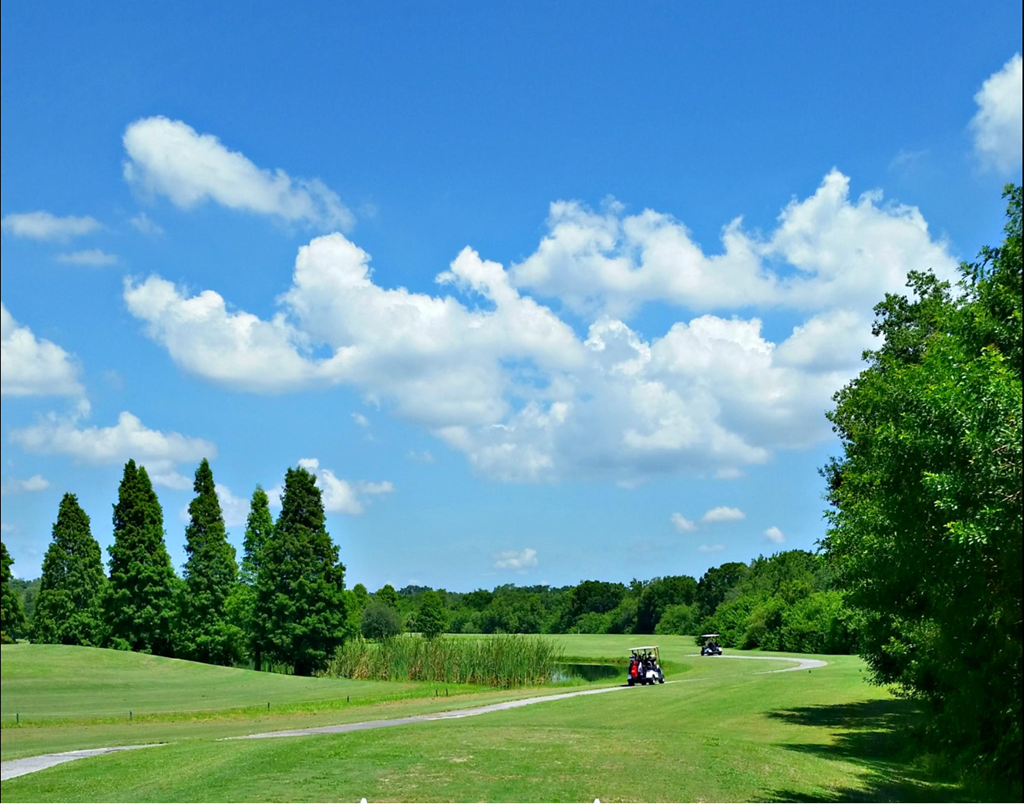
A photo shows the golf course's 14th hole.
Get more local news delivered straight to your inbox. Sign up for free Patch newsletters and alerts.