Neighbor News
Innovative program led by Coastal Orthopedics' Dr. John Ayres significantly reduces unnecessary blood transfusions
Patient blood management program led by Dr. John R. Ayres at Coastal Orthopedics reduces unnecessary blood transfusions at Manatee Memorial.

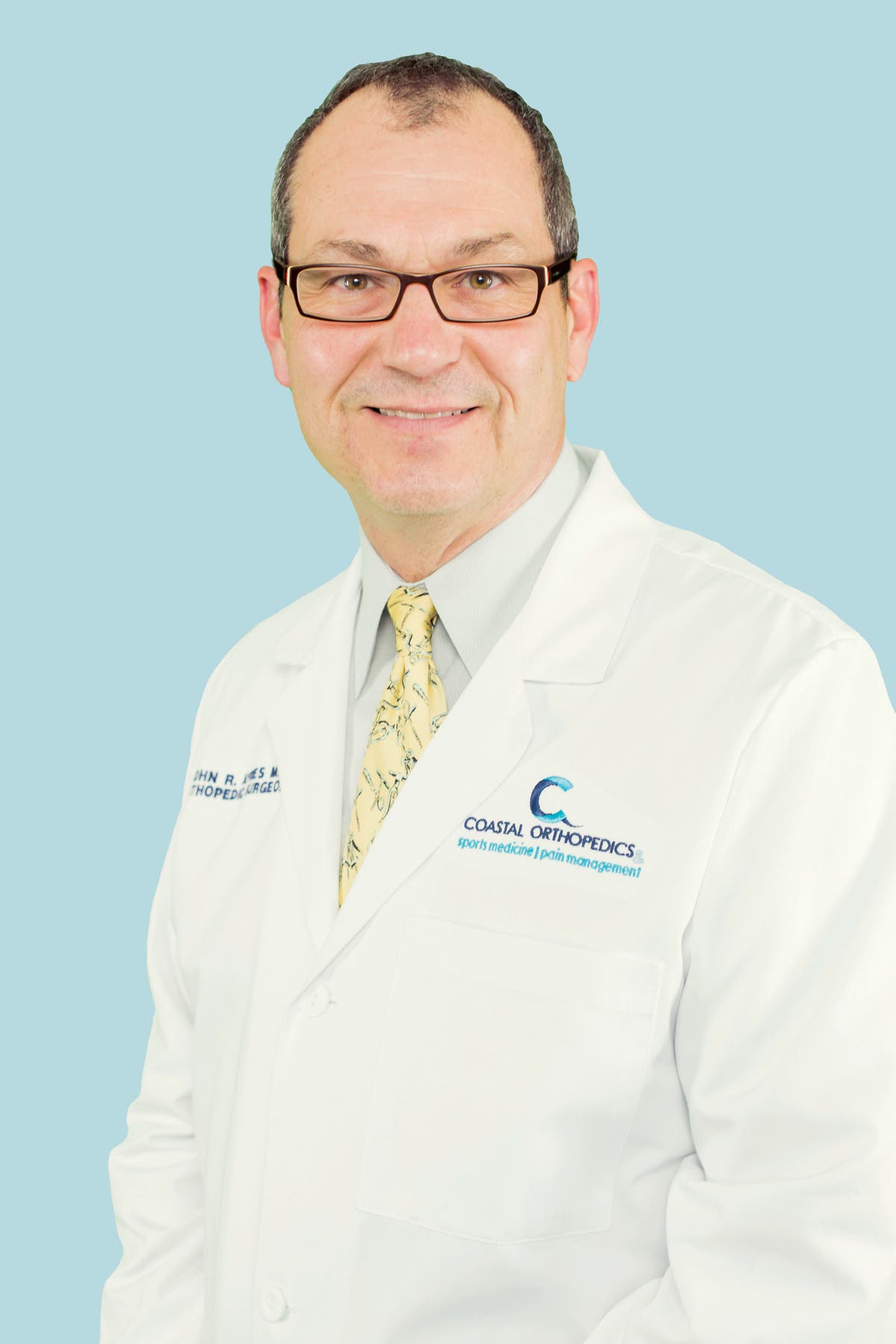
In just one year, a creative patient blood management program spearheaded by Coastal Orthopedics Joint Replacement Specialist Dr. John R. Ayres has led to a major reduction in the number of transfusions performed during joint replacement procedures at Manatee Memorial Hospital. That means less invasive procedures for patients, who are able to avoid the risks associated with transfusions, plus an overall reduction in the amount of blood used, reducing costs for patients and providers alike.
The specific policies and procedures that make up the new program have been used in forward-thinking facilities like the Mayo Clinic and the Cleveland Clinic for decades, but before last year, no one in Southwest Florida had compiled them in any kind of systematic way. While physicians in the area had been considering similar strategies, Dr. Ayres, who also serves as the clinical director of orthopedics at Manatee Memorial, was the first to suggest creating a standardized protocol for local physicians to follow. Universal Health Systems, Inc., Manatee Memorial’s parent company, recently tasked its hospitals with reducing the number of transfusions they perform, making Manatee Memorial particularly receptive to fresh ideas like those of Dr. Ayres.
The program went into effect last spring, and Dr. Ayres and his fellow surgeons at Manatee Memorial have seen phenomenal results. In the first quarter of 2014, before the program was implemented, Dr. Ayres performed nine transfusions. After the program was put in place, he performed only eight total transfusions over the remaining nine months of 2014. Overall, the percentage of patients undergoing knee, hip and shoulder replacement procedures at Manatee Memorial who needed transfusions dropped from 15 percent in the first quarter of 2014 to just 6 percent by quarter four.
Find out what's happening in Tampafor free with the latest updates from Patch.
“Blood transfusions aren’t nearly as benign as we once thought,” Dr. Ayres says. “With transfusions, the recipient’s system may react to substances in the donor’s blood, which places them at a higher risk of infection. The National Institutes of Health, for example, found the rate of infections from transfusions can be as high as 17 percent.”
Reducing the number of transfusions, therefore, can reduce the number of infections and complications patients experience. It can also lead to reduced blood usage, which lowers costs for providers, insurers and patients. Those savings are particularly significant in a health care industry that is striving to “bend the curve” of rising costs. In recent years, the cost of medical services has grown more slowly than overall inflation. Reducing the number of transfusions can hopefully help accelerate that trend.
Find out what's happening in Tampafor free with the latest updates from Patch.
How does it work? The program begins well before surgery, when a physician uses testing to analyze the odds that a patient may eventually require a transfusion.
“We start by making sure their tank is full,” Dr. Ayres says. “If a patient is anemic, for example, we might recommend iron supplements or dietary changes to help patients prepare for the procedure. Or if we find that a patient has an ulcer or some other source of blood loss, we’ll work to correct that problem before surgery.”
Once in the operating room, physicians using the program supply tranexamic acid, which prevents excessive blood loss during surgery. They can also reduce blood loss by using tourniquets and making smaller incisions.
After surgery is over, the program allows physicians to more intuitively assess a patient’s need for a transfusion.
“For years, if a patient’s hemoglobin level fell below an eight, we would automatically do a transfusion,” says Dr. Ayres. “What we’re doing now is looking at that hemoglobin level among many other indicators. Is the patient overweight? Are they feeling lightheaded? Are they experiencing low blood pressure? We’re examining a whole range of factors, not just relying on one number, when we decide if a patient really needs a transfusion.”
Although the program at Manatee Memorial has already generated terrific results, Dr. Ayres would like to see the number of transfusions reduced even further. “I think we’re doing pretty good,” says Dr. Ayres, “but we can do better. To paraphrase Vince Lombardi: In the pursuit of perfection, we might achieve excellence.”
About Coastal Orthopedics Sports Medicine & Pain Management
Founded in 1973 and based in Bradenton, Florida, Coastal Orthopedics is home to 16 orthopedic surgeons and pain management physicians who maintain hospital affiliations with Blake Medical Center, Manatee Memorial Hospital and Lakewood Ranch Medical Center. In addition to three offices and two surgery centers each servicing Florida’s West Coast, Coastal Orthopedics’ board-certified and fellowship-trained physicians and surgeons provide patients with the very latest in pain and orthopedic treatment technology. The company strives to repair and heal injuries relating to the entire musculoskeletal system. For more than 40 years, our highly skilled staff of physicians and surgeons have treated patients in specialty care including sports medicine, joint replacement, pain management and rehabilitation. Patients can experience restoration of function both surgically and non-surgically through the use of physician-guided strengthening, therapy, medications, injections and stretching. For more information, visit coastalorthopedics.com or call 941-792-1404.