Community Corner
Team Administers Antibiotics To Injured Right Whale Calf
The calf was discovered two weeks ago with two open wounds on its head consistent with a boat propeller.


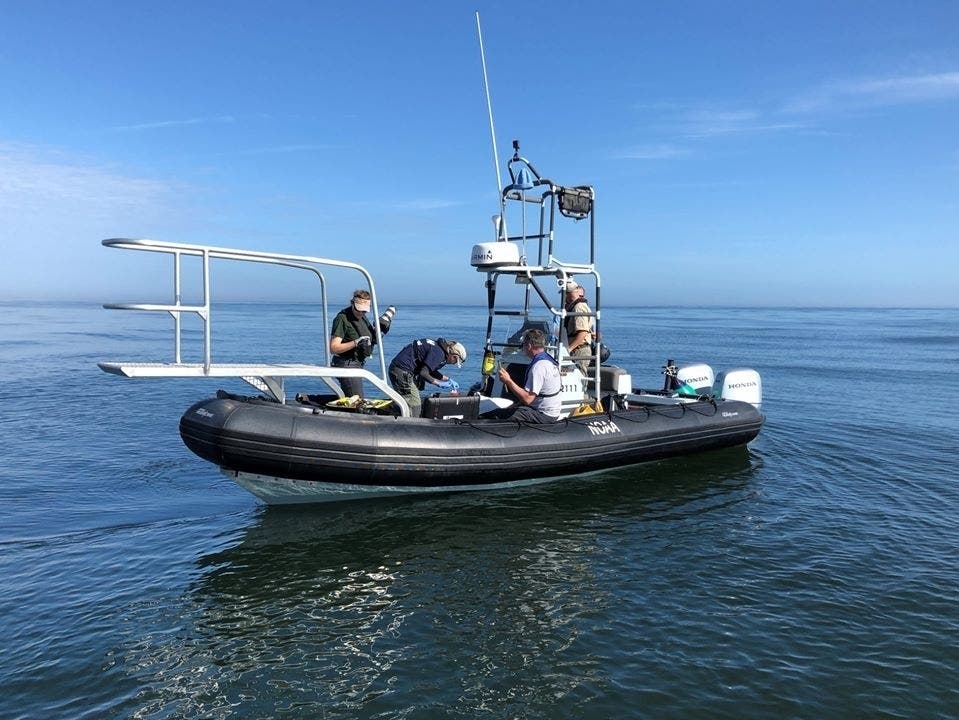


ST. PETERSBURG, FL — In the hopes of saving a rare white whale calf seriously injured by a boat propeller, a field team made up of medical experts from multiple marine agencies administered antibiotics to the calf this week.
The team relocated Derecha and her injured right whale calf off Fernandina Beach Jan. 15 and the team was able to remotely administer the drugs to stave off infection. Biologists will continue to monitor the calf during routine aerial surveys. The calf’s prognosis remains poor.
"This was a huge effort made possible by many experts from partner agencies all over the country including the field teams made up of FWC Fish and Wildlife Research Institute, the Wildlife Resources Division - Georgia DNR, Clearwater Marine Aquarium, SeaWorld, Blue World Research Institute and the International Fund for Animal Welfare," said the National Oceanic and Atmospheric Administration's Fisheries Service.
Find out what's happening in St. Petefor free with the latest updates from Patch.
The team decided to perform the difficult task of administering antibiotics to the whale after studying photos and video that showed the gashes on the calf's head were worse than originally thought. Marine biologists and veterinarians now say a rare right whale calf injured by a boat propeller most likely will not survive.
After spending the weekend studying photos and video of the right whale calf swimming with its mother off the coast of Georgia, the monitoring team has concluded that the gashes on the calf's head are worse than originally thought.
Find out what's happening in St. Petefor free with the latest updates from Patch.
They updated the calf’s prognosis from “guarded” to “poor,” which means the calf is not likely to survive.
The photos showed the gash on the left side of the calf’s mouth appeared deep enough to have exposed bone and impacted the baleen, the filter-feeder system inside the mouths of whales.
"The injuries are concerning because of the severity and location of the wounds," said marine biologists at the FWC Fish and Wildlife Research Institute in St. Petersburg. "One of the injuries appears to include damage to the calf's mouth, which could hamper its ability to nurse and feed."
If the calf is unable to nurse properly, it will slowly starve.
The injuries calf were first reported on Jan. 8 when the mother and then-week-old calf were spotted off Georgia’s Altamaha Sound by biologists with the research institute.
This is Derecha's fourth calf and is the fourth right whale calf born this season. Derecha, who is about 27 years old, was first documented in December 1993.
See related story: Video: Aquarium Spots 1st Endangered Right Whale Calf Of Season
The North Atlantic right whale, Eubalaena glacialis, is closely monitored because it is one of the most endangered marine animals in the ocean. There are only an estimated 400 right whales left in the world.
The NOAA Fisheries Service is asking anyone with information about what led up to the calf's injuries to call 877-WHALE-HELP (877-942-5343). The boat that struck the calf likely has propeller damage, authorities said.
To avoid coming into contact with right whales, the research institute recommends that boaters wear polarized sunglasses to better spot whales, and reduce speeds in areas where whales are likely to be. Boaters should remain at least 500 yards away from whales.
Moms and calves spend the majority of their time a few feet below the water's surface.
"The protection of these animals is literally in the hands of all mariners on the water and all businesses that service those vessels," said officials with the FWC Fish and Wildlife Research Institute. "Stay educated, remain alert and choose wisely how you operate your vessel while traveling through a whale neonatal center."
Right whales were once found throughout the North Atlantic Ocean, and they were prized by early whalers because of their slow speeds, coastal habitat and thick blubber. They were considered the "right" whale to hunt, thus the name. By the early 1700s, the right whale population was so reduced that they were no longer of economic importance.
Recovery of the species has been slow for multiple reasons, including a slow reproductive rate, threats from boaters and entanglement in fishing gear.
Get more local news delivered straight to your inbox. Sign up for free Patch newsletters and alerts.