Politics & Government
Gulf Coast In Crisis; Business Leaders Fight Back
Federal officials are sitting down with business and industry leaders to discuss ways to protect the waters of the eastern Gulf of Mexico.


ST. PETERSBURG, FL -- With red tide continuing to linger along the Gulf Coast and the U.S. Department of Interior announcing plans to expand offshore drilling, federal officials are sitting down with Pinellas County leaders to talk about concerns and ways to protect the waters of the eastern Gulf of Mexico.
Democrats U.S. Sen. Bill Nelson and U.S Reps. Kathy Castor and Charlie Crist are hosting a roundtable discussion Wednesday, Oct. 17, with scientists, marine biologists, business leaders and representatives of the fishing industry to discuss concerns and possible solutions.
The gathering at the Pinellas Suncoast Transit Authority Headquarters comes a day after Gulf Coast business leaders announced the launch of a coalition to battle offshore oil drilling.
Find out what's happening in St. Petefor free with the latest updates from Patch.
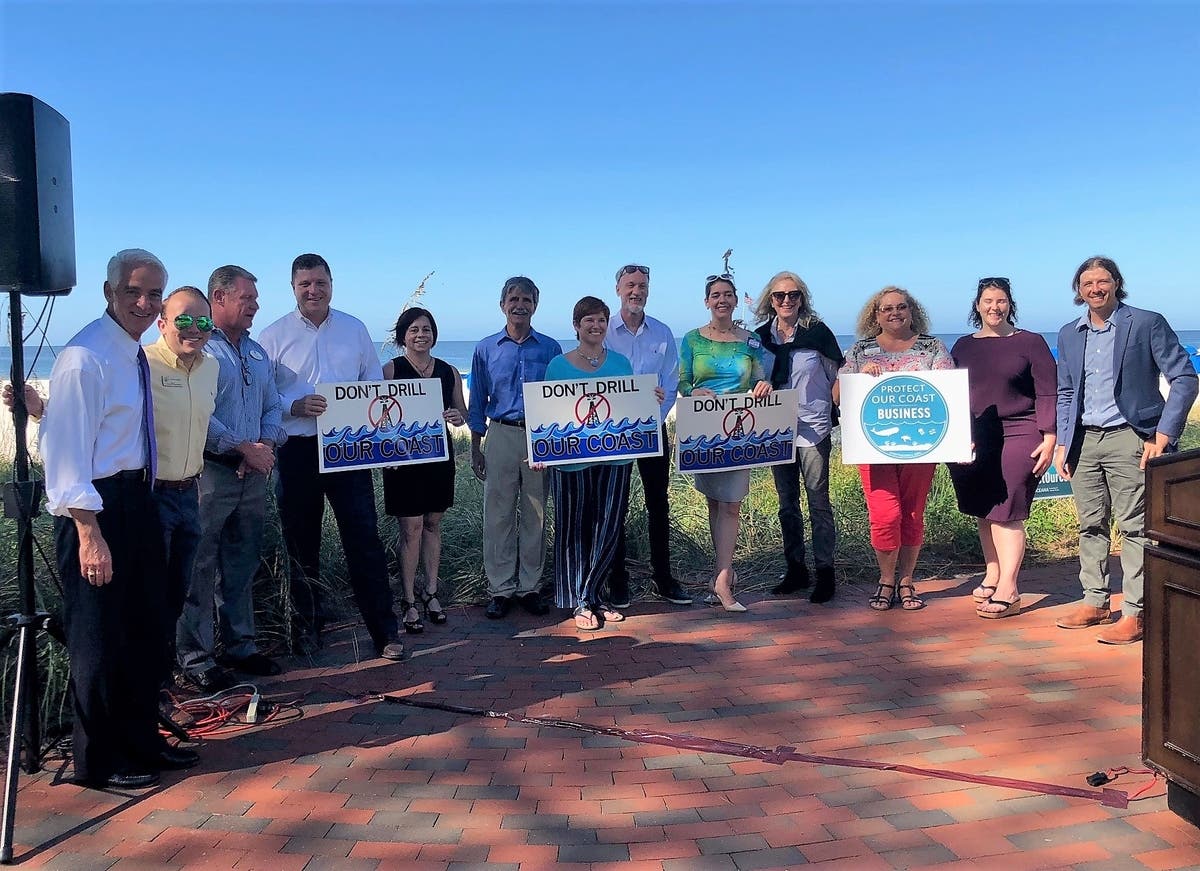
The Florida Gulf Coast Business Coalition hosted a press conference on the beach outside the Tradewinds Islands Grand Resort in St. Pete Beach Oct. 16 to announce its new alliance and discuss its plans to oppose any current efforts to expand offshore drilling in the eastern Gulf of Mexico.
The coalition represents more than 2,000 businesses, chambers of commerce and associations along the Gulf Coast. Among those speaking at the press conference were Robin Miller, CEO of the Tampa Bay Beaches Chamber of Commerce; Clearwater Marine Aquarium CEO David Yates; U.S. Rep. Charlie Crist, D-FL; St. Pete Beach Mayor Alan Johnson, state Sen. Jeff Brandes; and Treasure Island and Madeira Beach Chamber of Commerce CEO Missy Hahn.
Find out what's happening in St. Petefor free with the latest updates from Patch.
The coalition said the current efforts to expand offshore drilling threatens more than 304,000 jobs and roughly $17.5 billion from Florida’s Gulf Coast fishing, tourism and recreation sectors.
Earlier this year, the Trump administration announced plans to open nearly all U.S. waters to offshore drilling. In a draft five-year program (2019-24) for oil and gas development on the Outer Continental Shelf, the Department of the Interior outlined its plans to expand future oil and gas leasing to nearly all U.S. waters, the largest number of potential offshore lease sales ever proposed.
"We need to stop drilling in our Gulf Coast and protect not only our coastline but our businesses that rely on the economy that tourism brings to our destination," said Miller.
Yates said the first step is to convince Floridians of the need to pass Amendment 9 on the Nov. 6 general election ballot. Amendment 9 would prevent offshore oil and gas drilling in state waters.
In addition to concerns about drilling, local officials are concerned about the impact of red tide on Gulf Coast businesses and the tourism industry.
Hopes that Hurricane Michael might alleviate the concentration of red tide algae blooms along the Florida's west coast were dashed the day after the hurricane passed and tons of dead fish began washing up on Pinellas County beaches. To date, Pinellas County has removed more than 800 tons of dead fish from beaches.
The good news is red tide has dissipated along the coasts of Manatee and Sarasota counties, according to the Florida Fish and Wildlife Conservation Commission. While some Pinellas beaches are showing a high concentration of red tide, all of the Manatee and Sarasota beaches show low concentrations, according to the FWC's latest red tide update.
Nevertheless, businesses that depend on tourism say the damage has been done. Not only were they impacted by the presence of red tide, which killed marine life, caused respiratory problems and temporarily shut down some beaches, but they say the publicity surrounding red tide continues to keep tourists away.
After declaring a state of emergency in August, Florida Gov. Rick Scott pledged $13 million to assist communities impacted by the algae bloom. Additionally, the state gave $100,000 to Mote Marine Laboratoryin Sarasota for red tide research and $500,000 to Florida's tourism bureau, Visit Florida, to help local tourism boards create promotional campaigns.
This includes $1.3 million for Pinellas County, $750,000 for Manatee County and $1.5 million in Sarasota County.
However, impacted businesses said the state's contribution is a drop in the bucket.
In Pinellas County alone, 40 businesses have reported losses of more than $128 million due to red tide.
In August, Visit Sarasota surveyed 450 businesses, and 90 percent reported a loss due to red tide with 46 percent reporting that their business was down by 50 percent or more compared to August 2017
Walter Klages' Research Data Services of Tampa was hired in August to determine the economic impact of red tide in Manatee County.
Klages reported that hotel occupancy rates fell 13.7 percent compared to August 2017 and visitor spending fell by $4.4 million, resulting in an economic impact of $6.9 million in August alone.
Red tide's impact on marine life has been equally alarming.
The FWC Fish and Wildlife Research Institute in St. Petersburg and the Mote Marine Laboratory in Sarasota have spent the past four months rescuing marine life sickened by red tide and recovering dead marine life.
Since July 1, the Stranding Investigations Program at Mote has recovered 17 dead bottlenose dolphins and 172 dead sea turtles. Two pygmy killer whales and a melon-headed whale rescued by Mote have since died.
Meanwhile, the Fish and Wildlife Institute has recovered 47 dead manatees that tested positive for red tide toxins (see related story).
Video via Oceana Florida
Image via Matt Marriott Photography
(For more local news from Florida, click here to sign up for real-time news alerts and newsletters from Patch. If you have an iPhone, click here to get the free Patch iPhone app; download the free Patch Android app here.)
Get more local news delivered straight to your inbox. Sign up for free Patch newsletters and alerts.