Schools
Innovative Science Project Will Let Canterbury Students Track Ocean Currents in Real Time
Students at the private St. Petersburg high school will build seaworthy flotation platforms and equip them with satellite communications.


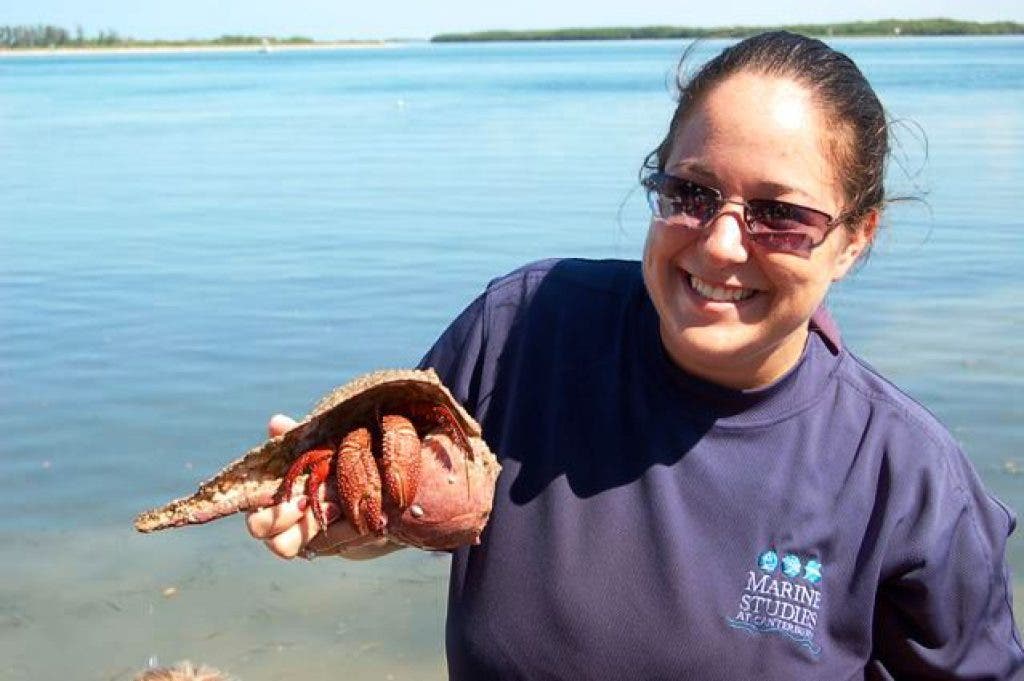
ST. PETERSBURG – Kids have the summer off, but many teachers use the break to update skills, learn new technologies – or plan an awesome hands-on project to show students in the fall.
Jenna Cummings, incoming director of Marine Science Studies at Canterbury School of Florida, is doing all three, as she develops a student-led project for collecting real-time data about the Gulf of Mexico.
Called the Ocean Drifter Program, the project will allow students to build a floating platform equipped with sensors and satellite communication that will stream data to classroom computers.
Find out what's happening in St. Petefor free with the latest updates from Patch.
No other Florida schools have made the Ocean Drifter Program part of their science curriculum, though it has been introduced in California.
“The kids learn how to build them,” Cummings said, referring to the high-tech floating platforms. “We release them offshore in the Gulf of Mexico and then we track them via Google Earth.”
Find out what's happening in St. Petefor free with the latest updates from Patch.
Cummings will travel to Monterey, Calif., this summer to learn how to teach students to construct the ocean drifters, which are made with PVC pipe, vinyl for the sails and a satellite transmitter.
The 4-foot-tall ocean drifters look something like a kite, except that they will glide just below the ocean surface. The satellite tracking devices will stick up like mini-periscopes.
Students will collect data on ocean currents, temperature and chlorophyll levels. They will learn how to program the drifters, use computer software to access the data and display their findings in graphics.
In August, Cummings will learn how to teach high school students about the Ocean Drifters Program through the Marine Advanced Technology Education (MATE) Center in Monterey. Her education will be funded through a grant from the National Science Foundation.
The plan is to have oceanography students build the ocean drifters in September and launch them. Back in the classroom, the high school students will monitor the devices, analyze data and even create graphics to display their findings. The project will last about three months.
Cummings believes that the students will get much more out of the curriculum than if they were using a textbook.
“There is the integration of science with technology and the problem-solving skills,” she said. “Instead of reading about ocean currents they actually will be tracking them. It really is hands-on. They will see exactly what the loop current does.”
Cummings hopes to collaborate with the College of Marine Science at the University of South Florida St. Petersburg, which has a research vessel.
Cummings is familiar with the benefits of hands-on learning. This past school year, she helped to involve students in marsh grass plantings at Clam Bayou and oyster bar restoration at Weedon Island Preserve.
Cummings also is laying plans for another interactive marine project, in addition to the Ocean Drifter Program. She hopes to work with the Florida Fish and Wildlife Department to conduct a redfish aqua culture project that would enable students to grow the fish from fingerlings and eventually release them in Tampa Bay to enhance the sport fish stock. The school already did a similar project growing tilapia.
Asked what students did with the tilapia once they were fully grown, Cummings smiled and said: “We cooked and ate them. They were really delicious.”
Get more local news delivered straight to your inbox. Sign up for free Patch newsletters and alerts.