Health & Fitness
Sustainable Tarpon Springs - The Benefits of Bees
An invitation to be part of a 'Conversation and Action Network' of friendly folks with a vision to see a 'greener' and more Sustainable Tarpon Springs.

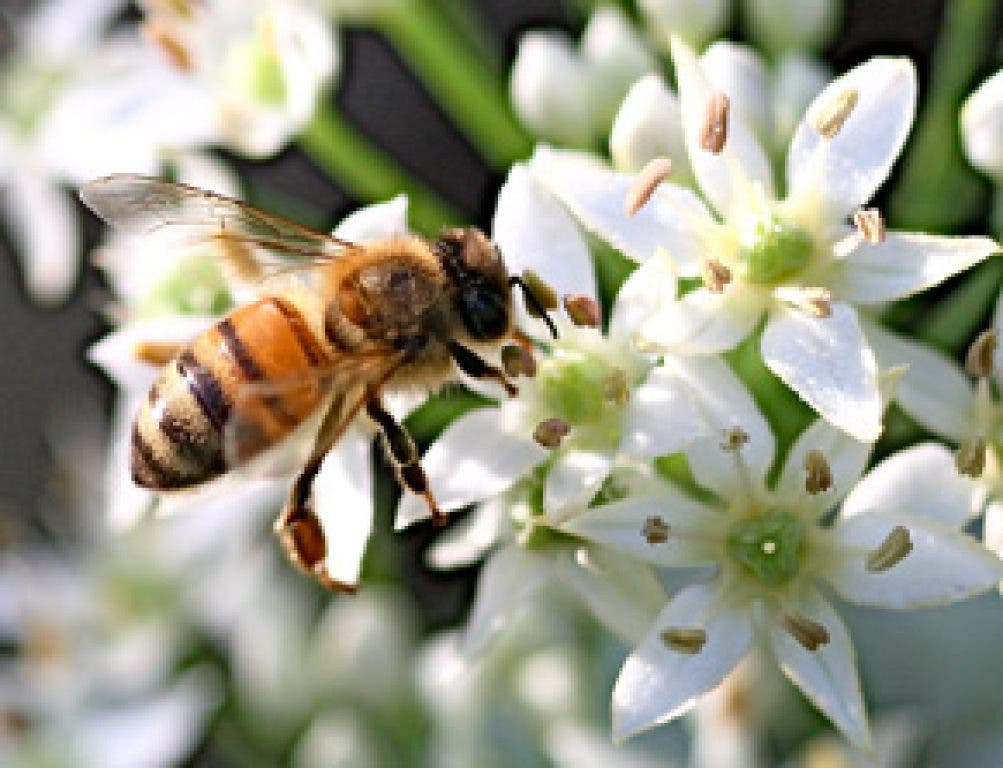
Even though Einstein never made the remark about humans only having four years if all the bees disappeared, according to the National Academy of Sciences, if bees entirely disappeared there would be more ripple effects than we can begin to comprehend.
Bees, both honey and bumblebees, primary pollinators, have been seriously stressed by our environment for awhile now. They are subject to a few viruses and parasites, but CCD or Colony Collapse Disorder has certainly been the most profound and wide-spread. Since 2006, beekeepers have puzzled over their abandoned hives and the disorientation of the bees natural navigation system.
Find out what's happening in Tarpon Springsfor free with the latest updates from Patch.
Interestingly enough, a commercial beekeeper, David Hackenberg, (who ranges from Pasco County all the way to Maine trekking thousands of beehives to service various blossoming crops dependent upon pollinators), had a different realization and took his suspicions all the way to Congress. He knew it wasn’t cell phones since he used his phone around his bees all the time.
Find out what's happening in Tarpon Springsfor free with the latest updates from Patch.
He testified about the most likely culprit of the problem - a new class of chemical pesticides, Neonicotinoids, which are ‘systemic’ once introduced to the seed, becoming part of the plant’s entire life, and are used in heavy doses by farmers who plant corn on 90 million acres in the Heartland of America. This sounds like a GMO product to me - genetically modified.
Yet, bees continue to be incredibly necessary to growing nuts, berries, fruits, and vegetables. One in three mouthfuls of food is indirectly or directly the result of honeybee pollination. Without pollinators, cross-pollinating with an artist’s brush is a painstaking job. (Ask my husband who did this with our pear tree in Kirkland, Washington.)
Honeybees need all the help they can get, yet since it appears that inspiring the EPA to take action to ban this destructive class of systemic chemicals may take longer than we can afford, the best solution is to support local beekeepers, or possibly even take up apiculture ourselves! A little over a year ago, Gov. Rick Scott signed a bill lifting restrictions on hobbyist beekeeping.
Even when commercial apiculture is struggling with serious losses due to CCD, hobbyist apiarists are able to have great success with much smaller, localized operations. One of my former co-workers, inspired by the popular novel, The Secret Life of Bees, started raising bees at her home on Whidbey Island a few years ago. She had a couple of challenges in her first year as she became acquainted with that ‘secret life’ but then she experienced the amazing rewards in her garden and with bee products - wax and honey.
It is not necessarily a hobby for everyone. It can be expensive to start up, and takes a lot of patient research to find the perfect location for bee hives - far from crossing ‘people paths’, safe distance from children, and other dangers. But after the new law went into effect July 1, 2012, registrations jumped from one or two per day to between seven and eleven! It seems beekeeping is definitely on the sustainability radar to more than a handful of people.
Another advantage in having European honeybees within a community is that they outcompete the Africanized bees (which give all bees a bad rap) and push them out of the area. So, before the ‘buzz about bees’ freaks anyone out, let’s consider how important they are to our welfare and our food chain.
In order for our community to gain a foothold on sustainable ground, we always need to find ways to be as localized about everything we rely upon. So, if our neighbor decides to raise honeybees - it is something to be proud and excited to have in nearby and support, knowing our food security is dependent upon just such decisions!
Cheers to the complex, beneficial lives of bees!